2026.10.11 (일) 08:01




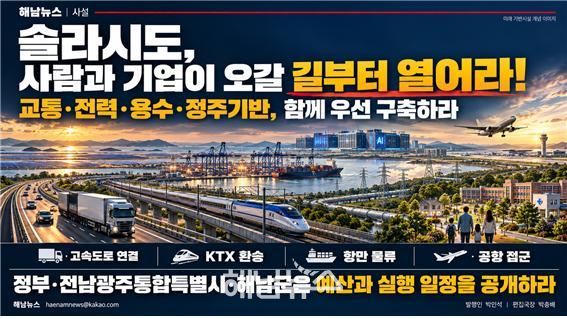 솔라시도 사람이 오갈 길부터 열어라 / 사진제공=ai이미지 |
[해남뉴스] haenamnews@kakao.com
솔라시도의 미래를 말하는 목소리는 크다. 국가 AI컴퓨팅센터, 재생에너지 산업단지, 첨단기업 유치, 정원관광도시, 인구 10만의 자족도시까지 청사진은 거대하다. 이제 행정이 답해야 할 질문은 구체적이어야 한다. 기업과 근로자는 어떤 길로 들어오는가. 가족은 어디에서 살고, 아이는 어떻게 학교에 가며, 응급환자는 어느 병원으로 이송되는가.
사람과 물자의 이동을 해결하지 못한 산업도시는 경쟁력을 확보하기 어렵다. 전력과 용수, 주택을 공급하더라도 그곳에 편리하게 접근하고 생활할 수 없다면 정착은 늦어질 수밖에 없다.
솔라시도 주변에 교통시설이 전혀 없는 것은 아니다. 목포권 철도와 항만, 무안국제공항, 기존 광역도로망이 있다. 그러나 시설의 존재와 솔라시도까지의 실질적인 접근성은 별개의 문제다. 국가 산업거점으로 육성하려면 각 교통시설과 사업장을 연결하는 도로, 환승체계, 운행서비스가 함께 작동해야 한다.
행정은 ‘인근에 공항이 있다’, ‘목포에서 KTX를 이용할 수 있다’는 설명에 머물러서는 안 된다. 역과 공항에서 솔라시도까지 얼마나 걸리는지, 대중교통은 얼마나 자주 운행하는지, 늦은 시간에도 이동할 수 있는지, 산업물류는 어떤 경로로 운송할 것인지 밝혀야 한다. 투자자가 평가하고 주민이 체감하는 것은 지도 위의 거리가 아니라 실제 이동시간과 비용이다.
국가 AI컴퓨팅센터는 지난 8월 3일 착공했고, 정부는 2028년 완공을 목표로 제시했다. 이제 교통과 생활기반시설에도 그 일정에 맞춘 실행계획이 있어야 한다. 센터가 가동된 뒤 출퇴근과 통학, 진료와 장보기를 해결하겠다는 순서로는 가족의 이주를 이끌기 어렵다.
고속도로부터 냉정하게 점검해야 한다. 광주∼강진 고속도로는 2026년 9월 보도 기준 연말 개통을 앞두고 있으며, 강진∼완도 구간은 같은 해 7월 전략환경영향평가와 주민 의견 수렴 절차가 진행됐다. 이는 서남권 접근성을 개선할 중요한 사업이지만, 솔라시도까지의 연결 문제를 모두 해결했다고 볼 수는 없다.
정부와 지방정부는 고속도로 나들목에서 기업도시까지 이어지는 도로의 수용능력, 교차로 병목, 공사차량과 통근차량의 동선부터 조사해야 한다. 필요한 연결도로와 위험구간 개선사업은 예산과 완료 시점을 확정해야 한다. 광역도로 개통 효과가 기업도시 입구에서 멈추는 일이 있어서는 안 된다.
철도 역시 마찬가지다. 국토교통부는 2026년 8월 무안공항역을 포함한 호남고속철도 2단계 사업을 2027년 완료 목표로 추진하겠다고 밝혔다. 그러나 철도사업의 완료 목표가 솔라시도의 철도 접근성을 자동으로 보장하지는 않는다. 역에서 사업장과 주거지까지 이어지는 마지막 이동구간을 해결해야 한다.
목포역 등 철도거점과 솔라시도를 연결하는 직행 교통수단, 열차 도착시간에 맞춘 환승, 출퇴근 시간대 운행, 야간 이동대책을 함께 마련해야 한다. 해남권 철도 접근성 확대도 실제 수요와 국가철도망 계획에 근거해 검토하되, 장기 철도사업을 기다리는 동안 이용할 수 있는 교통서비스부터 확보해야 한다.
항공교통은 더욱 신중하고 구체적인 대책이 필요하다. 무안국제공항은 존재하지만, 2026년 10월 초에도 재개항 촉구와 안전 대응체계 점검 문제가 제기되고 있다. 해외 투자자와 기술인력, 관광객의 이동을 공항이라는 시설의 존재만으로 설명할 수 없는 상황이다.
공항 정상화는 철저한 안전 확보와 함께 추진돼야 한다. 동시에 솔라시도와 공항을 연결하는 교통편, 이용 가능한 항공노선, 운항시간에 맞춘 환승계획을 갖춰야 한다. 공항이 실제로 이용될 수 있는 조건과 기업도시의 항공 접근성을 함께 설명하는 것이 책임 있는 행정이다.
항만도 사업별 물류 수요에 맞춰 연결해야 한다. 데이터센터 장비, 산업설비, 건설자재, 향후 입주기업의 생산품은 운송 특성이 다르다. 목포항·목포신항 등 기존 항만과 솔라시도 사이의 운송경로, 중량물 이동, 보관과 통관, 배후물류 기능을 검토해야 한다. 항만을 가까운 시설로 소개하는 수준을 넘어 기업이 실제로 이용할 수 있는 물류체계를 제시해야 한다.
교통·전력·용수·정주시설은 하나의 일정표로 추진해야 한다. 연결도로 공사와 송전·용수관로 설치가 서로 충돌하지 않도록 조정하고, 기업 가동 전에 필요한 기반시설을 사용할 수 있게 해야 한다. 부서별 계획을 모아놓는 것으로는 부족하다. 사업 간 선후관계를 조정하고 지연에 책임지는 통합 관리체계가 필요하다.
정주요건에서도 같은 원칙이 적용된다. 아파트가 완공됐다는 이유만으로 생활 가능한 도시가 되는 것은 아니다. 어린이집과 학교, 의원과 약국, 식료품점과 대중교통이 입주 시점에 맞춰 운영돼야 한다. 승용차가 없는 청년, 통학하는 학생, 병원을 오가는 고령자도 생활할 수 있어야 한다.
특히 가족의 이주를 좌우하는 교육과 의료는 홍보문구로 대신할 수 없다. 국제학교 유치계획과 병원 건립협약을 소개하려면 인허가, 재원, 운영주체, 교원·의료진 확보, 개교·개원 일정을 함께 설명해야 한다. 공립학교 통학과 보육, 일상 진료와 응급 이송처럼 당장 필요한 서비스부터 책임져야 한다.
교통망이 좋아지면 외부에서 출퇴근하는 것도 쉬워진다. 그만큼 솔라시도 안에서 살 이유를 만들어야 한다. 합리적인 주거비, 배우자의 일자리, 안정적인 돌봄, 교육과 의료, 문화생활이 함께 갖춰져야 근로자의 가족까지 정착한다. 해남읍과 주변 마을의 상권·서비스도 연결해 지역 전체에 소비와 소득이 확산되도록 해야 한다.
공공재정의 책임도 분명히 해야 한다. 수산양식기자재 클러스터는 2026년 9월 운영비와 인건비, 장기 적자 우려로 사업을 포기했다는 보도가 나왔다. 시설을 짓는 데 필요한 돈과 수십 년간 운영하는 데 필요한 돈을 함께 계산해야 한다는 경고다.
정부·전남광주통합특별시·해남군은 솔라시도 종합 기반시설 실행계획을 공개해야 한다. 고속도로 연결과 철도 환승, 공항 접근과 항만물류, 전력과 용수, 주택과 학교·의료시설을 한눈에 확인할 수 있어야 한다. 사업별 예산, 담당기관, 완료 시점, 운영주체, 유지관리비, 지연 시 대응책까지 명시해야 한다.
공공이 부담할 비용과 민간사업자가 책임질 비용도 구분해야 한다. 주민에게 돌아갈 일자리와 소득, 지역 구매와 생활서비스 개선 효과를 검증하고 공개해야 한다. 투자 발표금액만으로 공공지원의 타당성을 설명해서는 안 된다.
솔라시도에 필요한 것은 약속한 시점에 이용할 수 있는 길과 전기와 물, 그리고 가족이 안심하고 살아갈 생활기반이다.
정부와 지방정부는 기업 유치와 함께 교통 연결망을 우선사업으로 확정하라. 전력·용수·정주시설의 공급 시점을 기업 가동 일정에 맞춰 책임 있게 관리하라. 솔라시도의 성공은 발표장의 투자 규모가 아니라, 기업이 가동하고 주민이 정착하며 해남의 일상과 경제가 나아지는 결과로 증명돼야 한다.
[Editorial] Solaseado: Open the Routes That Bring People and Businesses In
Highway, KTX, port and airport connections must be developed alongside electricity, water and residential infrastructure
The central government, Jeonnam–Gwangju Special Metropolitan City and Haenam County must disclose budgets and implementation schedules beyond investment blueprints
[Haenam News] haenamnews@kakao.com
The promises surrounding Solaseado’s future are ambitious: a National AI Computing Center, a renewable energy industrial complex, advanced technology companies, a garden tourism city and a self-sufficient city of 100,000 residents. The questions authorities must now answer are concrete. How will businesses and workers reach the site? Where will families live? How will children get to school, and which hospital will receive patients in an emergency?
An industrial city cannot easily become competitive without addressing the movement of people and goods. Even with electricity, water and housing, settlement will inevitably be delayed if people cannot conveniently reach the city and go about their daily lives.
Transport facilities do exist around Solaseado. There are railways and ports in the Mokpo area, Muan International Airport and existing regional roads. But the existence of these facilities and practical access to Solaseado are separate matters. To develop the city into a national industrial hub, the roads, transfer arrangements and transport services connecting these facilities to workplaces must function together.
Authorities must move beyond statements such as “there is an airport nearby” or “KTX services are available in Mokpo.” They must explain how long it takes to reach Solaseado from stations and airports, how frequently public transport operates, whether travel is possible late at night and which routes industrial freight will use. Investors assess—and residents experience—actual travel time and cost, not distances on a map.
Construction of the National AI Computing Center began on August 3, and the government has set a completion target of 2028. Transport and everyday infrastructure must now have implementation plans aligned with that schedule. Waiting until the center begins operating to address commuting, school transport, medical care and grocery shopping will do little to encourage families to relocate.
Highways require a clear-eyed assessment. According to September 2026 reporting, the Gwangju–Gangjin Expressway is approaching its year-end opening, while the Gangjin–Wando section underwent strategic environmental assessment and public consultation procedures in July of the same year. These are important projects for improving access to the southwestern region, but they cannot be regarded as having resolved every connection to Solaseado.
The central and local governments must first examine the capacity of roads linking expressway interchanges to the enterprise city, intersection bottlenecks and the routes used by construction vehicles and commuters. Budgets and completion dates must be secured for necessary connecting roads and improvements to hazardous sections. The benefits of regional expressways must not stop at the entrance to the enterprise city.
The same applies to rail transport. In August 2026, the Ministry of Land, Infrastructure and Transport announced that it was pursuing completion of the second phase of the Honam High-Speed Railway, including Muan Airport Station, by 2027. But a railway completion target does not automatically guarantee rail access to Solaseado. The final journey from the station to workplaces and residential areas must also be addressed.
Direct transport services between railway hubs such as Mokpo Station and Solaseado, connections coordinated with train arrivals, commuter services and late-night travel arrangements must be established together. Improved rail access for the Haenam area should also be examined against actual demand and the national railway network plan. Meanwhile, usable transport services must be provided rather than leaving residents to wait for long-term railway projects.
Air transport requires particularly careful and specific measures. Muan International Airport exists, but calls for its reopening and questions about its safety preparedness were still being raised in early October 2026. Under these circumstances, the movement of overseas investors, technical personnel and tourists cannot be explained simply by pointing to an airport building.
Restoring airport operations must proceed with rigorous safety measures. At the same time, transport links between Solaseado and the airport, available flight routes and connections coordinated with flight schedules must be established. Responsible administration means explaining both the conditions under which the airport can actually be used and how the enterprise city will be reached from it.
Ports must likewise be connected according to the logistics needs of each project. Data center equipment, industrial machinery, construction materials and the future products of tenant companies have different transport requirements. Authorities must examine routes between existing ports—including Mokpo Port and Mokpo New Port—and Solaseado, along with heavy cargo transport, storage, customs clearance and supporting logistics facilities. They must move beyond describing ports as nearby amenities and present a logistics system businesses can actually use.
Transport, electricity, water and residential infrastructure must be developed under one coordinated schedule. Connecting-road construction and the installation of power transmission and water supply infrastructure must be coordinated to avoid conflicts. Essential infrastructure must be available before businesses begin operating. Simply assembling plans from different departments is insufficient. An integrated management system must coordinate the sequence of projects and assign responsibility for delays.
The same principle applies to living conditions. Completed apartment buildings alone do not make a city livable. Childcare centers, schools, clinics, pharmacies, grocery stores and public transport must be operating when residents move in. Young people without cars, students traveling to school and older residents visiting hospitals must all be able to live there.
Education and healthcare, which strongly influence a family’s decision to relocate, cannot be replaced by promotional language. Plans to attract an international school or agreements to build a hospital must be accompanied by details on approvals, funding, operators, teacher and medical staffing, and opening dates. Authorities must first take responsibility for immediate needs: public-school transport, childcare, routine medical care and emergency transfers.
Better transport also makes commuting from other cities easier. Solaseado must therefore give people reasons to live within it. Affordable housing, employment for spouses, reliable childcare, education, healthcare and cultural opportunities must be provided together if workers and their families are to settle. Businesses and services in Haenam town and surrounding villages must also be connected so that spending and income spread throughout the region.
Responsibility for public finances must be equally clear. In September 2026, reports stated that the aquaculture equipment cluster project had been abandoned because of operating costs, personnel expenses and concerns over long-term losses. This is a warning that the cost of building a facility and the cost of operating it for decades must be calculated together.
The central government, Jeonnam–Gwangju Special Metropolitan City and Haenam County must disclose a comprehensive infrastructure implementation plan for Solaseado. It must clearly present highway connections, rail transfers, airport access, port logistics, electricity and water supplies, housing, schools and medical facilities. For every project, it must specify the budget, responsible agency, completion date, operator, maintenance costs and measures to address delays.
The costs borne by the public and those for which private developers are responsible must also be distinguished. The jobs, income, local purchasing opportunities and improvements in everyday services that residents will receive must be assessed and disclosed. Announced investment amounts alone cannot justify public support.
What Solaseado needs is roads, electricity and water that are available when promised, together with the foundations that allow families to live with confidence.
The central and local governments must designate transport connections as priority projects alongside business recruitment. They must responsibly align the delivery of electricity, water and residential infrastructure with the schedules for business operations. Solaseado’s success must be demonstrated through operating businesses, settled residents and improvements in Haenam’s daily life and economy—not through investment figures announced from a podium.
 해남뉴스 박충배 편집/논설 news@hbcnews.kr