2026.10.01 (목) 07:21



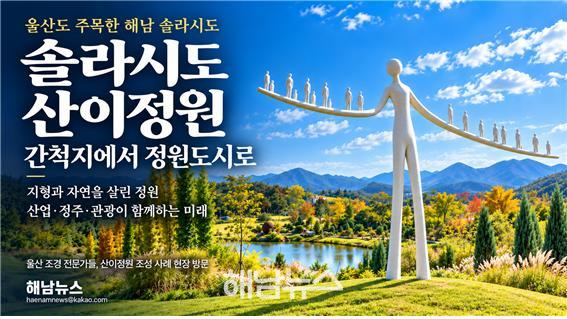 솔라시도 산이정원 / 사진제공=ai이미지 |
해남 솔라시도 기업도시의 산이정원이 간척지의 특성을 살린 정원 조성 사례로 주목받고 있다.
2028년 국제정원박람회를 준비하는 울산의 조경 전문가들이 현장을 찾아, 기존 지형과 자연환경을 활용하는 방식을 살펴봤다.
29일 목포MBC 보도에 따르면 울산 조경 관계자들은 해남 산이정원을 방문해 간척지가 정원으로 변화한 과정과 공간 구성을 확인했다.
방문단이 관심을 둔 부분은 시설의 규모보다 땅의 특성을 살리면서 식물과 사람이 함께하는 환경을 만들어낸 방식이었다.
해남군 산이면 솔라시도에 자리한 산이정원은 과거 바다였던 땅과 주변 경관의 역사를 정원에 담고 있다. 입구의 ‘맞이 정원’은 파도 형상의 정문과 섬을 표현한 공간, 옛 물길을 떠올리게 하는 굽은 길을 통해 간척 이전의 풍경을 보여준다.
정원 중심의 ‘물이정원’은 기존 지형을 활용한 수변 공간이다. 산이정원 측은 이곳을 주변 연못과 수생식물, 생물이 어우러지고 정원의 식물 생태계를 지탱하는 공간으로 소개하고 있다. 바다였던 땅의 흔적을 정원의 경관과 생태적 기능에 연결한 것이다.
울산이 추진하는 사업은 해남의 간척지 정원과 부지 성격에서 차이가 있다. 울산은 태화강국가정원과 삼산·여천 매립장 일원을 무대로 2028년 4월 22일부터 10월 22일까지 국제정원박람회를 개최할 예정이다.
삼산·여천 매립장은 전통과 현대를 결합한 한국형 정원으로 조성하고, 태화강국가정원은 정원 작품 전시와 생태체험 공간으로 재정비하는 계획이다.
따라서 이번 방문은 울산의 간척지 정원 조성 사례를 해남에 적용하는 것이 아니라, 울산 관계자들이 해남의 간척지 활용 사례를 매립장 정원화에 참고하기 위해 살펴본 것으로 이해해야 한다.
목포MBC 인터뷰에서 정홍가 울산시 조경협회 부회장은 산이정원이 조성된 배경과 울산의 사업 여건에 유사성이 있다며 참고할 점이 많다는 취지로 말했다. 한일근 상임대표도 산이정원을 둘러본 뒤 자연의 조건에 맞춰 조성하는 방식에서 가능성을 확인했다고 밝혔다.
산이정원은 관람과 산책에 더해 문화·교육 기능을 갖춘 공간이기도 하다. 한국수목원정원관리원 정원누리는 산이정원을 자연과 예술, 세대 간 교류를 연결하는 복합문화예술 공간으로 소개하고 있으며, 정원해설과 계절별 행사 등을 안내하고 있다.
솔라시도에서는 재생에너지와 인공지능, 데이터센터 등 산업 기반 확충과 함께 사람들이 찾아오고 머무를 수 있는 생활환경의 중요성이 커지고 있다. 이번 보도는 산이정원이 기업도시의 정주·관광 기반으로 활용되고 있다는 점도 조명했다.
이번 방문이 해남에 주는 시사점은 간척지 개발 과정에서 정원을 도시의 생활환경과 연결할 필요가 있다는 것이다. 산이정원의 경험을 솔라시도 전반으로 확장하려면 자연환경을 고려한 공간 조성과 함께 주민의 이용 편의, 지속적인 관리, 지역 관광과의 연계를 구체화해야 한다.
울산 관계자들이 찾아온 산이정원은 해남의 간척지가 산업과 관광, 일상이 함께하는 공간으로 변화할 수 있음을 보여주는 사례다.
앞으로의 과제는 이러한 관심을 솔라시도의 정주 여건 개선과 해남 지역경제의 실질적인 성과로 이어가는 데 있다.
Expo Preparations
Ulsan landscaping experts visit Sani Garden to examine designs that preserve the terrain and natural environment
Ulsan transforms landfill sites, while Haenam develops reclaimed land—different landscapes pursuing coexistence with nature
Solaseado’s gardens expand their role in residential life and tourism alongside industrial development
[Haenam = Haenam News] haenamnews@kakao.com
Sani Garden in Haenam’s Solaseado enterprise city is drawing attention as an example of garden development that makes use of the distinctive features of reclaimed land.
Landscaping experts from Ulsan, which is preparing for an international garden expo in 2028, visited the site to examine how its existing terrain and natural environment have been incorporated into the garden.
According to a September 29 report by Mokpo MBC, the Ulsan visitors toured Sani Garden to learn how reclaimed land had been transformed into a garden and to study its spatial layout.
Their interest centered on how the site’s characteristics were preserved to create an environment shared by plants and people, rather than on the scale of its facilities.
Located within Solaseado in Sani-myeon, Haenam County, Sani Garden reflects the history of land that was once sea and the surrounding landscape. At its entrance, the “Welcome Garden” evokes the scenery before reclamation through a wave-shaped gateway, spaces representing islands, and winding paths reminiscent of former waterways.
The “Lake Garden,” at the center of the site, is a waterfront space shaped around the existing terrain. Sani Garden describes it as an area where surrounding ponds, aquatic plants, and wildlife coexist, supporting the garden’s plant ecosystem. It connects traces of the land’s marine past with the garden’s landscape and ecological functions.
Ulsan’s project differs from Haenam’s reclaimed-land garden in the nature of its site. Ulsan plans to hold its international garden expo from April 22 to October 22, 2028, across Taehwagang National Garden and the Samsan and Yeocheon landfill sites.
The landfill sites are to be developed into Korean-style gardens combining traditional and contemporary elements, while Taehwagang National Garden will be reorganized to accommodate garden exhibitions and ecological experiences.
The visit should therefore be understood as an effort by Ulsan representatives to learn from Haenam’s use of reclaimed land for their own landfill-to-garden project, rather than as an example of Ulsan’s garden development being applied in Haenam.
In an interview with Mokpo MBC, Jeong Hong-ga, vice chair of the Ulsan Landscaping Association, noted similarities between the origins of Sani Garden and the conditions facing Ulsan’s project, saying there was much to learn from the site. Han Il-geun, the association’s executive representative, also said the visit demonstrated the potential of developing gardens in harmony with natural conditions.
Sani Garden provides cultural and educational opportunities in addition to sightseeing and walking. Garden Nuri, operated by the Korea Arboreta and Gardens Institute, describes it as a cultural and arts space connecting nature, art, and different generations, and provides information on guided garden tours and seasonal events.
As Solaseado expands its industrial infrastructure—including renewable energy, artificial intelligence, and data centers—the importance of creating an environment where people want to visit and stay is also growing. The report highlighted Sani Garden’s role in supporting residential life and tourism within the enterprise city.
The visit suggests that Haenam should connect garden development with everyday urban life as it develops reclaimed land. Extending Sani Garden’s experience across Solaseado will require environmentally sensitive design, convenient access for residents, ongoing maintenance, and stronger links with local tourism.
Sani Garden’s appeal to the Ulsan visitors demonstrates how Haenam’s reclaimed land can become a place where industry, tourism, and everyday life coexist.
The next challenge is to translate that interest into better living conditions in Solaseado and tangible benefits for Haenam’s local economy.
 해남뉴스 박충배 편집/논설 news@hbcnews.kr