2026.10.01 (목) 07:20

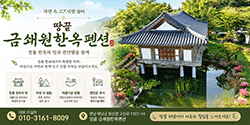


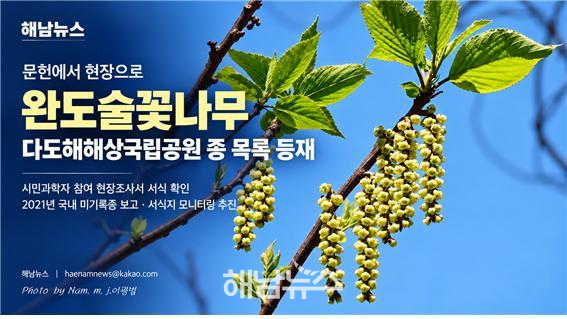 완도 술꽃나무 / 사진제공=ai이미지 |
완도 섬 지역에서 자생이 보고된 ‘완도술꽃나무’가 시민과학자들이 참여한 현장 조사에서 확인돼 다도해해상국립공원 종 목록에 올랐다. 기존 문헌 기록을 실제 서식정보와 연결해 국립공원 생물종 관리 자료를 보완한 성과다.
국립공원공단 다도해해상국립공원사무소는 시민과학자들과 함께 실시한 특정도서 조사에서 완도술꽃나무를 확인하고 공원 종 목록에 등재했다고 지난 28일 밝혔다. 이 나무는 기존 문헌에 등장했지만 공원 내 현장 확인 기록이 부족해 그동안 종 목록에 포함되지 않았던 식물이다.
사무소는 현장에서 확보한 서식정보와 관련 문헌을 검토해 국립공원 생물종 자료에 반영했다. 앞으로 시민과학자들과 공원 내 생물종·서식 현황 조사를 이어가고, 새롭게 확인되는 종과 서식정보를 관리 자료에 추가할 계획이다.
완도술꽃나무 서식지에 대해서는 개체와 서식환경의 변화를 지속적으로 관찰해 생물다양성 보전과 서식지 관리에 활용할 방침이다.
완도술꽃나무의 학명은 ‘Stachyurus praecox’다. 오찬진 등 연구진은 2021년 『식물분류학회지』 제51권 제4호에 발표한 「한국 미기록종 식물: 완도술꽃나무」에서 완도군 생일면 봉선리 무인도 상록수림에서 채집한 식물을 국내 미기록종으로 보고했다.
이 식물은 이전까지 일본의 난대·온대지역에 분포하는 것으로 알려져 있었다. 국명은 국내 발견 지역인 ‘완도’와, 길게 늘어진 꽃차례가 여러 가닥의 장식용 실인 ‘술’을 닮았다는 특징을 합쳐 붙였다.
완도술꽃나무는 잎이 떨어지는 낙엽활엽수로, 봄에 잎보다 먼저 연노란색 꽃이 긴 꽃축을 따라 아래로 늘어져 핀다. 전남산림연구원은 국내 확인 개체가 최대 8m까지 자라며, 꽃에는 암술과 수술이 함께 있지만 기능적으로는 암수딴그루로 관찰되는 특징이 있다고 설명했다.
이번 현장 확인은 세계적으로 알려지지 않았던 신종을 발견한 것과는 구분된다. 이미 2021년 국내 자생이 학술적으로 보고된 식물을 현장에서 확인하고, 다도해해상국립공원의 종 목록과 서식 관리 자료에 반영했다는 데 의미가 있다.
다만 공개된 보도에는 이번 조사의 정확한 실시일과 확인 개체 수, 과거 학술 보고 지점과 이번 조사 지점의 일치 여부가 제시되지 않았다. 새로운 자생지가 추가로 발견 됐는지와 구체적인 서식 규모는 추가 확인이 필요하다.
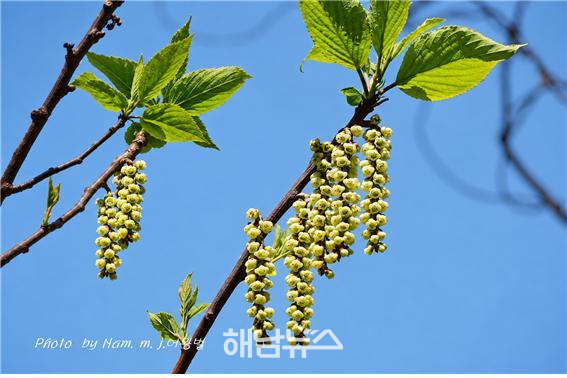 완도 술꽃나무 / 사진제공=ai이미지 |
“From Literature to the Field”: Stachyurus praecox Added to Dadohaehaesang National Park’s Species List
Citizen scientists confirm its presence during an island survey, strengthening the park’s biodiversity records
First reported in Korea in a 2021 scientific paper; habitat monitoring and conservation planned
[Wando = Haenam News] haenamnews@kakao.com
Stachyurus praecox, known in Korean as “Wando-sulkkot-namu,” has been added to Dadohaehaesang National Park’s species list after its presence was confirmed during a field survey involving citizen scientists. The finding strengthens the park’s biodiversity records by linking existing scientific literature with field observations.
The Korea National Park Service’s Dadohaehaesang National Park Office announced on September 28 that it had confirmed the plant during a survey of designated islands conducted with citizen scientists and added it to the park’s species list. Although the plant had appeared in earlier literature, insufficient field records within the park had kept it off the list.
The office reviewed the habitat information collected in the field alongside relevant literature and incorporated the findings into the park’s biodiversity records. It plans to continue surveying species and their habitats with citizen scientists and update its records as additional species and habitat information are confirmed.
The office also plans to monitor changes in the plant population and its habitat, using the findings to support biodiversity conservation and habitat management.
The plant’s scientific name is Stachyurus praecox. In 2021, Oh Chan-jin and fellow researchers reported it as a previously unrecorded species in Korea in their paper, “Stachyurus praecox (Stachyuraceae), First Report in Korea,” published in Volume 51, Issue 4 of the Korean Journal of Plant Taxonomy. The study examined specimens collected from an evergreen forest on an uninhabited island in Bongsun-ri, Saengil-myeon, Wando County.
The species had previously been known to occur in Japan’s warm-temperate and temperate regions. Its Korean name combines “Wando,” the location of its discovery in Korea, with “sul,” meaning a decorative tassel, in reference to its long, hanging flower clusters.
Stachyurus praecox is a deciduous broadleaf tree whose pale-yellow flowers hang along elongated flower stalks in spring before the leaves emerge. According to the Jeonnam Forest Research Institute, specimens confirmed in Korea can grow up to eight meters tall. Although each flower contains both male and female reproductive organs, the plants have been observed to function as separate male and female individuals.
The latest field confirmation should be distinguished from the discovery of a species previously unknown to science. Its significance lies in confirming the presence of a plant already reported growing naturally in Korea in 2021 and incorporating that information into Dadohaehaesang National Park’s species list and habitat management records.
However, publicly available reports do not specify the exact survey date, the number of plants confirmed, or whether the latest survey site is the same as the location documented in the earlier scientific paper. Further verification is needed to determine whether an additional natural population has been discovered and to establish the population’s size.
 해남뉴스 박충배 편집/논설 news@hbcnews.kr