2026.09.29 (화) 07:54




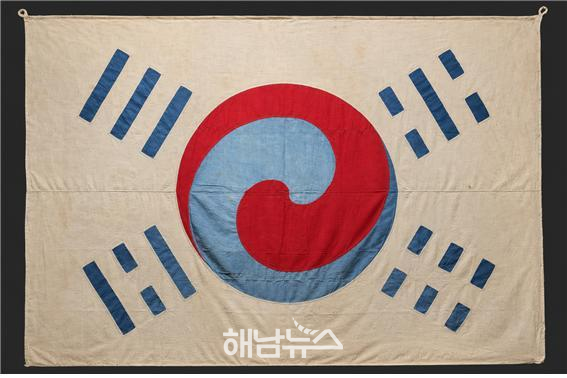 고종이 데니에게 하사한 태극기 / 사진제공=국립중앙박물관 |
【전남광주=AI호남뉴스】 aihnnews@kakao.com
1905년 을사오적은 처음부터 자신들이 나라를 팔겠다고 국민 앞에 선언하지 않았다. 그들도 황실과 국가를 보호하고 국제정세에 대응하기 위한 불가피한 선택이라는 명분을 내세웠다.
그러나 그들이 실제로 한 일은 대한제국의 외교권을 일본에 넘겨주고 국권 침탈의 문을 열어준 것이었다. 나라를 위한다는 말로 나라를 팔았고, 백성을 보호한다는 핑계로 침략자의 편에 섰다.
2024년 12월 3일 비상계엄을 선포한 세력도 다르지 않았다. 이들은 자유민주주의와 국가 정상화, 반국가세력 척결을 주장했다. 그러나 실제 행동은 군과 경찰을 국회에 투입하고 국민이 선출한 국회의 헌법적 권한을 막으려 한 것이었다.
입으로는 애국을 말하면서 행동으로는 국민주권과 헌정질서를 위협했다. 바로 이 지점에서 을사오적의 매국 논리와 12·3 세력의 반헌법적 행태는 맞닿아 있다.
친일은 일본을 찬양하는 말에만 있지 않다
친일을 일본을 칭송하거나 일제강점기를 미화하는 언행에만 한정해서는 그 본질을 볼 수 없다.
친일의 본질은 외세와 강자의 논리를 앞세워 국가주권과 국민의 권리를 희생시키는 데 있다. 침략과 독재를 질서 유지로 포장하고, 국가폭력을 국민 보호라고 주장하며, 민주주의를 혼란과 장애물로 취급하는 권력관이야말로 일제 식민통치와 친일세력이 남긴 위험한 유산이다.
을사오적은 일본의 힘에 기대 자신들의 지위와 재산을 지켰다. 일제에 협력한 관료·경찰·군인들은 천황과 총독부의 명령을 국가와 질서라는 이름으로 집행했다. 그 과정에서 독립운동가를 탄압하고 국민을 감시했으며, 민족의 주권을 빼앗은 침략 권력의 하수인이 됐다.
12·3 세력 역시 자신들의 정치적 판단을 국민의 뜻보다 우위에 놓았다. 국가와 국민을 위한다는 명분 아래 군과 경찰을 동원해 헌법기관을 제압하려 했다. 권력자가 국가와 자신을 동일시하고, 자신에게 반대하는 국민과 국회를 제거하거나 통제해야 할 대상으로 여겼다는 점에서 식민통치와 친일 권력의 사고방식이 되살아난 것이다.
현행법상 ‘친일반민족행위’에 대한 법률적 판단과 별개로, 12·3 세력이 보여준 말과 행동은 친일·독재 세력의 역사관과 통치방식을 답습한 것으로 평가하지 않을 수 없다.
을사오적도 “나라를 위한다.”고 말했다
1905년 11월 17일 일본은 군대를 동원해 대한제국 정부를 압박하고 외교권을 빼앗는 을사늑약을 강제로 체결했다.
고종 황제는 이를 승인하지 않았으며 조약에 국새도 찍히지 않았다. 그런데도 이완용·박제순·이지용·이근택·권중현은 일본의 요구에 찬성했다.
이들은 현실적으로 일본을 거스를 수 없으며 일본의 보호를 받는 것이 나라를 보전하는 길이라는 식으로 자신들의 선택을 합리화했다. 하지만 그 결과는 보호가 아니라 국권 상실이었다. 외교권 박탈에 이어 통감부가 설치됐고, 고종 강제 퇴위와 군대 해산을 거쳐 1910년 나라 전체를 빼앗겼다.
역사는 나라를 위한다는 말이 아니라 그 행동과 결과로 평가한다.
국민의 주권을 넘기고 헌정질서를 무너뜨리는 행위는 어떤 명분을 붙여도 애국이 될 수 없다. 을사오적의 ‘국가 보전’이 매국의 핑계였듯, 12·3 세력의 ‘국가 정상화’ 역시 헌정질서를 위협한 행위를 정당화할 수 없다.
청산하지 못한 친일 권력이 민주공화국을 위협했다
해방 직후 대한민국은 친일반민족행위자를 제대로 청산할 기회를 스스로 무너뜨렸다.
1948년 출범한 반민족행위특별조사위원회는 친일세력의 조직적인 방해와 권력의 탄압으로 해체됐다. 일제 경찰과 관료, 군인 상당수는 처벌받지 않았으며 오히려 해방된 국가의 권력기관으로 돌아왔다.
일제 경찰이 독립운동가를 고문했던 기술과 조직문화는 독재정권의 고문과 간첩 조작, 민주화운동 탄압에 다시 사용됐다. 국민을 주권자로 섬기는 민주적 국가관보다 국민을 감시하고 명령하며 제압하는 식민통치의 권력관이 살아남았다.
친일청산의 실패는 단지 과거의 몇 사람을 처벌하지 못한 데서 끝나지 않았다. 반역해도 권력만 잡으면 살아남고, 국가폭력을 저질러도 정권이 보호하면 책임을 피할 수 있다는 잘못된 선례를 남겼다.
그 결과 독재와 군사반란, 국가폭력이 되풀이됐다. 그리고 민주화 이후 수십 년이 지난 2024년 12월 3일, 군과 경찰을 동원해 국회를 통제하려는 비상계엄 사태가 다시 발생했다.
청산하지 않은 역사는 사라지지 않았다. 친일 권력의 사고방식은 반공과 안보, 질서와 국가 정상화라는 이름으로 모습을 바꾸며 살아남았다. 12·3은 그 오래된 반민주적 권력관이 다시 세상 밖으로 튀어나온 사건이었다.
헌법재판소는 2025년 4월 4일 윤석열 대통령 탄핵심판에서 비상계엄 선포와 군·경 투입 등이 헌법과 법률을 중대하게 위반했다고 판단해 파면을 결정했다.
이는 단순한 정치적 실패에 대한 심판이 아니다. 대통령을 비롯한 어떠한 권력자도 국민주권과 헌법 위에 설 수 없다는 민주공화국의 명령이다.
친일재산은 티끌 하나까지 찾아 환수해야 한다
친일반민족행위로 얻은 재산은 일반적인 사유재산과 동일하게 취급할 수 없다.
일본으로부터 받은 작위금과 은사금, 침략 권력에 협력한 대가로 취득한 토지와 사업권, 각종 특혜는 민족의 고통과 독립운동가의 피 위에 세워진 부당한 재산이다.
‘친일반민족행위자 재산의 국가귀속에 관한 특별법’도 친일반민족행위로 축재한 재산을 국가에 귀속시켜 정의를 구현하는 것을 목적으로 한다. 대법원은 친일반민족행위자재산조사위원회의 활동이 종료된 뒤에도 친일재산의 국가귀속 문제를 계속 해결할 필요가 있다고 판단했다. (국가법령정보센터 특별법, 대법원 친일재산 판례)
국가는 친일재산의 최초 취득부터 상속·증여·매매·명의신탁·법인 전환에 이르는 모든 과정을 다시 조사해야 한다. 차명으로 숨기거나 허위 매매를 통해 빼돌린 재산, 친일재산을 처분해 얻은 이익과 대체재산까지 추적할 수 있도록 제도를 보완해야 한다.
재산이 여러 차례 상속됐거나 오랜 시간이 흘렀다는 이유로 환수를 포기해서는 안 된다. 매국의 대가가 등기 명의를 바꾸고 세월을 통과했다고 해서 정당한 재산으로 세탁될 수는 없다.
친일재산은 티끌 하나라도 남김없이 찾아 국민에게 돌려줘야 한다. 반역으로 얻은 부와 특권은 대를 이어 누릴 수 없다는 원칙을 국가가 행동으로 증명해야 한다.
분노는 정당하지만 혈연이 아니라 행위와 재산을 심판해야 한다.
나라를 팔아 부와 권세를 누린 자들의 재산이 후대까지 이어지는 현실을 보면, 과거 역적에게 ‘3족을 멸한다’, ‘9족을 멸한다’는 극형을 적용했다는 이야기가 왜 등장했는지 이해할 만큼 국민의 분노는 클 수밖에 없다.
 대한제국 초창기 태극기 / 사진제공=AI호남뉴스 |
그러나 민주공화국의 청산은 혈연에 대한 보복이 되어서는 안 된다. 후손이라는 이유만으로 처벌하거나 불이익을 주는 연좌제는 헌법이 허용하지 않는다.
우리가 끝까지 추적해야 할 대상은 혈통이 아니라 친일행위로 만들어진 재산과 부당한 특권이다.
친일재산임을 알면서도 상속받아 은닉하거나 편법으로 처분한 사람, 매국의 역사를 왜곡하며 부당한 재산을 지키려 한 사람에게는 법적 책임을 엄중하게 물어야 한다. 반면 친일행위 및 부당한 재산과 관계없는 후손까지 처벌해서는 안 된다.
정확한 조사와 적법절차에 따른 환수는 연좌제가 아니다. 친일행위자가 민족을 배신한 대가로 얻은 부당이익을 원래 주인인 국민에게 돌려주는 역사정의의 실현이다.
12·3 세력도 끝까지 추적하고 기록해야 한다.
친일재산을 추적하듯 12·3 비상계엄의 기획·준비·실행·동조 과정도 철저히 밝혀야 한다.
누가 비상계엄을 구상했고, 누가 군과 경찰의 동원을 지시했으며, 누가 국회와 선거관리위원회 장악에 가담했는지 낱낱이 규명해야 한다. 명령을 내린 사람뿐 아니라 불법성을 알고도 실행하거나 은폐한 사람, 사후에 기록을 없애거나 허위 사실로 사태를 정당화한 사람까지 책임을 물어야 한다.
정치적 타협이나 정권의 이해관계에 따라 진상규명과 처벌이 중단돼서는 안 된다. 과거 반민특위가 무너졌던 역사를 12·3 사태 처리 과정에서 되풀이한다면 또 다른 반헌법 세력에게 잘못된 신호를 보내게 된다.
12·3을 축소·왜곡하거나 단순한 경고성 계엄으로 포장하는 행위도 경계해야 한다. 을사늑약을 불가피한 선택으로 미화하는 것과 헌정질서 파괴를 국가 정상화를 위한 결단으로 포장하는 것은 본질적으로 같은 역사 왜곡이다.
광복절은 미완의 청산을 완수하는 날이다
광복절은 태극기를 흔들고 만세를 외치는 기념행사로 끝나서는 안 된다.
누가 나라를 지켰고 누가 나라를 팔았는지, 독립운동가의 희생과 친일세력의 배신이 오늘날 어떤 결과로 이어졌는지 국민 앞에 정확하게 밝혀야 한다.
친일재산 환수 전담기구를 상설화하고 정부·지방자치단체·법원·등기기관·금융기관에 흩어진 자료를 통합해야 한다. 환수 대상과 소송 현황, 미환수 사유도 투명하게 공개해야 한다.
독립운동가와 후손에 대한 예우와 생활지원도 확대해야 한다. 나라를 위해 모든 것을 바친 사람의 후손은 가난에 시달리고, 나라를 팔아 재산을 얻은 사람의 후손은 그 부를 누리는 현실을 그대로 두고 역사정의를 말할 수는 없다.
을사오적은 나라를 위한다는 명분으로 나라를 팔았다. 12·3 세력은 국가를 정상화한다는 명분으로 민주공화국의 헌정질서를 위협했다.
우리는 더 이상 애국을 가장한 반역에 속아서는 안 된다. 애국은 권력자의 구호가 아니라 국민주권과 헌법을 지키는 행동으로 증명돼야 한다.
친일재산은 티끌 하나까지 환수하고, 헌정질서를 파괴한 세력은 마지막 한 사람까지 책임을 물어야 한다.
나라를 위한다는 말이 매국과 내란의 면죄부가 되는 역사를 끝내야 한다. 그것이 을사오적의 배신을 기억하고 12·3의 재발을 막는 길이며, 광복 81주년을 맞은 대한민국이 완수해야 할 역사적 책무다.
[AI Honam News Editorial for the 81st Anniversary of Korea’s Liberation]
In the Name of “Saving the Nation,” They Put It in Peril—Eradicate the Pro-Japanese and Anti-Constitutional Forces That Run from the Five Eulsa Traitors to the December 3 Martial Law Crisis
Every last trace of property acquired through collaboration with Imperial Japan must be reclaimed, ensuring that wealth and privilege gained through treason can never be inherited across generations.
The Five Eulsa Traitors spoke of “preserving the nation,” while the December 3 forces invoked “restoring national order.” We must never again be deceived by treason disguised as patriotism.
The roots of collaboration, dictatorship, and insurrection must be eradicated to safeguard the sovereignty and democracy of the Republic of Korea.
【Jeonnam-Gwangju=AI Honam News】 aihnnews@kakao.com
In 1905, the Five Eulsa Traitors did not openly declare to the Korean people that they intended to sell out their country. They claimed instead that their decision was an unavoidable measure to protect the imperial household, preserve the nation, and respond to changing international circumstances.
What they actually did, however, was surrender the Korean Empire’s diplomatic sovereignty to Japan and open the door to the complete loss of national independence. They sold their country while claiming to protect it and sided with the aggressor under the pretext of safeguarding the people.
The forces that declared emergency martial law on December 3, 2024, were no different. They invoked liberal democracy, the restoration of national order, and the eradication of so-called anti-state forces. Their actual conduct, however, involved deploying military and police forces to the National Assembly and attempting to obstruct the constitutional authority of the legislature elected by the people.
They spoke of patriotism while threatening popular sovereignty and the constitutional order. It is precisely at this point that the treasonous logic of the Five Eulsa Traitors intersects with the anti-constitutional conduct of the forces behind December 3.
Collaboration Is Not Limited to Words of Praise for Japan
The true nature of collaboration cannot be understood if it is defined only as praising Japan or glorifying the Japanese colonial period.
At its core, collaboration means sacrificing national sovereignty and the rights of the people in favor of the interests of a foreign power or those who wield superior force. It is a dangerous legacy of Japanese colonial rule and its collaborators to portray invasion and dictatorship as the preservation of order, justify state violence as the protection of the people, and treat democracy as a source of disorder or an obstacle to power.
The Five Eulsa Traitors relied on Japanese power to preserve their positions and wealth. Officials, police officers, and military personnel who collaborated with Imperial Japan enforced the orders of the Japanese emperor and the colonial Government-General in the name of the nation and public order.
In doing so, they suppressed independence activists, placed the people under surveillance, and became servants of an invading power that had stripped the Korean nation of its sovereignty.
The forces behind December 3 likewise placed their own political judgment above the will of the people. In the name of protecting the nation and its citizens, they attempted to use the military and police to subdue constitutional institutions.
The colonial and collaborationist mentality returned when those in power equated themselves with the state and treated citizens and lawmakers who opposed them as enemies to be eliminated or controlled.
Regardless of the separate legal determination of what constitutes “pro-Japanese and anti-national conduct” under current law, the words and actions of the December 3 forces cannot avoid being judged as a revival of the worldview and governing methods employed by pro-Japanese collaborators and authoritarian regimes.
The Five Eulsa Traitors Also Claimed They Were “Acting for the Nation”
On November 17, 1905, Japan mobilized military force to pressure the government of the Korean Empire into concluding the coercive Eulsa Treaty, which stripped Korea of its diplomatic sovereignty.
Emperor Gojong did not approve the treaty, nor was the imperial seal affixed to it. Nevertheless, Yi Wan-yong, Pak Che-sun, Yi Ji-yong, Yi Geun-taek, and Gwon Jung-hyeon supported Japan’s demands.
They rationalized their decision by arguing that Korea could not realistically resist Japan and that accepting Japanese protection was the only way to preserve the nation.
The result, however, was not protection but the loss of sovereignty. After Korea was deprived of its diplomatic rights, the Japanese Residency-General was established. Emperor Gojong was forced to abdicate, the Korean military was disbanded, and the entire country was annexed by Japan in 1910.
History judges not by claims of acting for the country, but by actions and their consequences.
No act that surrenders popular sovereignty or destroys the constitutional order can become patriotic simply by being given a noble justification. Just as the Five Eulsa Traitors’ promise to “preserve the nation” was an excuse for treason, the December 3 forces’ claim of “restoring national order” cannot justify conduct that threatened the constitutional system.
Unresolved Collaboration Threatened the Democratic Republic
Immediately after liberation, the Republic of Korea lost the opportunity to fully bring pro-Japanese and anti-national collaborators to justice.
The Special Investigation Committee on Anti-National Activities, established in 1948, was effectively dismantled by organized obstruction from collaborationist forces and suppression by the political establishment.
Many officials, police officers, and military personnel who had served Imperial Japan escaped punishment. Instead, they returned to positions of authority in the newly liberated country.
The torture techniques and institutional culture used by Japanese colonial police against independence activists were later employed by authoritarian regimes to torture citizens, fabricate espionage cases, and suppress democratic movements.
Rather than embracing a democratic concept of government that respected the people as sovereign citizens, the state retained a colonial governing mentality that treated them as subjects to be monitored, commanded, and subdued.
The failure to confront collaboration did not end with a handful of collaborators escaping punishment. It established a dangerous precedent—that those who betray the nation can survive if they retain power, and that perpetrators of state violence can evade responsibility if protected by the government.
As a result, dictatorship, military rebellion, and state violence repeatedly returned. Then, on December 3, 2024—decades after democratization—emergency martial law was declared, and military and police forces were deployed in an attempt to control the National Assembly.
History that has not been confronted does not disappear. The governing mentality of collaboration survived by changing its appearance and presenting itself under the names of anti-communism, national security, public order, and national restoration.
December 3 marked the reappearance of that deeply rooted, anti-democratic conception of power.
On April 4, 2025, the Constitutional Court removed President Yoon Suk Yeol from office, ruling that the declaration of emergency martial law and the deployment of military and police forces constituted grave violations of the Constitution and the law.
This was not merely a judgment on a political failure. It was a command from the democratic republic declaring that no president or other authority can stand above popular sovereignty and the Constitution.
Every Last Trace of Collaborationist Property Must Be Reclaimed
Property acquired through pro-Japanese and anti-national conduct cannot be treated in the same way as ordinary private property.
Titles, monetary rewards, land, business rights, and other privileges granted by Imperial Japan in exchange for assisting the colonial regime were built upon the suffering of the Korean people and the blood of independence fighters.
The Special Act on the State Reversion of Property Acquired by Pro-Japanese and Anti-National Collaborators was enacted to realize justice by transferring such property to the state.
The Supreme Court has also held that the need to identify and reclaim collaborationist property did not end when the Investigative Commission on Pro-Japanese Collaborators’ Property concluded its work.
The government must reinvestigate every stage through which such property has passed—from its original acquisition to inheritance, donation, sale, nominal ownership arrangements, and conversion into corporate assets.
The law and investigative system must be strengthened to trace assets concealed under borrowed names, transferred through fraudulent transactions, converted into substitute assets, or generated as proceeds from the disposal of collaborationist property.
The state must not abandon restitution merely because an asset has been inherited several times or because many years have passed. Wealth acquired through treason cannot be cleansed into legitimate property merely by changing the name on a deed or surviving the passage of time.
Every last trace of collaborationist property must be located and returned to the people. The state must prove through action that wealth and privilege acquired through betrayal of the nation cannot be enjoyed from one generation to the next.
The Anger Is Justified, but Actions and Illicit Property—not Bloodlines—Must Be Judged
When the wealth of those who sold the nation and enjoyed power and privilege continues to be passed down through generations, public anger naturally grows strong enough to make people understand why historical punishments against traitors were described as “exterminating three generations” or even “nine degrees of kinship.”
Yet accountability in a democratic republic must never become retaliation against bloodlines. The Constitution does not permit guilt by association or punishment solely on the basis of being a collaborator’s descendant.
What we must pursue to the end is not a bloodline, but the property and unjust privileges created through collaboration.
Those who knowingly inherited collaborationist property, concealed it, disposed of it through deceptive means, or distorted history to preserve illicit wealth must be held strictly accountable under the law.
At the same time, descendants who have no connection to the original collaboration or its unjustly acquired wealth must not be punished.
Precise investigation and restitution conducted through due process do not constitute guilt by association. They represent the realization of historical justice by returning to the people the illicit gains that collaborators acquired in exchange for betraying their nation.
The December 3 Forces Must Also Be Traced and Documented to the End
Just as collaborationist property must be traced, every stage in the planning, preparation, execution, and support of the December 3 martial law crisis must be thoroughly investigated.
The authorities must determine who conceived the martial law plan, who ordered the mobilization of military and police forces, and who took part in attempts to seize control of the National Assembly and the National Election Commission.
Responsibility must extend beyond those who issued the orders to those who knowingly carried them out, concealed illegal conduct, destroyed records afterward, or attempted to justify the crisis through false claims.
The investigation and punishment must not be abandoned because of political compromise or the interests of any administration.
If the collapse of the Special Investigation Committee on Anti-National Activities is repeated in the handling of the December 3 crisis, another dangerous signal will be sent to future anti-constitutional forces—that they too may escape accountability.
Attempts to minimize or distort December 3 by describing it as nothing more than a warning must also be rejected.
Glorifying the coercive Eulsa Treaty as an unavoidable choice and portraying the destruction of constitutional order as a decision to restore the nation are fundamentally the same form of historical distortion.
Liberation Day Must Be a Day to Complete the Unfinished Work of Accountability
Liberation Day must not end with waving the national flag and shouting “Long live Korean independence.”
The public must be told clearly who defended the nation, who sold it, and how the sacrifices of independence activists and the betrayal of collaborators continue to shape society today.
A permanent investigative body dedicated to reclaiming collaborationist property must be established. Records scattered among the central government, local governments, courts, land registration authorities, and financial institutions must be integrated.
The government must also disclose the properties subject to restitution, the status of related litigation, and the reasons assets have yet to be reclaimed.
Respect and material support for independence activists and their descendants must also be expanded.
A country cannot speak credibly of historical justice while the descendants of those who sacrificed everything for independence struggle in poverty and the descendants of those who gained wealth by selling the nation continue to benefit from that fortune.
The Five Eulsa Traitors sold their country in the name of protecting it. The December 3 forces threatened the constitutional order of the democratic republic in the name of restoring the nation.
We must never again be deceived by treason disguised as patriotism. Patriotism is not proven through the slogans of those in power, but through actions that defend popular sovereignty and the Constitution.
Every last trace of collaborationist property must be reclaimed, and every individual responsible for destroying the constitutional order must be held accountable.
We must put an end to the history in which claiming to act for the country becomes an excuse for treason and insurrection.
That is the path to remembering the betrayal of the Five Eulsa Traitors, preventing another December 3, and fulfilling the historic duty of the Republic of Korea on the 81st anniversary of national liberation
 해남뉴스 박충배 편집 및 논설위원 news@hbcnews.kr