2026.09.29 (화) 08:39



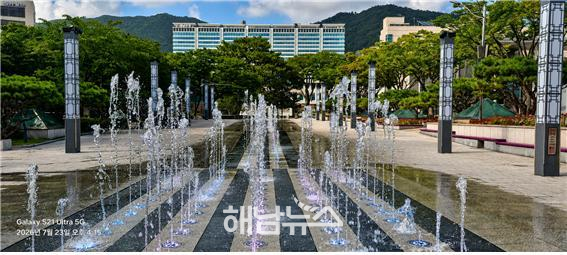 해남군 청사 전경 / 사진제공=해남뉴스 |
【해남=해남뉴스】 haenamnews@kakao.com
해남읍 시내를 걷는 주민들은 한여름 뜨겁게 달궈진 인도와 아스팔트 위에서 몸을 피할 그늘조차 제대로 찾기 어렵다. 코아루아파트와 정하에코하임, LG아파트 주변에는 보행자를 보호할 가로수가 사실상 없는 상태다. 해남군청을 비롯한 도심 주변에 남아 있는 몇 안 되는 가로수마저 가지가 과도하게 잘려 나가 여름철 그늘막 역할을 제대로 하지 못하고 있다.
이는 단순히 도시 미관이 부족하다는 문제가 아니다. 폭염이 일상적인 재난으로 바뀐 상황에서 가로수 그늘은 보행자의 건강과 생명을 보호하는 필수적인 안전시설이다. 그늘 한 점 없는 보행로를 걸어야 하는 노인과 어린이, 장애인, 임산부, 만성질환자에게 도심의 길은 생활공간이 아니라 견뎌야 하는 위험구간이 되고 있다.
해남군은 폭염 때마다 한낮 외출과 야외활동을 자제하고 충분한 휴식을 취하라고 당부한다. 그러나 군민들이 병원과 시장, 관공서, 버스정류장, 아파트를 오가는 길에는 잠시 쉴 만한 나무 그늘과 벤치조차 부족하다. 주민들에게 폭염을 조심하라고 말하면서 정작 안전하게 걸을 수 있는 환경을 조성하지 않는다면 이는 책임 있는 행정이라고 할 수 없다.
특히 해남군청 주변은 행정의 얼굴이자 많은 주민이 찾는 중심 생활권이다. 그런데 군청 주변의 몇 안 되는 가로수까지 수관이 크게 훼손될 정도로 전정됐다면 해남군의 가로수 관리 철학 자체를 묻지 않을 수 없다. 나무가 서 있다는 사실만으로 가로수의 기능이 유지되는 것은 아니다. 충분한 잎과 가지가 있어야 그늘을 만들고 복사열을 줄이며 보행자가 잠시 숨을 돌릴 공간을 제공할 수 있다.
가로수를 전선이나 교통표지판, 건물 또는 상가 간판을 가리는 장애물로만 여겨서는 안 된다. 불가피한 안전 전정은 필요하지만 수목의 생육과 그늘 기능을 잃게 할 정도의 일률적인 강전정은 재검토해야 한다. 특히 간판 가시성이나 민원 해결을 이유로 공공의 가로수가 지나치게 훼손됐다면, 이는 소수의 편의를 위해 다수 주민의 안전과 환경권을 희생한 결정이 될 수 있다.
더 심각한 문제는 코아루아파트와 정하에코하임, LG아파트 주변처럼 애초부터 가로수가 제대로 조성되지 않은 생활권이다. 아파트에는 많은 주민이 거주하고 노인과 어린이의 이동도 잦다. 주민들이 아파트를 나와 시장과 병원, 학교, 버스정류장으로 걸어가는 길에 가로수가 없다면 도시계획과 보행환경 조성 단계에서 기후 대응과 보행자 보호를 충분히 고려하지 못했다는 지적을 피하기 어렵다.
해남군은 ‘걷기 좋은 도시’나 ‘탄소중립 녹색도시’를 홍보하기에 앞서 군민이 실제로 걷는 길부터 살펴야 한다. 조형물과 화단을 설치하고 도로를 새로 포장하는 것만으로 보행환경이 개선되는 것은 아니다. 한여름에도 사람이 걸을 수 있는 길, 중간에 쉬어갈 수 있는 길, 나무와 자연을 느낄 수 있는 길을 만드는 것이 도시행정의 기본이다.
해남은 고령인구 비율이 높은 지역이다. 한낮에 10분만 걸어도 체력적 부담을 크게 느끼는 주민이 적지 않다. 햇볕을 피할 장소가 없는 보행로에서 주민이 온열질환 위험에 노출된다면 이를 개인의 건강관리 문제로 돌려서는 안 된다. 폭염 취약계층의 이동권을 보장하는 것은 자치단체가 책임져야 할 공공안전의 영역이다.
해남군은 코아루아파트·정하에코하임·LG아파트 주변과 해남군청·천변로·시장·병원·학교·버스정류장을 연결하는 주요 보행로의 가로수와 그늘시설 실태를 즉각 전수 조사해야 한다. 구간별 가로수 유무와 수종, 수관 폭, 그늘 형성 정도, 벤치와 음수시설 설치 현황을 확인해 ‘도심 그늘 공백지도’를 군민에게 공개할 필요가 있다.
과도하게 전정된 가로수에 대해서는 전정 시기와 사유, 작업 지시서, 시행업체, 예산, 감독 기록, 전문가 검토 여부를 밝혀야 한다. 수목별 생육 상태와 회복 가능성도 진단하고, 그늘 기능을 상실한 구간에는 보완 식재와 임시 그늘막을 설치해야 한다. 가로수가 없는 아파트 주변에는 보행 공간과 지하 매설물, 교통안전을 종합적으로 검토해 큰 그늘을 만들 수 있는 수종을 계획적으로 심어야 한다.
아울러 가로수 전정은 행정이나 업체의 편의에 따라 일률적으로 시행해서는 안 된다. 수목 전문가가 참여하는 전정 기준을 마련하고, 큰 가지를 자르는 강전정은 사전에 필요성과 대안을 검토하도록 해야 한다. 상가 간판이나 건물을 가린다는 민원이 제기될 때도 나무부터 자를 것이 아니라 간판 위치 조정과 최소한의 선택 전정 등 대안을 우선 검토해야 한다.
해남군의회도 관련 예산과 관리 실태를 점검해야 한다. 가로수 식재·전정·교체에 매년 얼마의 예산이 들어갔는지, 작업 뒤 현장 검수는 제대로 했는지, 수목 생육과 그늘 형성 효과를 평가했는지 확인해야 한다. 의회는 가로수를 단순한 경관 시설이 아닌 폭염 대응 기반시설로 관리하도록 관련 조례와 지침을 정비해야 한다.
도시는 자동차와 간판만을 위해 존재하지 않는다. 거리를 직접 걷는 사람, 특히 노인과 어린이, 보행 약자의 입장에서 도시를 설계해야 한다. 아파트 주변에는 가로수조차 없고, 군청 주변의 몇 안 되는 나무마저 앙상하게 잘려 있다면 해남군 행정은 주민의 발걸음과 고통을 제대로 헤아리지 못한 것이다.
폭염 속 그늘은 사치가 아니라 생존을 위한 최소한의 공공시설이다. 해남군은 형식적인 폭염 주의 당부를 되풀이할 것이 아니라 가로수가 사라진 보행로에 나무를 심고, 과도한 전정을 중단하며, 주민이 실제로 체감할 수 있는 ‘폭염 안전 그늘길’을 조성해야 한다. 군민의 마음을 헤아리는 행정은 바로 그늘 한 점을 지켜내는 일에서 시작된다.
Haenam News Editorial]
Not Even a Street Tree Near Apartment Complexes, While Trees Around the County Office Are Cut Back to Stumps—Does Haenam County Not See the Suffering of Pedestrians?
Virtually no street trees to protect pedestrians around Koaru, Jeongha Ecoheim, and LG apartment complexes
Even the few trees near Haenam County Office have been excessively pruned, severely reducing their shade
Older people, children, people with disabilities, and other vulnerable pedestrians exposed to danger on heat-baked sidewalks
Pedestrians’ “right to shade” pushed aside in favor of urban appearance and storefront visibility
Haenam promotes a walkable town while failing to provide enough greenery to protect those who actually walk
County government must conduct a comprehensive survey of urban street trees and publish neighborhood-level “shade gap maps”
Heat-safe shaded walking routes should connect apartment complexes, the county office, riverside roads, markets, hospitals, and bus stops
【Haenam=Haenam News】 haenamnews@kakao.com
Residents walking through downtown Haenam-eup during the summer struggle to find even a patch of shade where they can escape sidewalks and asphalt heated by the scorching sun. There are virtually no street trees to protect pedestrians around the Koaru, Jeongha Ecoheim, and LG apartment complexes. Even the few remaining trees around Haenam County Office and elsewhere in the town center have been so heavily pruned that they can no longer provide adequate summer shade.
This is not simply a matter of inadequate urban landscaping. As extreme heat increasingly becomes a routine disaster, shade from street trees is essential infrastructure that protects the health and lives of pedestrians. For older people, children, people with disabilities, pregnant women, and those with chronic health conditions, streets without a single patch of shade are no longer ordinary public spaces. They have become hazardous areas that must simply be endured.
Whenever a heat wave strikes, Haenam County advises residents to avoid going outside or engaging in outdoor activities during the hottest part of the day and to take sufficient breaks. Yet the routes residents must use to reach hospitals, markets, public offices, bus stops, and apartment complexes lack even basic tree shade and benches where they can rest.
Telling residents to protect themselves from extreme heat while failing to create an environment where they can walk safely cannot be considered responsible administration.
The area surrounding Haenam County Office is particularly important. It is the public face of the county administration and a central district visited by many residents. If even the few street trees around the county office have been pruned so severely that their crowns have been substantially damaged, then the county’s entire approach to street-tree management must be questioned.
The mere presence of a tree does not mean it is performing the function of a street tree. It needs sufficient foliage and branches to create shade, reduce radiant heat, and give pedestrians a place to pause and recover.
Street trees must not be treated merely as obstacles that block power lines, traffic signs, buildings, or shop signs. Pruning is sometimes necessary for safety, but uniform and severe pruning that destroys a tree’s growth and shade-providing function must be reconsidered.
If public street trees have been excessively cut back to improve storefront visibility or resolve complaints, such action may amount to sacrificing the safety and environmental rights of the majority for the convenience of a few.
An even more serious issue is found in residential areas such as the Koaru, Jeongha Ecoheim, and LG apartment complexes, where street trees were never properly established in the first place. Many people live in these complexes, and older residents and children frequently use the surrounding streets.
If residents cannot find street trees while walking from their apartments to markets, hospitals, schools, or bus stops, the county cannot avoid criticism that its urban planning and pedestrian-environment policies failed to adequately consider climate resilience and pedestrian safety.
Before promoting slogans such as a “walkable town” or a “carbon-neutral green city,” Haenam County must first examine the streets that residents actually use. Installing sculptures and flower beds or repaving roads does not by itself improve the pedestrian environment.
The basic responsibility of urban administration is to create streets where people can walk even in midsummer, rest along the way, and experience trees and nature as part of their daily lives.
Haenam has a high proportion of older residents. For many people, walking for even 10 minutes in the midday heat can be physically exhausting. When residents are exposed to the risk of heat-related illness because there is nowhere to escape the sun, the problem must not be dismissed as a matter of individual health management.
Guaranteeing safe mobility for people vulnerable to extreme heat is a matter of public safety for which the local government must take responsibility.
Haenam County must immediately conduct a comprehensive survey of street trees and shade facilities along major pedestrian routes connecting the Koaru, Jeongha Ecoheim, and LG apartment complexes with Haenam County Office, riverside roads, markets, hospitals, schools, and bus stops.
The county should examine the presence or absence of street trees, tree species, canopy width, actual shade coverage, and the availability of benches and drinking-water facilities in each area. Based on the findings, it should publish an “urban shade gap map” for residents.
For trees that have been excessively pruned, the county must disclose when and why the work was carried out, the relevant work orders, the contractor involved, the budget spent, inspection and supervision records, and whether tree experts were consulted.
Each tree should be assessed for its current health and capacity to recover. Areas that have lost their shade should receive supplementary planting and temporary shade structures. Around apartment complexes where street trees are absent, the county must examine pedestrian space, underground utilities, and traffic safety before systematically planting suitable species capable of developing broad canopies.
Street-tree pruning must not be carried out uniformly for the convenience of government departments or contractors. Clear standards involving arborists and other tree experts must be established, while severe pruning of large branches should require an advance review of its necessity and possible alternatives.
When complaints are raised that trees obstruct shop signs or buildings, the first response should not be to cut the trees. Alternatives such as relocating signs or carrying out minimal selective pruning should be considered first.
The Haenam County Council must also examine the related budgets and management practices. It should determine how much has been spent each year on planting, pruning, and replacing street trees, whether post-work inspections were properly conducted, and whether the trees’ health and shade-producing effects were evaluated.
The council should revise relevant ordinances and guidelines so that street trees are managed not simply as landscaping features, but as essential infrastructure for responding to extreme heat.
A town does not exist solely for cars and commercial signs. It must be designed from the perspective of those who walk its streets—especially older people, children, and pedestrians with limited mobility.
If there are no street trees around apartment complexes and even the few trees near the county office have been cut back to bare trunks, then the Haenam County administration has failed to understand the daily journeys and suffering of its residents.
Shade during extreme heat is not a luxury. It is the minimum public infrastructure needed for survival.
Instead of repeatedly issuing routine heat-wave warnings, Haenam County must plant trees along streets where greenery has disappeared, stop excessive pruning, and establish “heat-safe shaded walking routes” that residents can genuinely experience and use.
An administration that truly understands its residents begins by protecting even a single patch of shade.
 해남뉴스 박충배 편집 및 논설위원 news@hbcnews.kr