2026.08.10 (월) 14:18



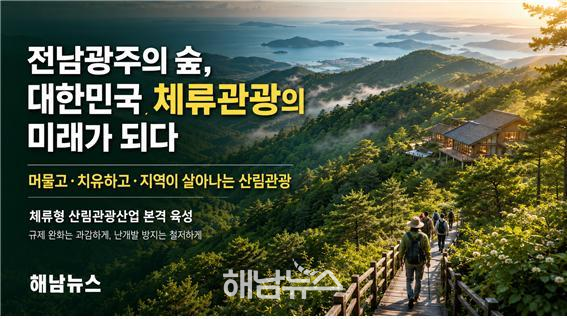 전남광주의 숲 / 사진제공=AI호남뉴스 |
전남광주통합특별시가 전체 면적의 55%를 차지하는 산림자원을 관광·휴양·치유산업과 연계해 지역의 새로운 성장동력으로 육성한다.
전남광주통합특별시는 출범과 함께 도입된 ‘산림이용진흥지구’ 지정 제도를 본격적으로 추진하기 위해 오는 8월 31일까지 22개 시·군을 대상으로 지정 대상지 수요조사를 실시한다고 밝혔다.
산림이용진흥지구는 ‘전남광주통합특별시 설치를 위한 특별법’에 따라 산림 관련 규제를 완화해 산림관광과 휴양, 치유, 레저산업을 육성할 수 있도록 마련된 제도다.
지구로 지정되면 보전산지에도 산림이용진흥사업에 필요한 시설을 설치할 수 있다. 평균경사도와 표고 등 산지전용 허가기준이 완화되고 대체산림자원조성비도 감경받거나 면제받을 수 있다.
특별시는 이러한 특례를 활용해 산림휴양시설과 산림레포츠시설, 체험시설, 숙박시설 등 방문객이 지역에 머물며 관광과 소비를 할 수 있는 체류형 산림관광 기반을 조성할 방침이다.
이번 수요조사 대상은 사업면적이 3만㎡ 이상이면서 전체 사업부지 가운데 산지면적이 50% 이상인 지역이다. 산림자원과 자연경관의 활용 가능성, 관광객 유치 효과, 지역경제 파급력 등이 주요 검토 대상이 될 것으로 보인다.
전남광주특별시는 시·군에서 제출한 후보지를 대상으로 전문가 의견과 사업 타당성 검토를 거쳐 산림이용진흥지구 지정 가능성을 판단할 계획이다.
지정 가능성이 높은 대상지는 지역 여건에 맞춰 산림휴양·관광시설, 산림레포츠와 체육시설, 체험·숙박시설, 지역개발사업 등으로 구체화한다.
권역별 자연환경과 관광자원을 반영한 차별화 전략도 추진한다.
남해안·다도해 권역은 바다와 섬, 해안 산림을 연결한 해양·산림 복합관광지로 조성하고, 지리산·백운산 권역은 생태관광과 산림치유를 중심으로 한 산림복지 거점으로 육성할 예정이다.
전남광주특별시 전체 면적 가운데 산림은 약 70만㏊로 55%를 차지한다. 특별시는 산림이용진흥지구가 본격적으로 지정되면 민간투자 유치와 관광객 체류시간 확대, 일자리 창출, 숙박·음식·지역특산품 소비 증가 등의 효과가 나타날 것으로 기대하고 있다.
다만 규제 완화가 산림 훼손이나 난개발로 이어지지 않도록 개발 가능 구역과 보전 구역을 명확히 구분해야 한다는 지적도 나온다. 후보지 선정 과정에서 주민 의견을 충분히 수렴하고 환경 훼손 방지대책과 개발이익의 지역 환원 방안도 함께 마련해야 한다.
특히 산림이용진흥지구 지정 이후 민간사업자의 사업 중단이나 투자 지연으로 훼손된 부지가 장기간 방치되지 않도록 사업자의 재정 능력과 운영계획, 원상복구 방안 등을 사전에 검증할 필요가 있다.
강신희 전남광주통합특별시 산림자원과장은 “산림이용진흥지구는 단순한 개발사업이 아니라 산림의 생태적 가치를 지키면서 관광과 휴양, 지역경제를 함께 발전시키는 새로운 지역발전 모델”이라고 설명했다.
이어 “전남광주의 풍부한 산림자원을 대한민국을 대표하는 산림관광 모델로 발전시켜 지역경제에 새로운 활력을 불어넣겠다.”고 말했다.
전남광주특별시는 수요조사 결과와 후보지별 타당성 검토 내용, 최종 대상지 선정 기준을 투명하게 공개하고 개발 과정에서도 산림의 공익적 기능과 지역 주민의 권익이 훼손되지 않도록 관리·감독을 강화해야 할 것으로 보인다.
Jeonnam-Gwangju Special Metropolitan City to Ease Forest Regulations and Foster Stay-Based Forest Tourism Industry
Demand survey underway in 22 cities and counties through August 31 to identify candidate Forest Utilization Promotion Zones
Eligible areas must cover at least 30,000 square meters, with forests accounting for 50 percent or more
Special provisions include facilities in conservation forests, relaxed land-conversion standards and reduced charges
Southern coast and Dadohae region to link marine tourism with forest recreation
Jirisan and Baegunsan areas to become ecological and healing tourism hubs
Experts to assess feasibility of recreation, leisure sports, experiential and accommodation projects
“Private investment and economic revitalization are needed, but safeguards against reckless development must also be established”
【JEONNAM-GWANGJU=HAENAM NEWS】 haenamnews@kakao.com
The Jeonnam-Gwangju Integrated Special Metropolitan City government is seeking to transform its extensive forest resources, which account for 55 percent of its total area, into a new engine of regional growth by linking them with tourism, recreation and healing industries.
The special metropolitan government announced that it will conduct a demand survey in 22 cities and counties through August 31 to identify potential sites for designation as Forest Utilization Promotion Zones, a system introduced upon the launch of the integrated city.
The Forest Utilization Promotion Zone system was established under the Special Act on the Establishment of the Jeonnam-Gwangju Integrated Special Metropolitan City. It provides an institutional framework for easing forest-related regulations and fostering forest tourism, recreation, healing and leisure industries.
Once an area is designated as a promotion zone, facilities necessary for forest utilization projects may be installed even within conservation forestland. Special provisions will also apply, including relaxed approval standards for forestland conversion based on average slope and elevation, as well as reductions or exemptions from charges imposed for the creation of alternative forest resources.
Using these regulatory exemptions, the city plans to establish infrastructure for stay-based forest tourism, including forest recreation facilities, forest leisure-sports venues, experiential programs and accommodations, encouraging visitors to remain in the region longer and increase local spending.
To qualify for the survey, a proposed project site must cover at least 30,000 square meters, with forestland accounting for at least 50 percent of the total area. The city will primarily assess the potential use of forest resources and natural scenery, the ability to attract visitors and the expected impact on the local economy.
Candidate sites submitted by the cities and counties will be reviewed by experts, who will assess their feasibility and determine whether they are suitable for designation as Forest Utilization Promotion Zones.
Promising sites will then be developed into projects tailored to local conditions, including forest recreation and tourism facilities, forest leisure-sports and athletic facilities, experiential and accommodation facilities, and broader regional development initiatives.
The city will also pursue differentiated development strategies reflecting the natural environment and tourism resources of each region.
The southern coast and Dadohae region will be developed as a combined marine and forest tourism destination connecting the sea, islands and coastal forests. The Jirisan and Baegunsan areas, meanwhile, will be fostered as forest welfare hubs centered on ecological tourism and forest-based healing.
Forests cover approximately 700,000 hectares, or 55 percent of the total area of Jeonnam-Gwangju Special Metropolitan City. The city expects the designation of Forest Utilization Promotion Zones to attract private investment, extend visitors’ stays, create jobs and increase spending on accommodations, food and local specialty products.
However, concerns have been raised that regulatory easing could lead to forest destruction or uncontrolled development. The city will therefore need to clearly separate areas open to development from those requiring conservation.
It must also sufficiently consult local residents during the selection process and establish measures to prevent environmental damage and ensure that development benefits are returned to local communities.
In particular, the financial capacity, operating plans and site-restoration measures of private developers should be thoroughly reviewed in advance. Such safeguards are necessary to prevent damaged land from being abandoned for long periods if a project is suspended or investment is delayed after designation.
“The Forest Utilization Promotion Zone is not simply a development project. It is a new regional development model designed to protect the ecological value of forests while advancing tourism, recreation and the local economy,” said Kang Shin-hee, director of the Forest Resources Division of Jeonnam-Gwangju Integrated Special Metropolitan City.
“We will develop Jeonnam-Gwangju’s abundant forest resources into a leading forest tourism model for Korea and inject new vitality into the regional economy,” Kang added.
The city should transparently disclose the results of the demand survey, the feasibility assessment of each candidate site and the criteria used to select the final locations. It must also strengthen oversight throughout the development process to protect the public functions of forests and the rights and interests of local residents.
 해남뉴스 박충배 편집 및 논설위원 news@hbcnews.kr