2026.08.06 (목) 06:57




 고천암 민원 해법 이번에는 풀릴 수 있을까 / 사진제공=AI호남뉴스 |
해남 고천암호의 수위 조절을 둘러싼 농민과 김 양식 어민의 오랜 갈등이 다시 지역 현안으로 떠올랐다. 집중호우 때 간척농지 침수를 막기 위해 담수를 바다로 내보내야 하지만, 대량의 민물과 부유쓰레기가 김 양식장으로 흘러가면 어민 피해로 이어질 수 있기 때문이다.
고천암 방조제는 농경지를 보호하면서 담수호 수위를 관리하는 핵심 농업기반시설이다. 그러나 집중호우로 담수량이 급격히 늘어나면 저지대 농경지가 침수될 수 있어 한국농어촌공사는 배수갑문을 열어 수위를 낮춰야 한다.
현장에서 제시된 설명에 따르면 고천암 배수갑문의 최대 방류능력은 초당 약 700톤 규모다. 한국농어촌공사 측은 2025년 한 해 수위조절을 위한 방류가 약 120차례 이뤄졌다고 설명한 것으로 전해졌다.
다만 이 수치는 배수갑문 조작일지와 방류 시간, 회차별 방류량을 포함한 공식 자료를 통해 다시 확인할 필요가 있다. ‘초당 700톤’ 역시 모든 수문을 최대한 개방했을 때의 시설상 방류능력인지, 실제 평균 방류량인지 구분해 공개해야 한다.
비가 많이 오면 농지가 잠기고, 물을 빼면 김 양식장이 위험하다
갈등의 핵심은 고천암호 안팎의 물 사정이 정반대라는 데 있다.
집중호우로 담수호 수위가 올라가면 약 550만 평으로 알려진 고천암 간척지와 주변 저지대 농경지가 침수 위험에 놓인다. 농민들은 벼와 밭작물을 지키려면 비가 오기 전 선제적으로 수위를 낮추고, 호우 때는 신속하게 물을 빼야 한다고 요구한다.
그러나 바다의 조위가 높은 만조 때는 수문을 열어도 자연배수가 어렵거나 방류 효율이 크게 떨어진다. 방류할 수 있는 시간이 썰물 전후로 제한되면서 짧은 시간에 많은 물을 내보내야 하는 구조다.
반면 고천암 방조제 바깥 해역은 해남 김 산업의 중요한 생산기반이다. 특히 갯벌에 지주를 세워 김발을 설치하는 지주식 김 양식은 친환경적이고 품질이 우수한 전통 양식 방식으로 평가된다. 현장에서는 관련 양식면적이 약 1천㏊에 이른다는 설명이 나왔다.
김은 바닷물의 염분과 영양염, 수온 변화에 민감하다. 가을철 채묘와 초기 생육기에 대량의 담수가 한꺼번에 유입되면 염분이 급격히 낮아지고 탁도가 높아져 김의 생육이 저하될 수 있다.
더구나 담수호와 유입 하천에 쌓여 있던 폐비닐, 스티로폼, 갈대, 생활쓰레기와 각종 부유물이 방류수와 함께 바다로 흘러가면 김발 훼손과 어장 오염으로 이어질 수 있다는 것이 어민들의 주장이다.
2010년 김 양식장 황백화…갈등은 16년째 반복
고천암 담수 방류를 둘러싼 갈등은 최근에 시작된 문제가 아니다.
2010년에는 고천암 하류의 해남 김 양식장 약 3천㏊에서 김 엽체가 누렇게 변하는 황백화 현상이 발생했다. 당시 어민들은 사전 통보 없이 이뤄진 담수 방류를 피해 원인으로 지목했으나, 방류와 황백화 사이의 직접적인 인과관계가 과학적으로 완전히 규명됐다고 단정하기는 어렵다.
당시 해남 수산기술사무소는 김 엽체와 해수를 채취해 원인 조사에 나섰고, 언론 보도에서는 피해 양식장의 조기산 김 생산액이 연간 50억 원 이상이라고 소개됐다. 연합뉴스 당시 보도
반복되는 민원에 따라 한국농어촌공사는 2011년 김 양식 기간에 호수 바닥의 오염 가능성이 큰 물보다 비교적 수질이 나은 상층수를 먼저 내보낼 수 있도록 비상수문을 설치했다. 당시 목포MBC도 상층수 배출시설 설치와 운영 방침을 보도했다. 목포MBC 보도
하지만 상층수 배출시설만으로 집중호우와 만조, 대량 방류가 겹치는 상황을 모두 해결하기는 어렵다는 지적이 나온다.
박지원 의원·지역 정치권, 국회방송 현장 점검
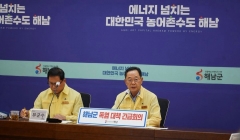
고천암 농어민 갈등은 최근 국회방송 프로그램 ‘민심탐험대, 윤택이 뛴다’의 해남 현장 의제로도 다뤄졌다. 박지원 국회의원과 방송인 윤택 등이 고천암 방조제를 찾아 농민과 어민, 한국농어촌공사의 입장을 듣고 해법을 모색했다는 지역언론 보도가 나왔다. 신문고뉴스 관련 보도
현장에는 박지원 의원을 비롯해 더불어민주당 해남·완도·진도 지역 관계자와 민찬혁·김미숙·한종천 해남군의원, 김성일 전남광주통합특별시의원, 한국농어촌공사 관계자 등이 참석한 것으로 전해졌다.
다만 참석자의 당내 직책과 현재 선출직 직함은 2026년 지방선거 이후 달라졌을 가능성이 있어 공식 참석자 명단을 기준으로 최종 확인해야 한다. 민찬혁·김미숙·한종천 의원은 2026년 민주당 해남군의원 후보 경선을 거쳐 의정활동에 나선 인물들이다.
한국농어촌공사 해남·완도지사 관계자는 해남에서 접수되는 농업 관련 민원의 상당 부분이 배수와 침수, 농업기반시설 문제에 집중돼 있다며 시설 개선의 필요성을 설명한 것으로 알려졌다.
박지원 의원과 참석자들은 농민과 어민 어느 한쪽에 희생을 요구하는 임시방편이 아니라 배수능력을 근본적으로 높이고 오염물의 해양 유입을 차단하는 국가사업이 필요하다는 데 뜻을 모은 것으로 전해졌다.
900억 원은 ‘확보 예산’ 아닌 ‘필요 사업비’로 구분해야
현장에서는 고천암의 구조적인 문제를 해결하려면 약 900억 원 규모의 예산 확보가 시급하다는 주장이 제기됐다.
그러나 현재 공개된 자료만으로는 900억 원이 정부 심의를 통과한 확정사업비인지, 배수갑문 확장과 배수장 증설 등을 포함한 지역의 추정 요구액인지 명확하지 않다. 따라서 정치권과 한국농어촌공사는 사업명과 총사업비, 국비 반영 단계, 기본조사 및 예비타당성 검토 여부를 공개해야 한다.
고천암 일대에는 이미 배수개선사업이 진행돼 왔다. 2018년에는 총사업비 185억 원을 들여 배수장과 배수문, 배수로 등을 정비하는 사업이 추진됐으며, 2024년에는 화산면 고천암2지구가 총사업비 138억 원 규모의 신규 착수지구에 포함됐다. 고천암 배수개선사업 보도, 2024년 신규사업 보도
따라서 추가로 거론된 900억 원이 기존 사업과 별개인지, 여러 배수개선지구를 합산한 금액인지부터 분명히 해야 한다.
해법은 ‘방류 여부’가 아니라 물관리 체계 전면 개선
전문가와 현장 관계자들의 의견을 종합하면 고천암 문제는 단순히 수문을 열 것인지 닫을 것인지의 선택으로 해결하기 어렵다. 다음과 같은 종합대책이 필요하다.
첫째, 배수갑문 조작기록을 공개해야 한다. 방류 일시와 시간, 수문 개방 폭, 예상·실제 방류량, 호수 수위, 당시 조위와 강수량을 실시간 또는 월별로 공개하면 불필요한 불신을 줄일 수 있다.
둘째, 농민·어민·해남군·한국농어촌공사·수산전문가가 참여하는 ‘고천암 물관리 상설협의회’를 구성해야 한다. 김 채묘·양식 기간과 벼농사 시기, 기상예보, 조석표를 함께 반영한 계절별 수위관리 기준이 필요하다.
셋째, 폭우 직전에 한꺼번에 방류하는 방식에서 벗어나 기상예보를 활용한 선제적 소량 분산방류를 확대해야 한다. 다만 가뭄과 농업용수 확보 문제까지 함께 고려해야 한다.
넷째, 배수갑문 앞에 부유쓰레기 차단막과 자동 수거시설을 설치해야 한다. 방류 전후에는 담수와 해수의 염분·탁도·영양염·화학적산소요구량 등을 측정하고 결과를 주민에게 공개해야 한다.
다섯째, 기존 상층수 배출시설의 처리능력을 점검하고 필요하면 저층 오염수와 상층수를 분리해 배출할 수 있는 선택취수시설을 보강해야 한다.
여섯째, 만조 때 자연배수가 어려운 문제를 해결하기 위해 배수펌프장 증설, 배수갑문 확장 또는 보조 배수시설 설치의 경제성과 환경성을 검토해야 한다.
일곱째, 방류와 피해 사이의 인과관계를 판단할 공동조사 기준을 마련해야 한다. 방류 전후의 염분 변화와 김 생육상태를 과학적으로 기록해야 농민과 어민 모두가 수용할 수 있는 피해조사와 보상체계를 만들 수 있다.
고천암호는 농민에게는 생명과 같은 농업용수원이자 홍수조절시설이고, 어민에게는 김 양식장과 맞닿아 있는 거대한 담수호다. 여기에 철새도래지와 갈대습지라는 생태적 가치까지 얽혀 있다.
정치권이 현장을 찾는 데 그쳐서는 안 된다. 박지원 의원과 전남광주통합특별시, 해남군, 한국농어촌공사는 약 900억 원으로 거론된 사업의 세부 내역과 국비 확보 일정을 공개하고, 방류기록과 수질조사 결과를 주민 앞에 내놓아야 한다.
농경지를 지키기 위해 바다를 희생해서도 안 되고, 김 양식장을 보호하기 위해 농경지가 잠기도록 방치해서도 안 된다. 고천암 갈등의 해법은 어느 한쪽의 양보가 아니라 물길과 시설, 오염관리를 함께 바꾸는 국가 차원의 종합대책에 있다
Farmers and Fishers Clash Over Survival Along Gocheonam Waterway…“Comprehensive KRW 90 Billion Solution Must Be Accelerated”
Heavy rainfall raises water levels in Gocheonam Lake, threatening 18.2 million square meters of reclaimed farmland
Drainage sluice gates can reportedly discharge up to approximately 700 metric tons per second, but gravity drainage is restricted at high tide
Korea Rural Community Corporation says water was released approximately 120 times for level control in 2025
Freshwater and floating debris entering coastal waters during the autumn laver season may damage stake-net farms
Laver yellowing controversy followed previous discharges; emergency gate installed to release upper-layer water
Rep. Park Jie-won, local politicians, residents and the Korea Rural Community Corporation seek on-site solutions through National Assembly TV
“The sea must not be sacrificed to prevent farmland flooding, nor should farmland be allowed to flood to protect laver farms”
Securing approximately KRW 90 billion in state funding for expanded sluice gates, additional pumping stations and pollution-control facilities remains a key task
【Haenam=AI Honam News】 aihnnews@kakao.com
The long-running dispute between farmers and laver growers over water-level management at Gocheonam Lake in Haenam has once again emerged as a major regional issue.
During torrential rainfall, freshwater must be discharged into the sea to protect reclaimed farmland from flooding. However, fishers warn that a sudden influx of freshwater and floating debris could severely damage coastal laver farms.
The Gocheonam seawall is a vital piece of agricultural infrastructure that protects farmland while regulating the water level of the freshwater lake. When heavy rainfall causes the lake to rise rapidly, the Korea Rural Community Corporation must open the drainage sluice gates to lower the water level and prevent flooding in low-lying farmland.
According to explanations presented at the site, the sluice gates have a maximum discharge capacity of approximately 700 metric tons per second. The Korea Rural Community Corporation reportedly said that water-level control discharges took place approximately 120 times in 2025.
These figures, however, must be verified through official records showing the dates, duration and volume of each discharge. Authorities must also clarify whether “700 metric tons per second” refers to the facility’s theoretical maximum capacity when all gates are fully open or to its average discharge rate under actual operating conditions.
When It Rains Heavily, Farmland Floods; When Water Is Released, Laver Farms Are Put at Risk
At the heart of the conflict is the fact that water conditions inside and outside Gocheonam Lake require opposite responses.
When torrential rainfall raises the lake level, approximately 18.2 million square meters—widely described locally as 5.5 million pyeong—of reclaimed and surrounding low-lying farmland may face flooding. Farmers argue that the lake level should be lowered preemptively before heavy rain and that water must be discharged quickly during downpours to protect rice paddies and other crops.
However, when the sea level is high at high tide, opening the gates does not guarantee effective gravity drainage. The discharge window is largely limited to periods around low tide, making it necessary to release large volumes of water within a relatively short period.
Outside the Gocheonam seawall lies an important production base for Haenam’s laver industry. In particular, stake-net laver farming—in which poles are installed in tidal flats to support laver nets—is regarded as a traditional, environmentally friendly method that produces high-quality laver. According to information presented at the site, the relevant farming area covers approximately 1,000 hectares.
Laver is highly sensitive to changes in salinity, nutrients and water temperature. If a large volume of freshwater enters the sea during autumn seeding and the early growth period, salinity may fall sharply while turbidity rises, potentially slowing or damaging laver growth.
Fishers also argue that discarded plastic sheeting, Styrofoam, reeds, household waste and other floating materials accumulated in the lake and its tributaries can be swept into the sea with discharged water, damaging laver nets and polluting fishing grounds.
Laver Yellowing Reported in 2010…Conflict Has Continued for 16 Years
The dispute over freshwater releases from Gocheonam did not begin recently.
In 2010, laver fronds reportedly turned yellow across approximately 3,000 hectares of farms downstream from Gocheonam. At the time, fishers blamed an unannounced freshwater discharge. However, it would be premature to conclude that a direct scientific causal link between the release and the yellowing was fully established.
The Haenam Fisheries Technology Office collected laver samples and seawater to investigate the cause. Media reports at the time said the affected farms produced more than KRW 5 billion worth of early-season laver annually.
In response to repeated complaints, the Korea Rural Community Corporation installed an emergency sluice gate in 2011. The facility was intended to release relatively cleaner upper-layer water during the laver farming season instead of potentially contaminated water from the bottom of the lake. Mokpo MBC also reported on the installation and planned operation of the upper-layer discharge facility.
However, critics say this facility alone cannot resolve situations in which torrential rainfall, high tide and the need for large-scale discharges occur simultaneously.
Rep. Park Jie-won and Local Political Leaders Conduct National Assembly TV Site Inspection
The conflict between Gocheonam farmers and fishers was recently featured as a local issue on the National Assembly TV program Exploring Public Sentiment: Yoon Taek Takes Action.
Regional media reported that Rep. Park Jie-won and broadcaster Yoon Taek visited the Gocheonam seawall to hear the positions of farmers, fishers and the Korea Rural Community Corporation and to explore possible solutions.
Those reportedly present included Rep. Park, officials affiliated with the Democratic Party’s Haenam–Wando–Jindo regional organization, Haenam County Council members Min Chan-hyeok, Kim Mi-sook and Han Jong-cheon, Jeonnam–Gwangju Special Metropolitan City Council member Kim Seong-il, and representatives of the Korea Rural Community Corporation.
However, some party positions and elected offices may have changed following the 2026 local elections. The final list of attendees should therefore be verified against official records. Min Chan-hyeok, Kim Mi-sook and Han Jong-cheon entered council activities after participating in the Democratic Party’s 2026 primary process for Haenam County Council candidates.
A representative of the corporation’s Haenam–Wando branch reportedly explained that a substantial proportion of agricultural complaints received in Haenam involve drainage, flooding and agricultural infrastructure, underscoring the need for facility improvements.
Rep. Park and other participants reportedly agreed that a national-level project was necessary to fundamentally improve drainage capacity and prevent pollutants from entering the sea, instead of imposing temporary sacrifices on either farmers or fishers.
KRW 90 Billion Must Be Identified as an Estimated Requirement, Not Funding Already Secured
At the site, participants argued that approximately KRW 90 billion must urgently be secured to address Gocheonam’s structural problems.
Based on currently available information, however, it remains unclear whether this amount is a confirmed project budget that has passed government review or a locally estimated funding request covering expanded sluice gates, additional drainage pumping stations and related improvements.
Political leaders and the Korea Rural Community Corporation must therefore disclose the project name, total estimated cost, current stage of central-government funding review, and whether preliminary studies or feasibility assessments have been conducted.
Drainage improvement projects have already been implemented in the Gocheonam area. In 2018, a KRW 18.5 billion project was launched to upgrade pumping stations, drainage gates and channels. In 2024, Gocheonam District No. 2 in Hwasan-myeon was selected as a new project area with an estimated total cost of KRW 13.8 billion.
Authorities must first clarify whether the additional KRW 90 billion proposal is separate from those projects or represents the combined cost of several drainage-improvement districts.
The Solution Is Not Simply Whether to Release Water, but to Overhaul the Entire Water-Management System
Based on the views of experts and local stakeholders, the Gocheonam dispute cannot be resolved simply by deciding whether to open or close the sluice gates. A comprehensive plan should include the following measures.
First, sluice-gate operation records must be made public. Disclosure of discharge dates, operating hours, gate openings, estimated and actual discharge volumes, lake levels, tides and rainfall—either in real time or through monthly reports—would help reduce unnecessary mistrust.
Second, a permanent Gocheonam Water Management Council should be established with farmers, fishers, Haenam County, the Korea Rural Community Corporation and fisheries experts. Seasonal water-level standards must reflect laver seeding and cultivation periods, the rice-growing calendar, weather forecasts and tide tables.
Third, authorities should move away from releasing large volumes of water immediately before torrential rainfall and instead expand preemptive, small-scale and distributed discharges based on weather forecasts. Any such approach must also account for drought risks and the need to secure agricultural water.
Fourth, floating-waste barriers and automatic collection systems should be installed in front of the drainage sluice gates. Before and after each discharge, authorities should measure freshwater and seawater salinity, turbidity, nutrient levels and chemical oxygen demand, and disclose the results to residents.
Fifth, the capacity of the existing upper-layer discharge facility should be inspected. If necessary, a selective intake system should be added so that upper-layer water can be discharged separately from potentially contaminated bottom water.
Sixth, authorities should evaluate the economic and environmental feasibility of expanding drainage pumping stations, enlarging the sluice gates or installing auxiliary drainage facilities to overcome the limitations of gravity drainage at high tide.
Seventh, a joint scientific standard must be established for determining whether a discharge caused damage. Salinity changes and laver growth conditions should be systematically recorded before and after releases so that both farmers and fishers can accept the findings of damage investigations and any resulting compensation system.
For farmers, Gocheonam Lake is both a vital agricultural water source and a flood-control facility. For fishers, it is a vast freshwater body directly connected to their laver farms. The area also has important ecological value as a migratory bird habitat and reed wetland.
Political leaders must do more than visit the site. Rep. Park Jie-won, the Jeonnam–Gwangju Special Metropolitan City government, Haenam County and the Korea Rural Community Corporation must disclose the detailed components of the proposed KRW 90 billion project, the timetable for securing state funding, sluice-gate operation records and water-quality survey results.
The sea must not be sacrificed to prevent farmland from flooding. Nor should farmland be allowed to flood to protect laver farms.
The answer to the Gocheonam conflict lies not in forcing one side to yield, but in a comprehensive national-level project that improves the waterway, drainage infrastructure and pollution-control system together.
 해남뉴스 박충배 편집 및 논설위원 news@hbcnews.kr