2026.03.20 (금) 05:35




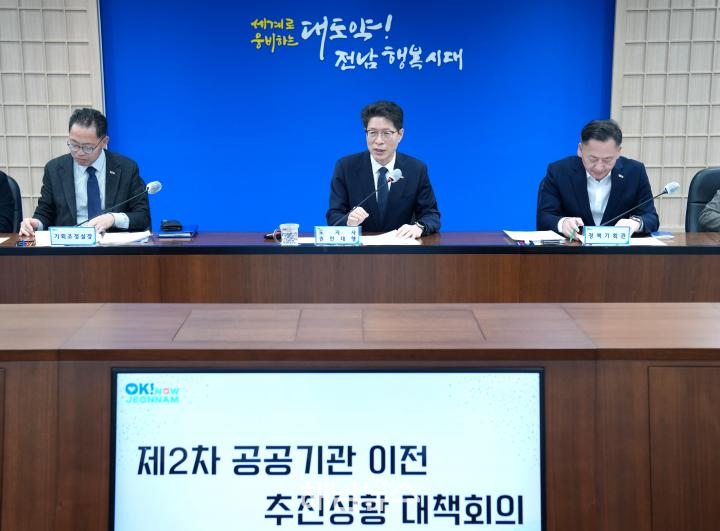 제2차 공공기관 이전 추진상황 보고회 / 사진제공=전라남도 |
전라남도가 전남·광주 통합특별시 출범을 앞두고 제2차 공공기관 이전 유치를 위한 전략 점검에 나섰다.
단순한 기관 이전을 넘어 지역 산업과 경제 구조를 재편할 수 있는 핵심 기회로 보고 선제 대응에 나선 것이다.
전라남도는 3월 18일 도청 서재필실에서 황기연 도지사 권한대행 주재로 ‘제2차 공공기관 이전 추진상황 대책회의’를 열고 정부의 공공기관 이전 추진 현황을 공유하는 한편, 지역 산업과 연계한 맞춤형 유치 전략을 논의했다.
이번 논의는 오는 7월 출범 예정인 전남·광주 통합특별시의 핵심 현안과 직결된 사안으로, 양 시·도는 이미 공동 대응 체계를 구축한 상태다. 전남도와 광주시는 에너지·환경, 농수산, 인공지능(AI) 등 첨단산업, 문화예술, 사회서비스 등 5개 분야를 중심으로 공공기관 유치 전략을 마련하고, 이를 바탕으로 정부 정책에 선제적으로 대응하고 있다.
유치 대상 기관은 농수협중앙회, 한국지역난방공사, 한국마사회, 한국환경공단, 한국공항공사 등 총 40곳으로, 각 기관의 기능과 지역 산업을 연결하는 전략적 접근이 핵심이다.
이는 단순히 기관을 이전받는 수준을 넘어, 해당 기관이 지역 산업 성장의 거점 역할을 하도록 유도하겠다는 구상이다.
이날 회의에서는 제1차 공공기관 이전의 성과를 분석하고, 제2차 이전을 위한 입지 논리와 정책 근거를 보강하는 데 중점을 뒀다.
특히 전남·광주가 공동으로 설정한 목표 기관에 대해 보다 설득력 있는 이전 논리를 마련하고, 정부와 공공기관을 대상으로 한 대응 전략을 구체화하기로 했다.
전라남도는 향후 단계별 전략도 마련했다.
지방선거 이전에는 공직선거법 범위 내에서 카드뉴스와 리플릿, 기관 현황 자료집 등을 제작해 공공기관 이전 필요성과 당위성을 알릴 계획이다.
이후 지방선거가 끝나면 통합특별시민 유치위원회를 발족하고, 대규모 결의대회와 언론 기고, 공공기관 노조 대상 팸투어, 대정부 건의 등을 통해 유치 활동을 본격화할 방침이다.
황기연 권한대행은 회의에서 “행정통합 지역에 대한 정부의 공공기관 이전 우대 방침을 적극 활용해야 한다.”며 “각 실국이 중심이 되어 정부와 공공기관과의 소통을 강화하고, 지역에 파급력이 큰 핵심 기관이 이전될 수 있도록 최선을 다해달라”고 강조했다.
이번 제2차 공공기관 이전은 전남·광주 통합특별시의 성공 여부를 가를 중요한 분기점으로 평가된다.
공공기관 이전이 지역 산업과 일자리 창출, 인구 유입까지 이어지는 구조적 변화를 동반하는 만큼, 향후 유치 성과에 따라 지역의 중장기 성장 경로가 크게 달라질 것으로 전망된다.
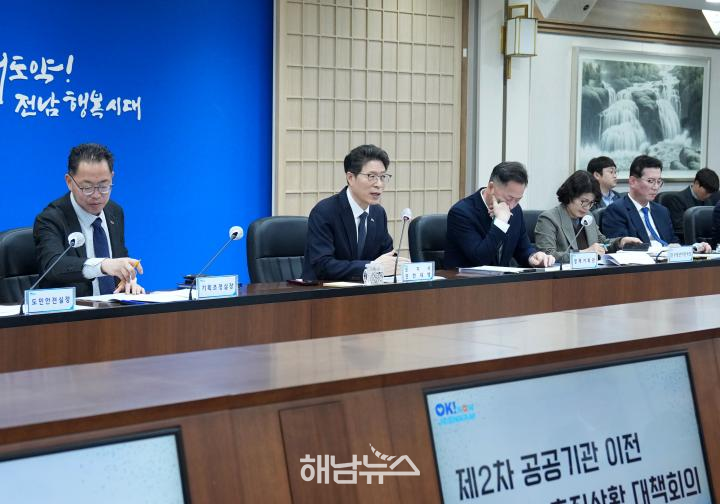 제2차 공공기관 이전 추진상황 보고회 / 사진제공=전라남도 |
**“Attracting 40 Public Institutions Will Decide Jeonnam’s Future”…
Strategy Gains Momentum Ahead of Integrated Special City Launch**
【Jeonnam = Haenam News】 haenamnews@kakao.com
Jeollanam-do has begun reviewing its strategy to attract public institutions as part of the second phase of the national relocation plan, ahead of the launch of the integrated Gwangju–Jeonnam Special City. The province is taking a proactive approach, viewing the relocation not merely as an administrative shift, but as a critical opportunity to restructure regional industries and the broader economic landscape.
On March 18, Jeollanam-do held a strategic response meeting at the Seojaepil Hall of the provincial government building, chaired by Acting Governor Hwang Gi-yeon. During the meeting, officials shared updates on the central government’s relocation policy and discussed tailored attraction strategies linked to regional industries.
This initiative is directly tied to the upcoming launch of the integrated special city scheduled for July. Jeonnam and Gwangju have already established a joint response framework, developing a coordinated strategy centered on five key sectors: energy and environment, agriculture and fisheries, advanced industries such as artificial intelligence (AI), culture and arts, and social services. The strategy aims to proactively align with national policy directions.
The targeted institutions include major national organizations such as the National Agricultural Cooperative Federation (NongHyup), Korea District Heating Corporation, Korea Racing Authority, Korea Environment Corporation, and Korea Airports Corporation, among a total of 40 institutions. The core strategy is to connect each institution’s function with regional industries, transforming them into growth hubs rather than merely relocating offices.
At the meeting, officials also analyzed the outcomes of the first phase of public institution relocation and focused on strengthening the rationale and policy basis for the second phase. In particular, Jeonnam and Gwangju agreed to refine persuasive arguments for each target institution and to develop more concrete engagement strategies with both the central government and the institutions themselves.
Jeollanam-do has also outlined a phased approach moving forward. Prior to the local elections, the province plans to produce promotional materials such as card news, leaflets, and institutional data booklets within the scope permitted by election law, in order to raise awareness of the necessity and justification for relocation. After the elections, it intends to establish a Special City Citizens’ Attraction Committee and launch full-scale campaigns, including large-scale rallies, media contributions, familiarization tours for labor unions of public institutions, and formal proposals to the central government.
Acting Governor Hwang Gi-yeon emphasized during the meeting, “We must actively leverage the government’s preferential policy for relocating public institutions to regions undergoing administrative integration.” He added, “Each department must strengthen communication with the central government and public institutions to ensure that key institutions with significant regional impact are successfully relocated.”
The second phase of public institution relocation is widely seen as a crucial turning point that will determine the success of the integrated Gwangju–Jeonnam Special City. As such relocations are expected to drive structural changes—including industrial development, job creation, and population inflow—the outcome of this effort is likely to significantly shape the region’s long-term growth trajectory.
 해남뉴스 박충배 편집 및 논설위원 haenamnews@kakao.com