2026.05.15 (금) 22:02



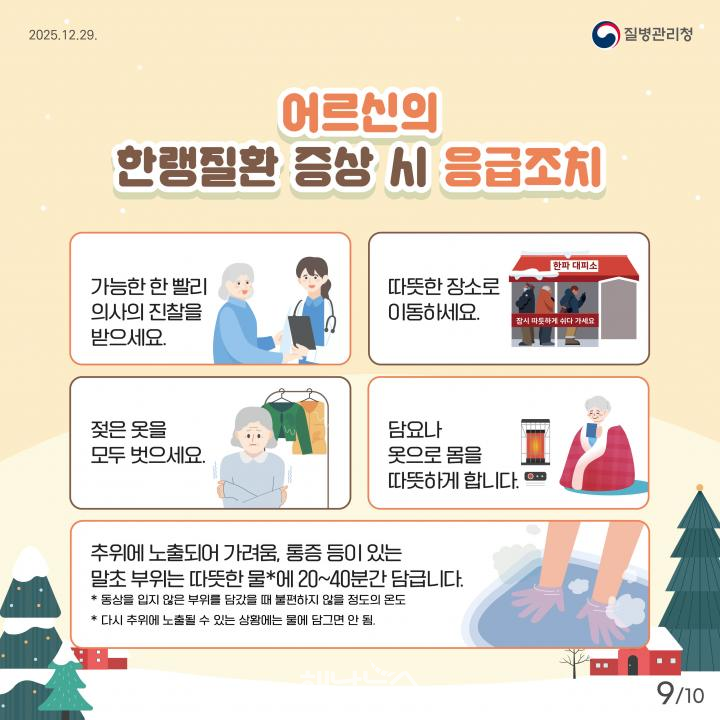 어르신 한랭질환 예방 건강수칙 카드뉴스 / 사진제공=전라남도 |
겨울 한파가 장기화되면서 저체온증과 동상 등 한랭질환이 ‘개인 건강 문제’를 넘어 생명 안전의 영역으로 부상하고 있다.
이에 전라남도가 치매환자와 독거노인 등 취약계층 보호를 최우선 과제로 설정하고, 비상 대응체계 가동에 들어갔다.
전남도는 최근 5년간(2020~2025절기) 질병관리청 한랭질환 응급실 감시자료를 분석한 결과, 도내 한랭질환 환자가 총 115명에 달했으며, 이 가운데 65세 이상 고령층이 74명(64%)으로 대부분을 차지했다고 밝혔다.
성별로는 남성이 72명(63%)으로 높았고, 발생 장소는 실외가 85명(74%)으로 압도적이었다. 특히 야간·새벽 시간대 발생 비율이 높아, 한파 시간대 외출과 장시간 야외 노출이 주요 위험 요인으로 분석됐다.
올 겨울(2025~2026절기) 들어서도 상황은 엄중하다.
1월 19일 기준, 전남에서는 한랭질환자 13명 중 3명이 사망했으며, 저체온증이 100%, 65세 이상이 92.3%에 달했다.
전국적으로도 같은 기간 215명 발생, 7명 사망으로 집계돼 한파 대응의 시급성이 확인됐다.
전남도는 특히 치매 환자와 인지기능 저하 어르신의 위험성을 강조했다.
추위를 인지하거나 위험 상황을 스스로 판단하기 어려워 무단 외출·장시간 배회가 곧 중증 저체온증으로 직결될 수 있기 때문이다.
이에 따라 도는 한파 특보 시 재난문자 발송, 마을 방송 강화, 도내 45개 응급의료기관과의 실시간 모니터링을 통해 환자 발생 즉시 대응하는 체계를 유지하고 있다.
■ “예방이 곧 생명”… 한파 대비 핵심 수칙
전남도는 도민과 보호자를 대상으로 생활 속 실천이 가능한 예방 수칙을 거듭 당부했다.
외출 전: 체감온도 등 날씨 확인, 불필요한 야외활동 자제
외출 시: 내복 등 겹겹이 착용, 장갑·목도리·모자·마스크 필수
생활 습관: 가벼운 실내운동, 충분한 수분 섭취와 균형 잡힌 식사
실내 환경: 적정 실내온도 유지, 과도한 건조 방지
■ 특히 주의해야 할 대상
어르신·어린이: 체온 유지 기능 약화—야외활동 최소화
만성질환자: 급격한 온도 변화로 증상 악화 우려
음주 후 외출: 체온 인지 저하로 치명적 위험
낙상 위험군: 빙판·경사지 회피, 손을 주머니에서 빼고 보행
■ 치매환자 보호, ‘이웃의 역할’이 생명선
전남도는 치매환자 보호를 위해 외출 시 동행 또는 행선지 확인, 방한복·모자·장갑 점검, 야간·새벽 외출 자제, 연락처가 적힌 인식표 착용, 이웃·지역사회 돌봄망을 통한 안부 확인을 핵심 실천 과제로 제시했다.
정광선 전남도 보건복지국장은 “한랭질환은 예방수칙만 지켜도 충분히 막을 수 있는 질환”이라며 “치매환자와 고령 어르신이 안전하게 겨울을 날 수 있도록 가족·이웃·지역사회가 함께 책임지는 안전망을 만들어 달라”고 강조했다.
한파는 자연현상이지만, 방심은 재난이다. 이번 겨울, 전남이 선택한 해답은 분명하다.
‘관심과 예방’이 곧 생명이다.
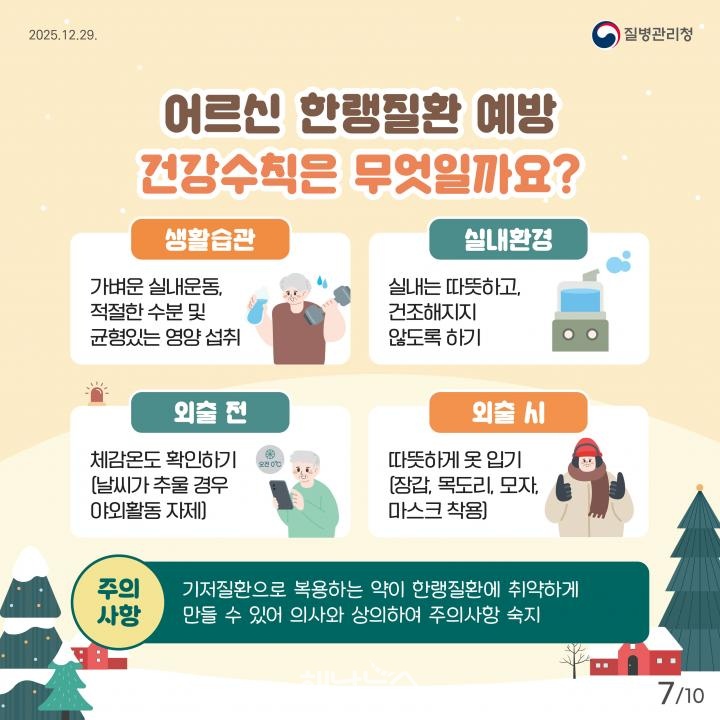 어르신 한랭질환 예방 건강수칙 카드뉴스 / 사진제공=전라남도 |
[Jeonnam = Haenam News]
haenamnews@kakao.com
“A Cold Wave Is a Disaster—Protect the Lives of People with Dementia and Seniors Living Alone First.”
Jeonnam Province launches emergency measures to prevent hypothermia, mobilizing protection for vulnerable groups and full cooperation with emergency medical services.
As prolonged winter cold waves continue, cold-related illnesses such as hypothermia and frostbite are emerging not merely as personal health issues but as matters of life safety. In response, Jeonnam Province has designated the protection of vulnerable groups—including people with dementia and seniors living alone—as a top priority and has activated an emergency response system.
According to an analysis of cold-related illness surveillance data from emergency departments released by the Korea Disease Control and Prevention Agency for the past five seasons (2020–2025), Jeonnam recorded a total of 115 cold-related illness cases. Of these, 74 cases (64%) involved people aged 65 or older, indicating that the majority occurred among the elderly.
By gender, men accounted for 72 cases (63%), higher than women. By location, outdoor incidents were overwhelmingly predominant, with 85 cases (74%). In particular, a high proportion occurred at night and in the early morning, identifying outings during severe cold and prolonged outdoor exposure as major risk factors.
This winter season (2025–2026) remains grave. As of January 19, Jeonnam reported 13 cold-related illness cases, including three deaths. All cases involved hypothermia (100%), and 92.3% were aged 65 or older. Nationwide, during the same period, 215 cases and seven deaths were reported, underscoring the urgency of cold-wave preparedness.
Jeonnam Province emphasized the heightened risk faced by people with dementia and seniors with cognitive impairment. Because they may struggle to recognize cold or judge danger, wandering or unauthorized outings during cold waves can quickly lead to severe hypothermia. Accordingly, the province is maintaining a rapid-response system by issuing disaster alert messages during cold-wave advisories, strengthening village broadcasting, and conducting real-time monitoring in cooperation with 45 emergency medical institutions across the province.
■ “Prevention Saves Lives”—Key Cold-Wave Health Guidelines
Jeonnam Province repeatedly urged residents and caregivers to follow practical, everyday preventive measures:
Before going out: Check weather conditions, including wind chill, and avoid unnecessary outdoor activities.
When outside: Dress in layers, and wear gloves, scarves, hats, and masks.
Daily habits: Do light indoor exercise, drink adequate fluids, and maintain a balanced diet.
Indoor environment: Keep indoor temperatures appropriate and prevent excessive dryness.
■ Groups Requiring Special Caution
Seniors and children: Reduced ability to maintain body temperature—minimize outdoor activities.
People with chronic conditions: Sudden temperature changes may worsen symptoms.
After drinking alcohol: Impaired awareness of body temperature can be life-threatening.
Those at risk of falls: Avoid icy or sloped surfaces; keep hands out of pockets while walking.
■ Protecting People with Dementia: Neighbors Save Lives
For the protection of people with dementia, Jeonnam Province identified key practices: accompanying them when going out or confirming destinations, checking winter clothing (coats, hats, gloves), discouraging nighttime or early-morning outings, wearing identification tags with contact information, and checking on their well-being through neighbors and community care networks.
Jeong Gwang-seon, Director General of Health and Welfare at Jeonnam Province, said, “Cold-related illnesses are preventable if basic guidelines are followed,” adding, “To ensure that people with dementia and elderly residents get through winter safely, families, neighbors, and local communities must work together to create a shared safety net.”
Cold waves are natural phenomena—but complacency is a disaster. This winter, Jeonnam’s answer is clear.
Attention and prevention save lives.
 해남뉴스 박충배 편집 및 논설위원 haenamnews@kakao.com