2026.02.16 (월) 08:35




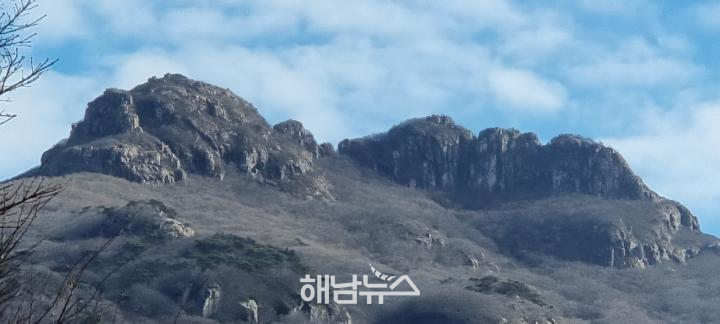 두륜산 대흥사의 가련봉, 노승봉 / 사진제공=해남뉴스 |
【박충배 편집/칼럼/논설】
해남군 삼산면 두륜산 대흥사를 둘러싼 여덟 개의 봉우리 이야기는 단순한 지리 설명이 아니다.
그것은 대흥사가 스스로를 하나의 절이 아니라, 하나의 ‘수행 세계’로 조직해 온 산중 우주관에 가깝다.
『대둔사지(大芚寺志)』와 전통 기록, 그리고 지역에 전해 내려오는 구전을 종합해 보면, 두륜산은 오랫동안 “한 봉우리에 한 의미”의 구조로 읽혀 왔다.
여덟 개의 봉우리는 단순한 산세가 아니라, 대흥사의 법맥·수행 단계·자연관을 상징적으로 감싸는 팔방(八方)의 경계였다.
문헌마다 봉우리의 명칭과 배열에는 다소 차이가 있으나, 대흥사 일원에서 가장 널리 공유되어 온 ‘두륜산 팔봉’ 서사를 따라가면, 이 산이 왜 하나의 거대한 수행 지도였는지가 분명해진다.
가련봉(加鍊峰) ― 출가와 단련의 시작
(일명 가학봉 駕鶴峰)
대흥사 서쪽에 솟은 이 봉우리는 오래도록 가학봉, 곧 “학을 타고 오르는 산”으로 불려 왔다.
그러나 실제 지명과 수행적 의미를 살펴보면, 이 봉우리는 가련봉(加鍊峰)이 본래의 이름에 가깝다.
‘더할 가(加)’, ‘단련할 련(鍊)’.
가련봉은 속세를 떠났다는 선언이 아니라, 이제부터 자신을 불처럼 단련하겠다는 결의의 봉우리다.
가학(駕鶴)이 자유의 결과를 상징한다면, 가련은 수행의 시작을 뜻한다.
학을 타고 오르는 이미지는 이 봉우리를 바라보던 선승과 문인들이 덧입힌 시적 별칭이었고, 그 상징이 세월 속에서 이름처럼 굳어진 것이다.
이 봉우리는 대흥사 수행 세계의 입구다.
이 산에 발을 들이는 순간, 삶의 차원이 달라진다는 사실을 가장 먼저 일깨우는 곳이다.
노승봉(老僧峰) ― 시간이 쌓인 수행의 산
노승봉은 말이 적은 산이다.
이름 그대로 늙은 스님을 닮은 형상은, 수행이란 화려한 깨달음보다 오랜 시간의 침묵과 인내 위에 놓여 있음을 보여준다.
가련봉이 출발이라면, 노승봉은 축적이다.
대흥사가 하루아침에 형성된 사찰이 아니라, 수백 년에 걸쳐 법맥이 이어져 온 ‘시간의 도량’임을 이 봉우리는 말없이 증명한다.
두륜봉(頭輪峰) ― 산의 정수리, 세계의 중심
두륜산이라는 이름을 대표하는 봉우리, 두륜봉은 문자 그대로 ‘머리’이자 ‘바퀴’다. 세계가 굴러가는 중심, 곧 법륜(法輪)의 상징이다.
『대둔사지』가 대흥사를 단순한 지방 사찰이 아니라, 법이 머물고 굴러가는 중심 도량으로 인식한 이유는 이 봉우리에서 분명해진다.
두륜봉은 대흥사 수행 세계의 축이자, 산 전체를 하나로 묶는 중심점이다.
혈망봉(穴望峰) ― 비움 속에서 보는 눈
혈망봉은 이름부터 독특하다.
‘혈(穴)’은 굴이고, ‘망(望)’은 바라봄이다.
이 봉우리는 실제로 움푹 들어간 지형과 연결되어 전해지며, 불교적으로는 비워야 비로소 볼 수 있다는 선의 역설을 상징한다.
가득 채워진 눈으로는 진실을 볼 수 없고, 깊이 파인 자리에서야 멀리 내다볼 수 있다는 깨달음. 혈망봉은 두륜산에 전해 내려오는 여덟 개의 굴 수행 전통과도 깊게 맞닿아 있다.
고계봉(高界峰) ― 세계의 경계선
‘계(界)’는 세계이며 경계다.
고계봉은 속계(俗界)와 성계(聖界)가 나뉘는 지점, 다시 말해 이 산이 더 이상 관광지가 아니라 수행 세계로 전환되는 경계를 상징한다.
대흥사에 대해 “여기는 절인가, 관광지인가”라는 질문이 던져질 때, 고계봉은 조용히 답한다.
“여기부터는 다른 세계다.”
연화봉(蓮花峰) ― 깨달음의 완성
(일명 문필봉 文筆峰)
연화봉은 팔봉 가운데 가장 상징적인 완결의 봉우리다.
연꽃은 불교에서 진흙 속에서 피어나는 깨달음, 청정, 완성을 뜻한다.
이 봉우리는 오랫동안 문필봉, 곧 붓끝처럼 솟은 산으로도 불려 왔다. 정상부 암봉의 형상이 연꽃 봉오리이자 붓끝처럼 보였기 때문이다.
초의선사, 추사 김정희, 다산 정약용이 교유하던 대흥사의 성격은, 이 봉우리를 통해 선·문·차가 하나로 어우러진 도량이었음을 드러낸다.
그러나 본래의 이름은 연화봉이다.
문필은 해석이고, 연화는 수행의 결론이다.
향로봉(香爐峰) ― 산 전체가 법당이 되는 자리
향로봉은 형상 그대로 향로를 닮았다.
이 봉우리는 특정 수행자보다 의례와 기도의 상징에 가깝다.
연기가 하늘로 오르듯, 이곳에서 대흥사는 전각을 넘어 산 전체를 공양의 대상으로 인식해 왔다.
대흥사가 “건물이 아니라 산 자체가 절”이라는 인식을 갖게 된 이유가 이 봉우리에서 완성된다.
사자봉(獅子峰) ― 법을 지키는 수호의 자리
(일명 도솔봉兜率峰)
사자봉은 하나의 명확한 지명이라기보다, 사자바위가 형성된 봉우리 계열, 특히 도솔봉 일대를 가리키는 상징적 명칭이다.
불교에서 사자는 법을 설하고 수호하는 존재이며, 사자의 포효는 곧 부처의 설법이다.
대흥사에는 전통적인 천왕문이 없다.
대신 이 산은 자연 지형으로 법계를 지켜왔다. 사자봉은 도량을 굽어보며 외부를 향해 앉은 수호자의 자리였다.
맺음말 ― 두륜산 팔봉은 ‘산의 목록’이 아니다
두륜산의 여덟 봉우리는 자연 경관의 나열이 아니다.
그것은 수행의 시작에서 완성에 이르는 하나의 서사이며, 대흥사가 스스로를 해석한 산중 우주 지도다.
그래서 『대둔사지』가 대흥사를 “崑崙山 大芚寺(곤륜산 대둔사)”라 불렀던 것도 결코 우연이 아니다.
두륜산 팔봉은 말없이 증언한다.
대흥사는 ‘남도의 큰 절’이 아니라, 세계관을 가진 사찰임을.
**The Eight Peaks of Duryunsan:
A Universe of Practice Shaped by the Mountain**
— Reading Daeheungsa’s Mountain Cosmology through Daedunsaji —
The story of the eight peaks surrounding Daeheungsa Temple on Mount Duryun in Samsan-myeon, Haenam, is not a simple matter of geography.
Rather, it reflects a mountain-based cosmology through which Daeheungsa understood itself—not merely as a temple, but as an entire world of spiritual practice, deliberately organized within the landscape.
A synthesis of Daedunsaji (Records of Daedunsa), traditional documents, and local oral traditions reveals that Mount Duryun has long been read according to a structure in which each peak embodies a distinct meaning. The eight peaks do not merely shape the mountain’s terrain; they form a symbolic eight-directional boundary (palbang, 八方) that encircles and expresses Daeheungsa’s lineage, stages of practice, and view of nature.
Although historical sources differ slightly in the naming and configuration of the peaks, the widely shared narrative of the “Eight Peaks of Mount Duryun” clearly shows why this mountain functioned as a vast map of spiritual cultivation rather than a mere physical setting.
Garyeon Peak (加鍊峰) — The Beginning of Ordination and Self-Discipline
(Also known as Gahak Peak, 駕鶴峰)
Rising to the west of Daeheungsa, this peak was long known as Gahak Peak, “the peak of riding a crane,” a poetic image suggesting transcendence from the mundane world.
Yet when its true name and spiritual meaning are examined, Garyeon Peak (加鍊峰) emerges as the more original designation.
The characters mean “to add” (加) and “to refine through fire” (鍊).
Garyeon Peak does not proclaim that one has already left the secular world; rather, it marks the resolve to enter the fire of discipline and refinement. While gahak evokes the freedom attained after realization, garyeon signifies the beginning of practice itself.
The image of riding a crane was a literary metaphor applied by monks and scholars who contemplated the peak; over time, the metaphor became mistaken for the name.
This peak stands as the gateway to Daeheungsa’s world of practice—the place that first impresses upon the visitor that stepping into this mountain means stepping into a different dimension of life.
Noseung Peak (老僧峰) — The Mountain Where Time Accumulates
Noseung Peak is a quiet mountain.
Its resemblance to an aged monk conveys a truth central to Buddhist practice: realization is not a sudden spectacle, but the product of long years of silence, endurance, and accumulation.
If Garyeon Peak represents departure, Noseung Peak represents duration.
Without words, it bears witness to the fact that Daeheungsa is not a temple formed overnight, but a sanctuary of time, where the Dharma lineage has been transmitted over centuries.
Duryun Peak (頭輪峰) — The Summit and Axis of the World
The peak that gives Mount Duryun its name, Duryun Peak, literally means “head” (頭) and “wheel” (輪). It symbolizes the turning of the Dharma Wheel (法輪)—the axis around which the world revolves.
Here, Daedunsaji’s vision of Daeheungsa becomes clear: not a provincial temple, but a center where the Dharma abides and turns. Duryun Peak is the structural and spiritual axis that binds the entire mountain into a single system of practice.
Hyeolmang Peak (穴望峰) — Seeing from Emptiness
Hyeolmang Peak bears a striking name.
Hyeol (穴) means cave; mang (望) means to gaze or perceive.
Linked to naturally hollowed terrain, the peak symbolizes a Zen paradox: only through emptiness can true vision arise. A mind that is full cannot see clearly; it is from a deep hollow that one can perceive far.
Hyeolmang Peak is closely connected to the tradition of the eight meditation caves of Mount Duryun, where inward vision replaced outward observation.
Gogye Peak (高界峰) — The Boundary Between Worlds
The character gye (界) signifies a realm or boundary.
Gogye Peak marks the threshold where the secular world gives way to the sacred—the point at which Mount Duryun ceases to be a tourist destination and becomes a domain of practice.
When asked, “Is this place a temple or a tourist site?” Gogye Peak answers quietly:
“From here on, this is another world.”
Yeonhwa Peak (蓮花峰) — The Fulfillment of Awakening
(Also known as Munpil Peak, 文筆峰)
Among the eight peaks, Yeonhwa Peak is the most symbolically complete.
The lotus represents awakening, purity, and fulfillment—rising unstained from the mud.
This peak was also long known as Munpil Peak, “the peak of the writing brush,” as its summit resembles both a lotus bud and the tip of a calligrapher’s brush. Through this peak, Daeheungsa reveals itself as a place where meditation, literature, and tea culture converged—a meeting ground for figures such as Choui Seonsa, Chusa Kim Jeong-hui, and Dasan Jeong Yak-yong.
Yet Munpil is interpretation; Yeonhwa is essence.
The lotus is the conclusion of practice.
Hyangno Peak (香爐峰) — Where the Mountain Becomes the Altar
Hyangno Peak resembles an incense burner.
Rather than belonging to a particular practitioner, it symbolizes ritual and offering.
As incense smoke rises to the heavens, so here Daeheungsa came to understand not only its halls, but the entire mountain as an object of offering. At this peak, the idea that “the mountain itself is the temple” finds its full expression.
Saja Peak (獅子峰) — The Guardian of the Dharma
(Associated with Dosol Peak, 兜率峰)
Saja Peak is not a single, clearly marked summit, but a symbolic name for the ridge and rocky formations—particularly around Dosol Peak—where the Lion Rock takes shape.
In Buddhism, the lion is the guardian and proclaimer of the Dharma; the lion’s roar (saja-hu) is the Buddha’s teaching itself.
Daeheungsa lacks a traditional Four Heavenly Kings Gate. Instead, the mountain’s own terrain assumes the role of protection. Saja Peak sits facing outward, overlooking the temple grounds, silently guarding the Dharma realm.
Conclusion — The Eight Peaks Are Not a List of Mountains
The eight peaks of Mount Duryun are not a catalog of scenic points.
They form a single narrative—from the beginning of discipline to the fulfillment of awakening—a mountain cosmology through which Daeheungsa interpreted itself.
For this reason, it is no accident that Daedunsaji refers to the temple as
“Daedunsa of Mount Kunlun” (崑崙山 大芚寺).
The Eight Peaks of Mount Duryun testify in silence:
Daeheungsa is not merely “a great temple of the southern region,”
but a temple with a fully articulated worldview.
 해남뉴스 박충배 편집 및 논설위원 haenamnews@kakao.com