2026.08.18 (화) 20:38




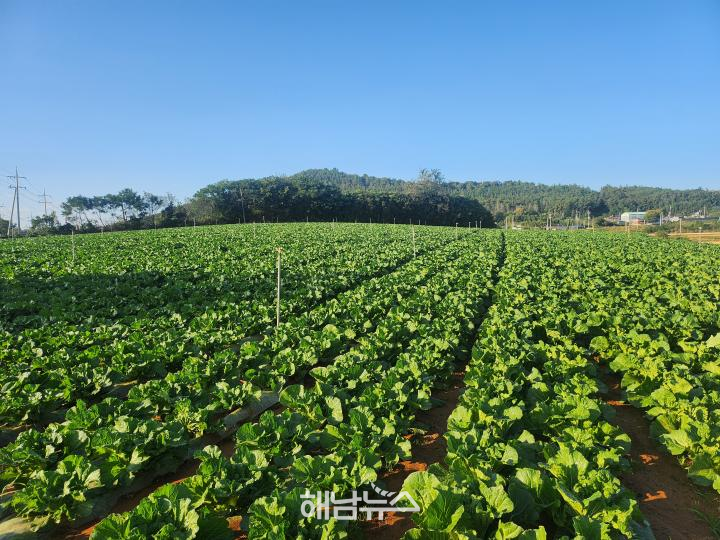 배추 농가 / 사진제공=전남광주특별시 |
전남광주통합특별시가 가을·겨울배추 재배면적 증가에 따른 공급과잉과 가격 하락에 선제적으로 대응하기 위해 해남·진도지역 농가를 대상으로 배추 작목전환을 지원한다.
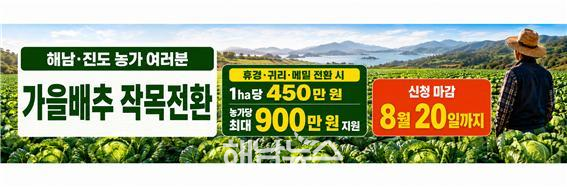
전남광주통합특별시는 배추 주산지인 해남군과 진도군의 가을·겨울배추 재배 예정지 400㏊를 대상으로 총 18억 원 규모의 ‘배추 작목전환 지원사업’을 추진한다고 밝혔다.
농가가 지원 대상 필지를 휴경하거나 귀리·메밀 등 다른 작물로 전환해 재배하면 1㏊당 450만 원을 지원받을 수 있다. 농가당 지원 면적은 최대 2㏊로, 최대 지원액은 900만 원이다.
지원 대상은 최근 2년인 2024년과 2025년에 배추를 재배한 필지 등이다. 참여를 희망하는 농가는 오는 8월 20일까지 농지 소재지 읍·면 주민센터에 신청하면 된다.
다만 배추 대신 마늘·양파·대파 등 다른 수급 불안 품목을 재배하는 경우에는 지원 대상에서 제외된다. 특정 품목으로 재배면적이 몰리면서 또 다른 공급과잉이 발생하는 것을 막기 위한 조치다.
이번 사업은 지난해 배추 가격 상승으로 올해 가을·겨울배추 재배면적이 늘어날 것으로 예상됨에 따라 생산단계에서 재배면적을 조절하고 농가소득을 안정시키기 위해 마련됐다.
한국농촌경제연구원이 발표한 8월 관측정보에 따르면 지난해 11∼12월 출하기 배추 가격 상승의 영향으로 올해 전국 가을배추 재배의향 면적은 전년보다 2.7%, 겨울배추는 3.6% 증가할 것으로 전망됐다.
배추·마늘·양파 등 노지채소는 재배면적과 기상 여건, 작황에 따라 생산량과 가격 변동 폭이 크다. 재배면적 확대와 작황 호조로 생산량이 급증하면 시장가격 하락과 농가소득 감소로 이어질 가능성이 크다.
배추 소비 여건의 변화도 공급과잉 우려를 키우고 있다. 김장 문화가 과거 대가족 중심의 공동작업에서 소규모 가족 단위로 바뀐 데다 국민 1인당 김치 소비량도 2017년 39.9㎏에서 2022년 36.5㎏으로 감소했다.
이에 전남광주통합특별시는 가을·겨울배추 재배면적과 작황, 시장가격 등 수급 상황을 지속해서 점검하고 생산단계의 면적 조절과 소비 촉진 대책을 함께 추진할 방침이다.
해남·진도지역 배추 재배 농가들은 “지난해 추진한 배추 작목전환 지원사업이 배추 가격 안정에 도움이 됐다”며 “지난해 가격 상승의 영향으로 올해 김장배추 재배면적이 확대될 것으로 예상되는 만큼 반드시 필요한 사업”이라고 말했다.
정원진 전남광주통합특별시 식량원예과장은 “작목전환 사업이 배추 수급 조절과 농가 경영 안정에 도움이 되는 만큼 농업인들의 적극적인 참여를 부탁드린다.”며 “절임배추와 남도김치 소비 촉진에도 힘써 농가의 안정적인 판로 확보를 지원하겠다.”고 말했다
 |
Haenam and Jindo to Convert 400 Hectares of Fall and Winter Cabbage Fields to Other Uses…Up to KRW 9 Million per Farm
Jeonnam-Gwangju Special Metropolitan City takes preemptive action against oversupply and falling prices
KRW 1.8 billion allocated…KRW 4.5 million per hectare for fallowing or growing oats and buckwheat
Eligible land must have been used to grow cabbage during the past two years…Maximum of 2 hectares per farm
Conversion to supply-sensitive crops such as garlic, onions, and green onions excluded
Applications accepted through August 20 at local township offices
Planned cultivation area expected to rise 2.7% for fall cabbage and 3.6% for winter cabbage
“Crop conversion will be accompanied by efforts to promote pickled cabbage and Namdo kimchi”
【HAENAM·JINDO=HAENAM NEWS】 haenamnews@kakao.com
Jeonnam-Gwangju Special Metropolitan City is supporting farmers in Haenam and Jindo in switching from fall and winter cabbage to other crops as a preemptive measure against oversupply and falling prices caused by an expected increase in cultivation area.
The city government announced that it will invest KRW 1.8 billion in a cabbage crop-conversion support program covering 400 hectares of planned fall and winter cabbage fields in Haenam and Jindo, two of Korea’s major cabbage-producing regions.
Farmers who leave eligible fields fallow or switch to other crops, including oats and buckwheat, will receive KRW 4.5 million per hectare. Support is limited to a maximum of 2 hectares per farm, allowing each participating farm to receive up to KRW 9 million.
Eligible land includes fields used to grow cabbage during the past two years, in 2024 and 2025. Farmers wishing to participate must apply by August 20 at the administrative office of the eup or myeon where the farmland is located.
However, farmers will not be eligible for support if they replace cabbage with other crops prone to unstable supply, such as garlic, onions, or green onions. The restriction is intended to prevent cultivation from becoming concentrated in particular crops and creating another oversupply problem.
The program was introduced to control the cultivation area at the production stage and stabilize farm income, amid expectations that higher cabbage prices last year will lead to expanded fall and winter cabbage cultivation this year.
According to the August agricultural outlook released by the Korea Rural Economic Institute, the nationwide intended cultivation area for fall cabbage is expected to increase by 2.7% year-on-year, while that for winter cabbage is projected to rise by 3.6%. The increases are attributed to higher cabbage prices during last year’s November–December shipping season.
Open-field vegetables such as cabbage, garlic, and onions are highly susceptible to fluctuations in production and prices, depending on the cultivation area, weather conditions, and crop yields. A sharp increase in production resulting from expanded acreage and favorable growing conditions could lead to lower market prices and reduced farm income.
Changes in cabbage consumption are also heightening concerns about oversupply. Kimchi-making culture has shifted from large-scale work involving extended families to smaller household-based preparation. Meanwhile, Korea’s per-capita kimchi consumption declined from 39.9 kilograms in 2017 to 36.5 kilograms in 2022.
Jeonnam-Gwangju Special Metropolitan City plans to continue monitoring fall and winter cabbage acreage, crop conditions, market prices, and other supply-and-demand indicators, while implementing both production-area adjustment and consumption-promotion measures.
Cabbage farmers in Haenam and Jindo said, “Last year’s cabbage crop-conversion support program helped stabilize cabbage prices. As the higher prices recorded last year are expected to encourage farmers to expand this year’s kimchi cabbage acreage, this program is essential.”
Jeong Won-jin, director of the Food and Horticulture Division at Jeonnam-Gwangju Special Metropolitan City, said, “The crop-conversion program has helped stabilize both cabbage supply and farm management, and we encourage farmers to actively participate.”
“We will also promote the consumption of pickled cabbage and Namdo kimchi to help farmers secure stable sales channels,” he added.
 해남뉴스 박충배 편집 및 논설위원 news@hbcnews.kr