2026.06.04 (목) 03:35




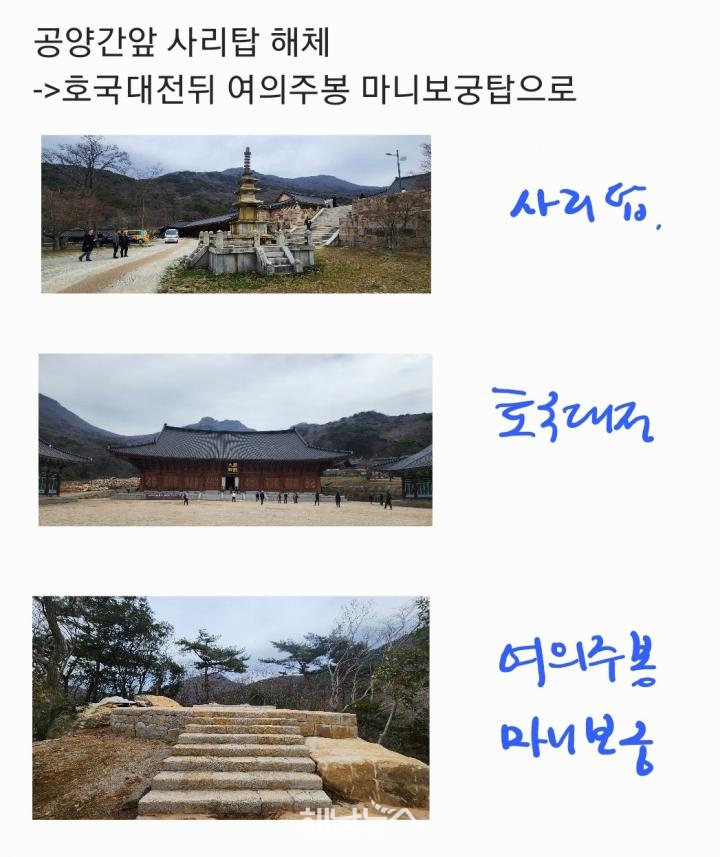 대흥사 사리탑 해체 / 사진제공=대흥사 설각스님 |
전남 해남 대흥사에서 부처님 진신사리를 새로운 성지에 봉안하는 역사적 불사가 추진되며, 끊겼던 불맥(佛脈)을 다시 잇는 상징적 전환점이 마련됐다.
이번 불사는 용화당 앞 사리탑을 해체하고, 그 안에 모셔져 있던 진신사리를 호국대전 뒤 여의주봉(일명 목탁봉) 정상의 ‘마니보궁’에 봉안하는 것을 핵심으로 한다.
■ “사리의 이동, 곧 역사 복원이다”
이번에 봉안되는 진신사리는 부처님의 진신을 상징하는 불교 최고 성물로, 오랜 기간 대흥사 경내에 봉안되어 온 신앙의 중심이다.
이번 이운은 단순한 이전이 아니라 “사리를 중심으로 사찰의 정신적 축을 재정립하는 역사적 행위”로 평가된다.
■ 일제에 의해 끊긴 탑… 여의주봉에서 다시 이어진다.
여의주봉 정상에는 본래 탑이 존재했으나, 일제강점기 당시 일본인들에 의해 ‘맥을 끊는다.’는 명분 아래 강제 해체된 것으로 전해진다.
이는 단순한 문화재 훼손을 넘어 한국 불교의 상징적 축을 약화시키려는 역사적 단절이었다.
이후 오랜 시간 비어 있던 탑의 자리(마니보궁)에 이번 진신사리가 다시 봉안되면서 끊긴 역사와 신앙의 흐름이 복원되는 계기가 마련됐다.
■ 용화당 사리탑 해체… ‘마니보궁’으로 재탄생
그동안 진신사리는 용화당 앞 사리탑에 봉안되어 있었으나, 이번 불사를 통해 기존 사리탑은 해체되고, 사리는 여의주봉 정상 ‘마니보궁’에 영구 봉안된다.
이는 공간 이동이 아니라 “사찰의 중심축을 재구성하는 상징적 전환”이다.
■ 4월 2일부터 친견… 5월 1일 봉안 법회
대흥사는 이번 불사와 관련해 일반 신도와 국민이 참여할 수 있는 일정을 공개했다.
진신사리 친견 : 2026년 4월 2일부터 5월1일까지.
봉안 법회 : 2026년 5월 1일(금)
장 소 : 대흥사 호국대전 뒤 여의주봉 정상 마니보궁
특히 이번 친견은 진신사리를 직접 마주할 수 있는 귀중한 기회로 관심이 집중되고 있다.
■ 대흥사, 다시 ‘진신사리 성지’로
대흥사는 한국 불교를 대표하는 수행도량이자 역사 사찰이다.
이번 봉안은 일제강점기 훼손의 역사 복원, 신앙 중심 공간 재정립, 현대 순례 성지화, 라는 세 가지 의미를 동시에 담고 있다.
특히 여의주봉 마니보궁은 향후 진신사리 봉안 성지이자 순례 중심지로 재탄생할 가능성이 크다.
■ 결론: “끊어진 역사, 다시 흐른다.”
이번 사리 이운과 봉안은 단순한 종교 행사가 아니다.
그것은 일제가 끊어낸 맥을 다시 잇고, 비어 있던 성지를 복원하며, 대흥사의 정신을 재정립하는 역사적 복원 선언이다.
대흥사의 산과 탑, 그리고 사리는 이제 다시 하나로 이어지고 있다.
【AI Honam News】
“The severed spiritual axis cut during Japanese rule… restored through the Buddha’s sacred relics”
Daeheungsa Temple to enshrine sacred relics at Yeouiju Peak Manibo-gung
Public viewing from April 2 · Enshrinement ceremony on May 1
【Haenam = AI Honam News】 aihnnews@kakao.com
A historic Buddhist ritual is underway at Daeheungsa Temple in Haenam, Jeonnam, as the sacred relics of the Buddha are to be enshrined at a new spiritual site—marking a symbolic turning point in restoring the severed spiritual lineage (Bulmaek) of the temple.
The core of this ritual involves dismantling the sarira stupa in front of Yonghwa-dang and relocating the sacred relics enshrined within it to the “Manibo-gung” at the summit of Yeouiju Peak (also known as Moktakbong), located behind Hokukdaejeon Hall.
■ “The relocation of relics is the restoration of history”
The sacred relics to be enshrined are regarded as the highest object of veneration in Buddhism, symbolizing the physical presence of the Buddha, and have long served as a spiritual center within Daeheungsa Temple.
This relocation is not a mere transfer, but
???? “a historical act that re-establishes the spiritual axis of the temple centered on the relics.”
■ A pagoda destroyed during Japanese rule… restored at Yeouiju Peak
A pagoda originally stood at the summit of Yeouiju Peak, but during the Japanese colonial period, it was forcibly dismantled under the pretext of “cutting the spiritual vein.”
This act went beyond simple destruction of cultural heritage and is interpreted as
???? a symbolic attempt to weaken the spiritual foundation of Korean Buddhism.
With the sacred relics now being re-enshrined at the long-empty site (Manibo-gung),
???? the broken flow of history and faith is being restored.
■ From Yonghwa-dang stupa to Manibo-gung
Until now, the sacred relics had been enshrined in the stupa in front of Yonghwa-dang. Through this ritual:
The existing stupa will be dismantled
The relics will be permanently enshrined at Manibo-gung on Yeouiju Peak
This is not simply a physical relocation, but
???? “a symbolic transformation that reconstructs the central axis of the temple.”
■ Public viewing from April 2… Enshrinement ceremony on May 1
Daeheungsa Temple has announced a schedule allowing the public and devotees to participate:
Public viewing of the sacred relics: April 2 – May 1, 2026
Enshrinement ceremony: May 1, 2026 (Friday)
Location: Manibo-gung at the summit of Yeouiju Peak, behind Hokukdaejeon Hall
This viewing offers
???? a rare and meaningful opportunity to witness the sacred relics in person.
■ Daeheungsa reborn as a sacred relic pilgrimage site
Daeheungsa is one of Korea’s representative Buddhist temples and a historic center of spiritual practice.
This enshrinement carries three major meanings:
Restoration of history damaged during Japanese colonial rule
Re-establishment of the temple’s spiritual center
Transformation into a modern pilgrimage destination
In particular, Manibo-gung at Yeouiju Peak is expected to emerge as
???? a major sacred site for relic enshrinement and pilgrimage.
■ Conclusion: “A broken history begins to flow again”
This relocation and enshrinement of the sacred relics is not merely a religious event.
It is
reconnecting the spiritual lineage severed by colonial rule
restoring a once-empty sacred site
and redefining the spiritual identity of Daeheungsa
???? a declaration of historical and spiritual restoration.
The mountains, pagodas, and sacred relics of Daeheungsa are now being reunited as one.
 해남뉴스 박충배 편집 및 논설위원 haenamnews@kakao.com