2026.03.17 (화) 05:15




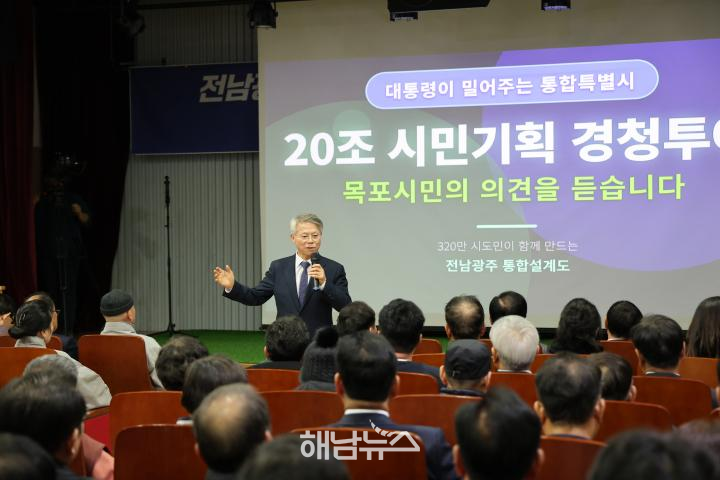 목포 경청투어 / 사진제공=민형배의원실 |
전남·광주 통합특별시장 경선 출마 예정자인 민형배 국회의원(광주 광산구을)이 목포에서 시민들과 만나 통합특별시 출범 이후 지역 발전 전략을 논의하며 “청사 위치 논쟁보다 산업과 일자리 전략이 더 중요하다”는 메시지를 강조했다.
민 의원은 13일 목포 김대중노벨평화상기념관 다목적강당에서 열린 ‘20조 시민기획 경청투어’에서 시민들과 함께 전남·광주 통합특별시 출범 시 정부가 지원 예정인 20조 원 재정의 활용 방향과 지역 산업 전략에 대한 의견을 청취했다.
이날 행사에서는 통합특별시 출범 이후 목포의 도시 경쟁력 회복과 산업 기반 구축을 두고 시민들의 다양한 질문과 제안이 이어졌다.
한 시민은 “목포가 과거 전남의 중심 도시였지만 최근 인구 감소와 산업 위축으로 어려움을 겪고 있다.”며 “통합특별시 출범을 계기로 목포 경제를 다시 살릴 산업 전략이 필요하다.”고 강조했다.
또 다른 시민은 통합특별시 청사 위치 논쟁과 관련해 “청사가 어디에 있느냐보다 지역 경제와 산업 기반을 키우는 정책이 더 중요하다”고 의견을 밝혔다.
이에 대해 민 의원은 “시청이 어디에 있느냐보다 지역에 어떤 산업과 일자리가 들어오느냐가 더 중요하다.”며 “반도체 등 첨단 산업단지를 유치해 지역 경제를 키우는 것이 훨씬 큰 효과를 낼 것”이라고 말했다.
통합특별시 주청사 위치 문제에 대해서는 “초기에는 광주·무안·동부권 청사를 기능별로 나누는 분산형 행정체계를 일정 기간 운영한 뒤 시민 합의를 통해 가장 합리적인 방안을 결정하겠다.”는 기존 입장을 재확인했다.
이날 토론에서는 시민 정책 아이디어를 제도화하자는 제안도 나왔다.
한 참석자는 사회문제 해결 아이디어를 시민들에게 공모하고 실제 정책으로 실행될 경우 수익의 일정 비율을 보상하는 방식의 정책 모델을 제안했다.
또 다른 시민은 통합특별시 지원 재정 20조 원의 안정적 확보 방안을 질문하며 “법적 근거가 부족해 실제 지원이 이뤄질지 걱정된다.”고 우려를 제기했다.
이에 대해 민 의원은 “정부의 정책 의지와 정치적 합의가 있는 만큼 지원이 이뤄지지 않을 가능성은 크지 않다”며 “보다 명확한 재정 지원 근거를 마련하기 위해 노력하겠다.”고 밝혔다.
‘20조 시민기획 경청투어’는 시민들이 직접 제안한 정책 아이디어를 전남·광주 통합특별시 정책 설계에 반영하기 위해 마련된 현장 소통 프로그램이다.
민 의원은 지난 2월 5일 순천에서 첫 경청투어를 시작해 강진·장흥·고흥권역, 광주 남구, 해남·완도·진도권역 등을 돌며 전남·광주 각 지역 시민들의 의견을 청취하고 있다.
민 의원은 “전남광주특별시는 성장통합·균형통합·기본소득·녹색도시·시민주권이라는 다섯 가지 원칙 위에 세워질 것”이라며 “시민이 통합의 내용을 채우고 미래를 설계하는 ‘시민주권 통합’을 반드시 실현하겠다.”고 강조했다.
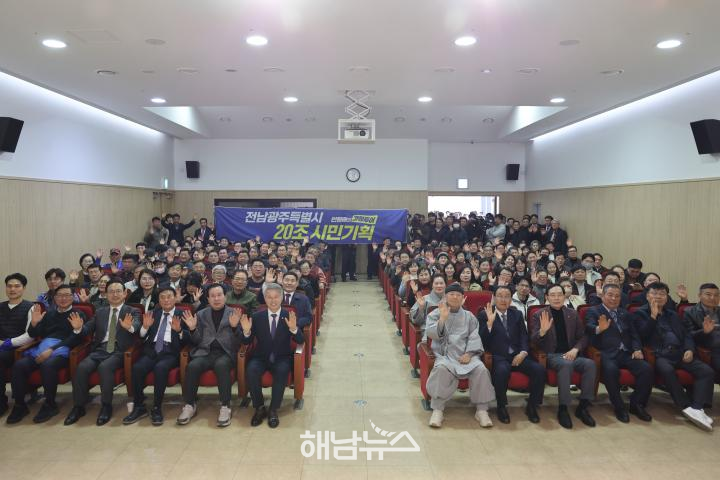 목포 경청투어 / 사진제공=민형배의원실 |
“Industry Matters More Than City Hall”
Min Hyung-bae Holds ‘20 Trillion Won Citizen Planning Tour’ in Mokpo
“Citizens Will Design the Future of the Integrated City”
[Mokpo = AI Honam News] aihnnews@kakao.com
Rep. Min Hyung-bae, a prospective candidate in the Democratic Party primary for mayor of the proposed Jeonnam–Gwangju Integrated Special City, met with citizens in Mokpo and emphasized that industrial development and job creation are more important than debates over the location of the city hall.
On the 13th, Rep. Min attended the “20 Trillion Won Citizen Planning Listening Tour” held at the multipurpose hall of the Kim Dae-jung Nobel Peace Prize Memorial Hall in Mokpo. During the event, he listened to citizens’ opinions on how the government’s planned 20 trillion won financial support for the integrated special city should be used and discussed strategies for regional industrial development.
At the meeting, citizens raised various questions and proposals regarding Mokpo’s future urban development and the creation of an industrial base following the launch of the integrated city.
One citizen said,
“Mokpo used to be the central city of Jeonnam, but recently it has been struggling with population decline and industrial contraction,” adding that an industrial strategy is needed to revive the local economy through the integrated special city initiative.
Another participant pointed out that debates over the location of the city hall should not overshadow policies aimed at strengthening the regional economy and industrial base.
In response, Rep. Min stated,
“More important than where the city hall is located is what industries and jobs are created in the region. Attracting advanced industrial complexes such as semiconductors will have a far greater impact on revitalizing the local economy.”
Regarding the location of the main city hall for the integrated special city, he reiterated his previous stance that a decentralized administrative system would be operated in the early stages, distributing functions among Gwangju, Muan, and the eastern region, before determining the final location through public consensus.
During the discussion session, participants also proposed institutionalizing citizen policy ideas.
One attendee suggested a policy model in which citizens submit ideas to solve social issues and receive a portion of the profits if those ideas are implemented and generate economic returns.
Another citizen raised concerns about the stability of the promised 20 trillion won in government support, noting that the legal basis for the funding appears insufficient.
Rep. Min responded that given the government’s policy commitment and the existing political consensus, it is unlikely that the support will fail to materialize, adding that he will work to establish a clearer legal foundation for financial support.
The “20 Trillion Won Citizen Planning Listening Tour” is a public communication program designed to incorporate policy ideas proposed directly by citizens into the policy design of the Jeonnam–Gwangju Integrated Special City.
Rep. Min began the tour in Suncheon on February 5 and has since visited Gangjin–Jangheung–Goheung, Gwangju Nam-gu, and the Haenam–Wando–Jindo region, collecting opinions from citizens across Jeonnam and Gwangju.
Rep. Min emphasized that the integrated city will be built upon five core principles: growth integration, balanced integration, basic income, a green city, and citizen sovereignty.
“The Jeonnam–Gwangju Special City will be a city where citizens themselves fill in the details of integration and design the future,” he said, pledging to realize a model of citizen-driven integration.
 해남뉴스 박충배 편집 및 논설위원 haenamnews@kakao.com