2026.04.03 (금) 06:53



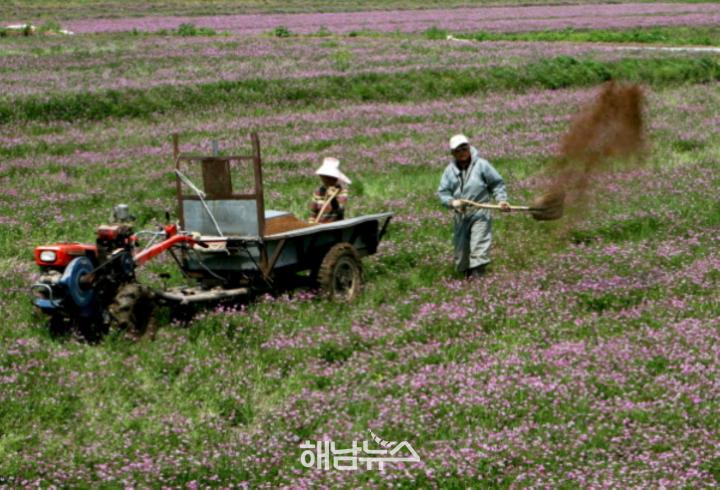 유기농업자재 살포 현장 / 사진제공=전라남도 |
박충배 편집/칼럼/논설
해남의 넓은 들녘, 완도의 섬 농토, 진도의 바람 많은 논밭은 서로 다른 얼굴을 하고 있지만, 한 가지 공통된 고민을 안고 있다.
기후 변화, 농자재 가격 상승, 그리고 농업의 지속 가능성이다.
이런 현실 속에서 전라남도가 ‘2026년 유기농업자재 지원사업’을 통해 해남·완도·진도 농업 현장에 다시 한 번 숨을 불어넣는다.
신청은 이달 31일까지, 농지 소재 읍·면·동 행정복지센터에서 진행된다.
- 해남, ‘대농·집단농업’ 친환경 전환의 시험대
전남 최대 농업군인 해남은 대규모 논·밭농사가 중심이다.
그만큼 농약과 비료 사용량도 많고, 비용 부담 역시 크다.
이번 유기농업자재 지원은 해남 농가에게 경영비 절감과 토양 회복이라는 두 가지 해법을 동시에 제시한다.
유기농가는 ha당 최대 200만 원, 무농약 농가는 150만 원까지 지원받을 수 있어, 친환경 전환을 망설이던 농가들에게 실질적인 선택지가 된다.
특히 자운영, 녹비보리, 호밀 등 녹비작물 종자 지원은 논 토양의 유기물 함량을 높이고 병해충을 줄이는 장기 처방으로 평가받는다.
- 완도, 섬 농업에 맞는 ‘환경 중심 농사’ 기반 강화
완도는 해남과 달리 섬 지역 특성상 농약 사용에 더욱 민감하다.
토양과 바다가 맞닿아 있는 구조에서 친환경농업은 선택이 아닌 필수에 가깝다.
완도 농가들은 이번 지원사업을 통해 해조류·수산 중심 지역 이미지와 어울리는 친환경 농업 기반을 한층 강화할 수 있게 됐다.
헤어리베치, 수단그라스 등 녹비작물은 척박한 토양을 개선하는 데 효과가 높아, 섬 농업의 구조적 한계를 보완하는 수단으로 주목된다.
진도, 소규모·복합농가의 부담을 덜다
진도는 중소 규모의 논·밭농가와 복합영농이 많은 지역이다.
관행농업을 유지하면서도 친환경으로 조금씩 전환하고 싶은 농가가 많지만, 초기 비용이 늘 부담이었다.
이번 사업은 관행농가도 ha당 100만 원까지 유기농업자재를 지원해, 진도 농가들이 무리 없이 친환경농업에 첫발을 내딛도록 돕는다.
‘한 번에 바꾸라’가 아닌, ‘함께 바꾸자’는 정책 방향이 현장에서 긍정적으로 받아들여지는 이유다.
“친환경농업은 농촌 생존 전략이다”
전남도는 이번 유기농업자재 지원을 단순한 보조금 정책이 아니라, 농촌의 생존 전략으로 보고 있다.
농약과 화학비료 의존도를 낮추는 것은 곧 토양을 살리고, 농업 비용 구조를 바꾸며, 지역 먹거리의 신뢰를 높이는 일이다.
김영석 전남도 친환경농업과장은 “해남·완도·진도처럼 농업과 자연환경이 밀접한 지역일수록 친환경농업의 효과는 더 크다”며 “이번 지원사업을 통해 농업인의 부담은 줄이고, 지속 가능한 농업 환경은 확실히 구축해 나가겠다.”고 밝혔다.
농약을 줄이는 일은 단기성과가 보이지 않을 수 있다.
그러나 땅은 기억한다.
해남의 들녘도, 완도의 섬 밭도, 진도의 논도 지금의 선택이 몇 해 뒤 농촌의 모습을 결정한다.
[Jeonnam = Haenam News]
haenamnews@kakao.com
Park Chung-bae | Editor / Columnist / Editorial Writer
**Choosing to Reduce Pesticides and Restore the Land
Eco-Friendly Agriculture in Haenam, Wando, and Jindo—Jeonnam Stands with Farmers**
The wide plains of Haenam, the island farmlands of Wando, and the wind-swept rice fields of Jindo may each have different landscapes, but they share one common concern.
Climate change. Rising agricultural input costs. And the sustainability of farming itself.
Amid these challenges, Jeollanam-do is breathing new life into agricultural communities in Haenam, Wando, and Jindo through the 2026 Organic Farming Materials Support Program.
Applications are being accepted until the 31st of this month at 읍·면·동 (township) administrative welfare centers where the farmland is located.
Haenam: A Testing Ground for the Eco-Friendly Transition of Large-Scale Farming
As the largest agricultural county in Jeollanam-do, Haenam is characterized by extensive rice paddies and large-scale field farming.
With scale comes heavy use of pesticides and fertilizers—and, inevitably, rising costs.
This organic farming materials support program offers Haenam farmers two solutions at once: reduced management costs and soil restoration.
Organic-certified farms can receive up to 2 million won per hectare, while pesticide-free farms can receive 1.5 million won per hectare, making eco-friendly conversion a realistic option for farmers who have long hesitated.
Support for green manure crops such as Chinese milk vetch, green barley, and rye is particularly valued as a long-term prescription that increases soil organic matter and suppresses pests and diseases.
Wando: Strengthening an Environment-Centered Farming Base for Island Agriculture
Unlike Haenam, Wando’s island geography makes it especially sensitive to pesticide use.
Where farmland and the sea coexist side by side, eco-friendly farming is less a choice than a necessity.
Through this support program, Wando farmers are further strengthening an agricultural foundation that aligns with the region’s identity as a hub of seaweed and fisheries.
Green manure crops such as hairy vetch and sudangrass are gaining attention for their ability to improve poor soils, helping to overcome the structural limitations of island agriculture.
Jindo: Easing the Burden on Small-Scale and Mixed Farms
Jindo is home to many small and mid-sized rice and field farms, often operated as mixed farming systems.
While many farmers wish to gradually transition to eco-friendly practices, the initial cost has been a constant obstacle.
This program addresses that concern by supporting even conventional farms with up to 1 million won per hectare in organic farming materials, allowing Jindo farmers to take their first steps toward eco-friendly agriculture without undue strain.
It is precisely this policy approach—not “change everything at once,” but “change together”—that is resonating positively in farming communities.
“Eco-Friendly Agriculture Is a Survival Strategy for Rural Areas”
Jeollanam-do views this program not as a simple subsidy, but as a survival strategy for rural communities.
Reducing dependence on pesticides and chemical fertilizers means restoring the soil, restructuring farming costs, and strengthening trust in local food.
Kim Young-seok, Director of Jeonnam’s Eco-Friendly Agriculture Division, stated,
“The benefits of eco-friendly agriculture are even greater in regions like Haenam, Wando, and Jindo, where farming and the natural environment are closely intertwined. Through this program, we will reduce farmers’ burdens while firmly establishing a sustainable agricultural environment.”
Reducing pesticide use may not produce immediate results.
But the land remembers.
The plains of Haenam, the island fields of Wando, and the rice paddies of Jindo—all will reflect today’s choices in the shape of rural life in the years to come.
 해남뉴스 박충배 편집 및 논설위원 haenamnews@kakao.com