2026.08.06 (목) 06:21



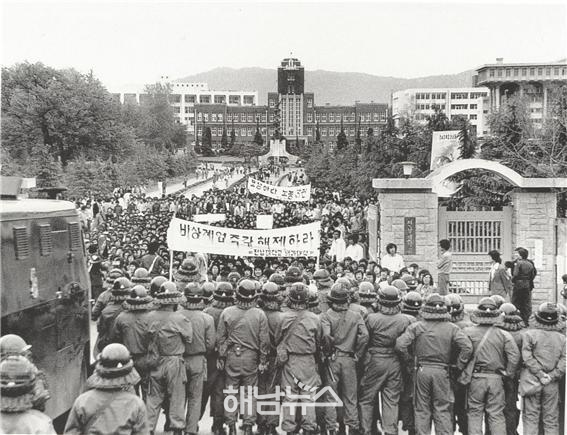 5.18 광주 민주화 운동 / 사진제공=chat gpt |
【전남·광주=AI호남뉴스】 aihnnews@kakao.com
1980년 5월 20일의 광주는 더 이상 침묵하지 않았다.
계엄군의 무차별 폭력과 언론 왜곡, 국가권력의 총칼 앞에서 시민들은 거리로 나섰고, 도시는 거대한 저항의 함성으로 뒤덮였다.
그날 광주는 단순한 시위 현장이 아니었다.
대한민국 민주주의가 국가폭력과 정면으로 충돌한 전쟁터였고, 시민들은 맨몸으로 역사를 지켜내고 있었다.
오전부터 계엄군은 진압봉을 앞세워 시민들을 무차별 구타했다.
도심 곳곳에서는 피 흘리는 시민들이 속출했고, 공포는 분노로 바뀌기 시작했다.
시민들의 저항은 조직적으로 확대됐다.
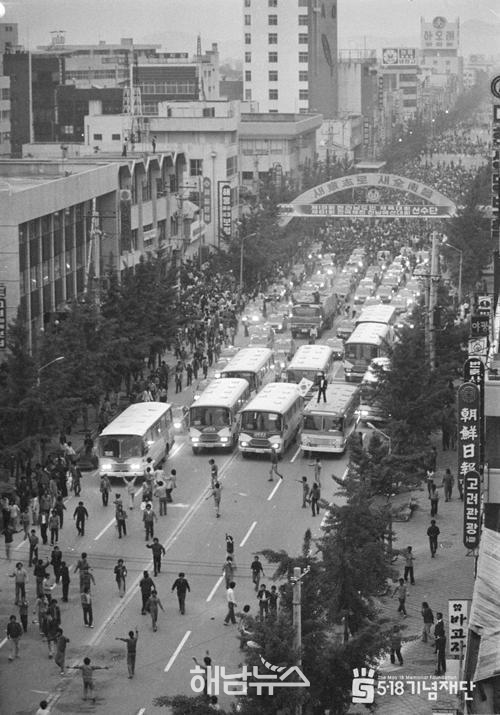
택시와 버스, 화물차 등 차량 211대가 도심을 돌며 경적 시위를 벌였고, 운수 노동자들까지 민주화 항쟁에 동참했다.
차량들이 만들어낸 거대한 경적 소리는 계엄군의 총칼에 맞선 시민들의 절규이자 “광주를 살려내라”는 외침이었다.
오후 3시 50분경 금남로 2~3가에는 시민 5천여 명이, 금남로 4가에는 3천여 명이 운집했다.
이어 오후 7시 15분부터는 버스와 택시들이 금남로를 중심으로 본격적인 차량시위를 전개했고, 노동청 앞과 금남로 일대에는 4천여 명의 시민이 모여 계엄 철폐와 민주화를 요구했다.
그러나 군은 대화를 선택하지 않았다.
오후 7시 20분, 11공수여단은 경찰기동대 차량을 앞세워 차량 시위대 강제 해산 작전에 돌입했다.
시민을 보호해야 할 국가권력은 오히려 시민을 적으로 규정하고 진압 대상으로 삼았다.
그날 밤 광주의 분노는 언론으로 향했다.
오후 8시, 대의동 광주MBC 앞에는 시민 5천여 명이 모여 “왜 진실을 보도하지 않느냐”며 공정보도를 요구했다.
당시 언론은 계엄군의 폭력을 외면하거나 왜곡 보도했고, 시민들의 희생은 철저히 침묵 속에 가려지고 있었다.
결국 분노는 폭발했다.
오후 8시 30분, 시민들의 항의 속에 광주MBC 건물에 불이 났고, 이어 방송 기능은 사실상 마비됐다.
오후 9시에는 광주MBC와 광주KBS 방송이 중단됐다.
그날 언론 내부에서도 양심의 저항은 있었다.
언론 통제와 왜곡 보도에 항의하며 광주일보 기자들이 집단 사직서를 제출했다.
진실을 침묵시키라는 권력의 명령 앞에서, 일부 언론인들은 직업보다 양심을 선택했다.
하지만 참극은 여기서 끝나지 않았다.
밤 9시 25분, 햇불시위대 200여 명이 광주역으로 향했다.
이미 광주 전역은 긴장과 공포로 뒤덮여 있었고, 계엄군은 실탄 사용 준비에 들어가고 있었다.
밤 9시 50분, 최세창 3공수여단장은 공수부대원들에게 실탄 지급을 지시했다.
그리고 밤 11시.
3공수여단은 광주역 일대에서 시민들을 향해 기관총과 M16 소총을 집단 발포했다.
수많은 시민들이 총탄에 쓰러졌고, 광주역에서는 최소 7명이 목숨을 잃었다.
대한민국 군대가 국민을 향해 전쟁 무기까지 동원한 참혹한 국가폭력이 현실이 된 순간이었다.
같은 날 오전 9시에는 31사단 광주 시내 무기고에 보관 중이던 소총과 실탄이 군부대로 회수됐고, 정오에는 정호용 특전사령관과 윤흥정 전교사령관이 만나 강경 진압 방침을 논의한 것으로 알려졌다.
이는 발포와 유혈 진압이 우발적 충돌이 아니라 사전에 준비되고 조직된 작전이었음을 보여주는 정황으로 남아 있다.
그날 광주에는 3공수여단 병력까지 추가 투입되며 총 3천400여 명의 계엄군이 배치됐다.
도시는 군홧발 아래 짓밟혔고, 시민들은 피로 민주주의를 지켜야 했다.
1980년 5월 20일.
그날의 광주는 국가폭력에 맞선 시민 저항의 상징이었다.
택시 기사와 버스 기사, 학생과 노동자, 시민과 기자들까지 모두가 거리로 나와 “대한민국은 국민의 나라여야 한다.”고 외쳤다.
그러나 국가는 총으로 답했다.
우리는 결코 잊어서는 안 된다.
광주의 피는 단지 과거의 희생이 아니다.
오늘의 민주주의가 어디에서 시작됐는지를 증명하는 살아 있는 역사다.
그리고 묻지 않을 수 없다.
국민을 향해 총을 겨눈 권력은 과연 누구를 위한 국가였는가.
 5.18 광주 민주화 운동 / 사진제공=chat gpt |
【AI Honam News Column】
“Gwangju Resisted with Blood” — On May 20, 1980, State Violence Answered Citizens’ Anger with Bullets
211 Taxis and Buses Joined Horn Protests, Journalists Resigned Against Media Control… and the Mass Shooting at Gwangju Station
【Jeonnam·Gwangju = AI Honam News】 aihnnews@kakao.com
On May 20, 1980, Gwangju refused to remain silent any longer.
Faced with indiscriminate violence by martial law troops, distorted media coverage, and the guns of state power, citizens poured into the streets, and the city became engulfed in cries of resistance.
That day, Gwangju was not merely the site of a protest.
It was a battlefield where South Korea’s democracy collided head-on with state violence, and ordinary citizens stood unarmed to defend history itself.
From the morning onward, martial law forces brutally beat civilians with clubs.
Across downtown Gwangju, bleeding citizens collapsed in the streets, and fear gradually transformed into fury.
The citizens’ resistance rapidly became organized and widespread.
A total of 211 vehicles — including taxis, buses, and trucks — drove through the city in coordinated horn protests, as transportation workers joined the democratic uprising.
The deafening sound of horns became both a desperate cry against the military’s guns and a collective plea to “Save Gwangju.”
At around 3:50 p.m., approximately 5,000 citizens gathered near Geumnam-ro 2-ga and 3-ga, while another 3,000 assembled near Geumnam-ro 4-ga.
Beginning at 7:15 p.m., buses and taxis launched a full-scale vehicle protest centered around Geumnam-ro, while some 4,000 demonstrators gathered near the Labor Office and surrounding streets demanding the lifting of martial law and the restoration of democracy.
But the military chose not dialogue, but force.
At 7:20 p.m., the 11th Special Forces Brigade began operations to disperse the vehicle protesters using riot-control vehicles.
The state, which should have protected its citizens, instead identified them as enemies to be suppressed.
That evening, the citizens’ anger turned toward the media.
At 8:00 p.m., roughly 5,000 people gathered in front of Gwangju MBC in Daeui-dong, demanding fair reporting and asking, “Why are you hiding the truth?”
At the time, much of the media either ignored or distorted reports of military brutality, while the suffering of Gwangju’s citizens was buried in silence.
Eventually, public outrage exploded.
At 8:30 p.m., amid mounting protests, a fire broke out at the Gwangju MBC building, effectively paralyzing its broadcasting operations.
By 9:00 p.m., broadcasts from both Gwangju MBC and Gwangju KBS had been suspended.
Yet even inside the media, there were acts of conscience.
Reporters from the Gwangju Ilbo newspaper collectively submitted resignation letters in protest against media censorship and manipulated reporting.
Faced with orders to silence the truth, some journalists chose conscience over career.
But the tragedy did not end there.
At 9:25 p.m., approximately 200 torch-bearing demonstrators marched toward Gwangju Station.
By then, the entire city was consumed by fear and tension, while martial law forces prepared to use live ammunition.
At 9:50 p.m., Choi Se-chang, commander of the 3rd Special Forces Brigade, ordered live rounds to be distributed to paratroopers.
Then, at 11:00 p.m., the 3rd Special Forces Brigade opened collective fire with machine guns and M16 rifles on civilians near Gwangju Station.
Countless citizens fell under gunfire, and at least seven people were killed near the station.
It was the moment when the horrifying reality of a nation’s military turning wartime weapons against its own people became undeniable.
Earlier that same morning, at 9:00 a.m., rifles and ammunition stored at a downtown armory belonging to the 31st Division had already been retrieved and moved back to military units.
At noon, Special Warfare Commander Jeong Ho-yong and Combat Education Command Commander Yoon Heung-jeong reportedly met to discuss a hardline suppression strategy.
These developments strongly suggest that the bloodshed and live-fire crackdown were not accidental clashes, but premeditated and organized operations.
By that day, additional troops from the 3rd Special Forces Brigade had been deployed, bringing the total number of martial law troops in Gwangju to approximately 3,400.
The city was trampled beneath military boots, and citizens were forced to defend democracy with their blood.
May 20, 1980.
That day’s Gwangju became the ultimate symbol of civic resistance against state violence.
Taxi drivers, bus drivers, students, laborers, ordinary citizens, and journalists alike all took to the streets, crying out that “South Korea must belong to its people.”
But the state answered them with bullets.
We must never forget.
The blood shed in Gwangju is not merely a tragedy of the past.
It is living history — proof of where today’s democracy truly began.
And we must continue to ask:
A government that pointed guns at its own citizens — whose nation was it truly protecting?
 해남뉴스 박충배 편집 및 논설위원 haenamnews@kakao.com