2026.03.31 (화) 05:18




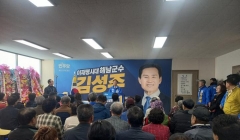
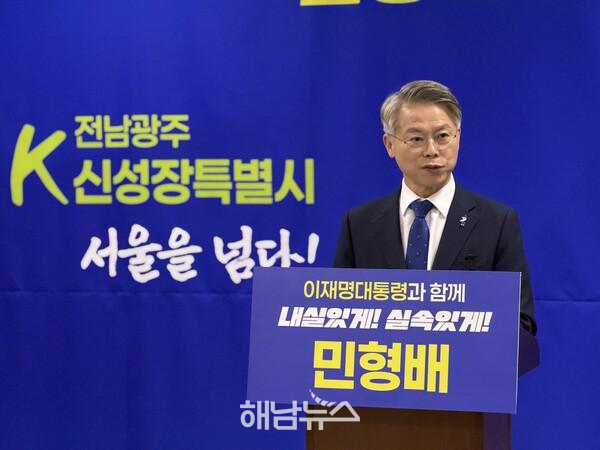 민형배 전남광주특별시장 예비후보 / 사진제공=민형배의원실 |
전남·광주 통합특별시를 둘러싼 정책 경쟁이 ‘속도’에서 ‘정확성’으로 방향을 틀고 있다.
광역철도를 둘러싼 논쟁이 단순한 정치공방을 넘어 ‘사실 왜곡 논란’으로 확산되면서, 정책 검증의 본질이 시험대에 오른 것이다.
더불어민주당 전남·광주통합특별시장 경선 후보인 민형배 국회의원 측 ‘민심캠프’는 30일 공식 논평을 통해 “지금 필요한 것은 정치적 공방이 아니라 사실관계의 정확한 정리”라고 직격했다.
■ “왜곡된 전제 위 논쟁… 정책 검증 아니다”
민심캠프는 전날 열린 광주권 정책배심원 심층토론회에서 불거진 광역철도 논란에 대해 강한 유감을 표했다.
캠프는 “시민사회 제안의 취지와 광주-나주 광역철도 사업의 현재 추진 단계가 충분히 설명되지 못했다”며 “불완전한 정보 위에서의 논쟁은 정책 검증이 아니라 정치적 소비에 불과하다”고 지적했다.
이어 “광역철도 논의는 상대를 공격하는 도구가 아니라, 광주와 전남을 하나의 생활권으로 연결하는 실질적 해법을 찾는 과정이어야 한다”고 강조했다.
■ “이미 한 차례 실패한 사업… 냉정한 재검토 단계”
핵심 쟁점인 광주-나주 광역철도에 대해서는 보다 직설적인 입장을 내놨다.
민심캠프는 “해당 사업은 이미 예비타당성조사를 통과하지 못한 전력이 있다”며 “현재는 ‘추진 여부’가 아니라 ‘어떤 방식이 현실적인가’를 다시 따져야 하는 단계”라고 밝혔다.
특히 “확정되지 않은 사안을 마치 결론 난 것처럼 말하거나, 재검토 자체를 불필요한 것으로 몰아가는 것은 명백한 사실 왜곡”이라고 선을 그었다.
■ “신설 집착 버려야… 기존 철도망 활용이 현실 해법”
민심캠프는 시민사회 제안의 본질도 다시 짚었다.
캠프는 “제안의 핵심은 특정 노선을 고집하자는 것이 아니다”라며 “막대한 비용과 시간이 드는 신설 노선만을 유일한 해법으로 보는 접근에서 벗어나야 한다.”고 강조했다.
대안으로는 호남선, 경전선, 전라선 등 기존 철도망을 활용한 생활권 연결 방식을 제시했다.
이는 광주-나주-목포 축과 광주-순천-광양만권 축을 보다 빠르고 현실적으로 연결할 수 있는 방안이라는 설명이다.
■ “광역철도는 생존 문제… 정치 소재 아니다”
민심캠프는 이번 논란의 본질을 ‘생활권 문제’로 규정했다.
“광역철도는 출퇴근과 통학 등 시도민의 일상과 직결된 핵심 인프라”라며 “정치적 공방의 소재로 소비될 사안이 아니다”라고 못 박았다.
이어 “이미 실패한 추진 경과를 인정하는 것에서 출발해야 한다.”며 “적은 비용으로 더 넓은 효과를 낼 수 있는 대안을 책임 있게 검증하는 것이 정치의 역할”이라고 강조했다.
■ “정치가 아니라 설계의 문제”
이번 논평은 단순 반박을 넘어, 광역철도 논쟁을 ‘정치 vs 정책’ 구도로 재정의한 메시지로 해석된다.
결국 쟁점은 하나다.
“새로 만들 것인가, 아니면 지금 있는 것을 더 잘 쓸 것인가.”
전남·광주 통합특별시를 향한 경쟁은 이제 ‘누가 더 크게 말하느냐’가 아니라 ‘누가 더 현실적으로 설계하느냐’의 싸움으로 이동하고 있다.
“Metropolitan Rail Is a Matter of Facts, Not Political Bickering”… Min Hyung-bae Camp Fires Back
Subheadline: “Project Failed Feasibility Test—Reevaluation Is the Principle… Existing Rail Networks Offer a Realistic Alternative”
[Jeonnam–Gwangju = AI Honam News] aihnnews@kakao.com
The policy competition surrounding the proposed integrated special metropolitan city of Jeonnam and Gwangju is shifting from “speed” to “accuracy.”
Debates over metropolitan rail development are escalating beyond political disputes into controversies over factual distortions, putting the very essence of policy verification to the test.
The campaign team (“Minshim Camp”) of Min Hyung-bae, a candidate in the Democratic Party’s primary for mayor of the proposed Jeonnam–Gwangju Integrated Special City, issued an official statement on the 30th, emphasizing that “what is needed now is not political confrontation, but a clear correction of the facts.”
■ “Debates Based on Distorted Premises… Not Policy Verification”
The Minshim Camp expressed strong regret over the controversy surrounding metropolitan rail raised during the Gwangju policy jury debate held the previous day.
The camp stated,
“The intent of civil society proposals and the current status of the Gwangju–Naju metropolitan rail project were not sufficiently explained,” adding that
“debates based on incomplete information are not policy verification, but merely political consumption.”
It further stressed that
“discussions on metropolitan rail should not be used as tools to attack opponents, but as a process to find practical solutions to connect Gwangju and Jeonnam into a unified living zone.”
■ “A Project That Already Failed Once… Now in a Phase of Cold Reevaluation”
Regarding the key issue of the Gwangju–Naju metropolitan rail project, the camp took a more direct stance.
It pointed out that
“the project has already failed a preliminary feasibility study,” and emphasized that
“the current phase is not about whether to proceed, but about reassessing what approach is realistically viable.”
The camp also drew a clear line, stating:
“Presenting an unconfirmed project as if it were finalized, or dismissing the need for further review, is a clear distortion of facts.”
■ “Abandon Obsession with New Lines… Utilizing Existing Rail Is the Realistic Solution”
The Minshim Camp also clarified the core intent of civil society proposals.
“The key is not to insist on a specific new route,” it said,
“but to move away from the assumption that costly and time-consuming new lines are the only solution.”
As alternatives, it proposed utilizing existing rail networks such as:
Honam Line
Gyeongjeon Line
Jeolla Line
This approach, the camp explained, would enable faster and more practical connections between:
the Gwangju–Naju–Mokpo axis, and
the Gwangju–Suncheon–Gwangyang Bay industrial zone.
■ “Metropolitan Rail Is a Matter of Survival… Not Political Ammunition”
The camp framed the issue fundamentally as one of everyday living.
“Metropolitan rail is a core infrastructure directly tied to citizens’ daily lives—commuting and schooling,” it stated,
“and must not be reduced to a tool for political disputes.”
It added that
“policy discussions must begin with acknowledging past failures,” and
“the role of politics is to responsibly examine alternatives that deliver broader impact at lower cost.”
■ “This Is Not Politics, But Design”
The statement goes beyond a simple rebuttal, reframing the metropolitan rail debate as a confrontation between “politics vs. policy design.”
Ultimately, the core question is this:
“Should we build something new, or use what we already have more effectively?”
The competition for leadership of the Jeonnam–Gwangju Integrated Special City is no longer about who speaks louder—
but about who can design more realistically.
 해남뉴스 박충배 편집 및 논설위원 haenamnews@kakao.com