| “지역에서 배우고 세계로”…해남교육, ‘K-교육특별시’ 미래교실 준비한다
김경범 서울대 교수 초청 교육공동체 역량강화 연수…학교 관리자·교직원 참여 해남뉴스 박충배 편집/논설 news@hbcnews.kr |
| 2026년 09월 16일(수) 13:32 |
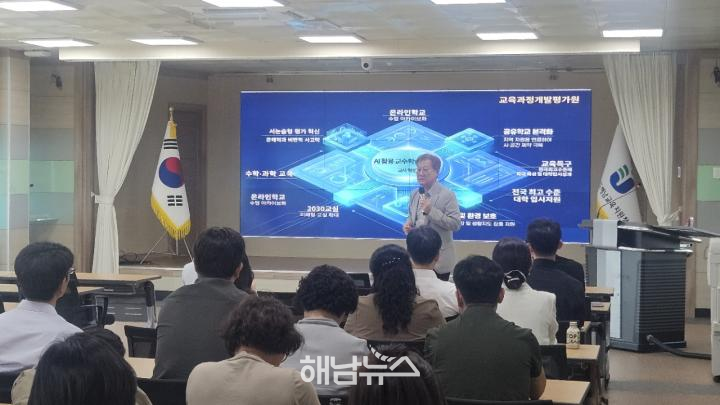 ‘K-교육특별시’ 미래교실 준비한다 / 사진제공=해남교육지원청 |
“학생이 어디에 살고 있느냐에 따라 배움의 기회가 달라져서는 안 된다.”
전남광주통합특별시 해남교육지원청이 AI 맞춤형 교육과 지역인재 육성, 학교 자율성 확대를 중심으로 한 ‘K-교육특별시’ 미래교육 준비에 나섰다.
특히 학생들이 지역에서 배우고 성장하면서도 세계를 향해 도전할 수 있도록 학교와 지역사회, 대학, 기업을 하나의 교육생태계로 연결하는 방안이 제시돼 향후 해남교육 현장에 어떤 변화로 이어질지 주목된다.
해남교육지원청은 지난 15일 청사 3층 대회의실에서 유·초·중·고 교장·원장과 교감·원감, 행정실장, 희망 교직원 등을 대상으로 ‘K-교육특별시 대한민국 교육의 표준을 세우는 교육공동체 역량강화 연수’를 실시했다.
오전과 오후로 나눠 진행된 이날 연수에는 김경범 서울대학교 교수이자 K-교육특별시 준비위원회 위원장이 강사로 나섰다.
김 교수는 ‘미래를 여는 학교, 더 큰 대한민국을 만드는 전남광주교육’을 주제로 전남·광주 교육이 앞으로 나아가야 할 방향과 K-교육특별시의 정책 구상을 설명했다.
핵심은 ‘교육이 지역을 살리고, 지역이 교육을 완성하는 교육생태계’ 구축이다.
김 교수는 이를 실현하기 위한 3대 정책과제로 ▲자율과 분권의 교육자치 ▲지역이 키우고 세계를 주도하는 인재양성 ▲학생 성장을 책임지는 교실을 제시했다.
기존의 통제와 관리 중심 교육행정에서 벗어나 학교 현장의 자율성을 확대하고, 교육청은 학교와 학생을 지원하는 체제로 변화해야 한다는 것이다.
■ 지역에서 키운 인재가 다시 지역으로…‘교육지산지소’
이번 연수에서는 지역에서 배우고 성장한 학생이 다시 지역의 미래를 만들어가는 이른바 ‘교육지산지소’도 주요 화두로 제시됐다.
학교 교육을 학교 안에만 가두지 않고 지역사회와 대학, 기업, 산업현장까지 연결해 지역 전체를 하나의 교육공간으로 확장하자는 구상이다.
지역의 미래산업과 일자리를 교육과 연계해 학생들에게 진로와 성장의 기회를 제공하고, 지역에서 키운 인재가 다시 지역 발전을 이끄는 선순환 구조를 구축하겠다는 의미를 담고 있다.
이는 학령인구 감소와 청년 유출 등 지역소멸 문제에 직면한 해남과 같은 농어촌 지역에서 더욱 중요한 과제로 꼽힌다.
학생 수가 적거나 농어촌에 거주한다는 이유로 교육과정과 진로·진학, 체험교육의 선택지가 줄어드는 구조를 넘어 지역 간 교육격차를 줄이는 것이 K-교육특별시의 실질적인 과제가 될 전망이다.
■ AI가 학생별 학습 지원…‘2030교실’ 확대
교실의 변화도 제시됐다.
AI 맞춤형 교수·학습 플랫폼을 비롯해 전남·광주 공유학교, 서·논술형 평가 강화, 교원 교류와 공동연구, 기초학력 통합지원체계 등을 통해 학생 한 명 한 명의 학습과 성장을 보다 촘촘하게 지원한다는 구상이다.
AI를 활용해 학생별 학습 수준과 특성에 맞는 교육을 지원하고 온라인학교 수업을 아카이브화해 필요한 학생들이 다양한 수업에 접근할 수 있도록 하는 방안도 소개됐다.
미래형 ‘2030교실’ 확대와 수학·과학 교육 강화도 주요 과제로 제시됐다.
평가방식 역시 단순한 지식 암기와 정답 찾기에서 벗어나 학생의 문해력과 비판적 사고력, 문제해결력을 키우는 방향으로 전환하고 서·논술형 평가를 강화해야 한다는 점이 강조됐다.
지역의 다양한 인적·물적 교육자원을 학교와 연결하는 ‘공유학교’도 확대해 학교 규모와 지역에 따른 교육기회의 차이를 줄여나간다는 구상이다.
■ 해남의 자연·문화에 AI·에너지 연결한다
해남교육지원청은 이 같은 정책 방향을 해남의 지역적 특성과 결합해 ‘해남형 교육생태계’로 발전시키겠다는 구상이다.
해남이 보유한 역사·문화와 인문·생태 자원을 교육과정에 적극 활용하는 한편 AI와 에너지 등 미래산업 분야까지 교육과 연결해 학생들의 진로와 미래역량을 넓혀나간다는 것이다.
조연주 해남교육장은 “앞으로의 교육은 학생이 어디에 살고 있느냐에 따라 배움의 기회가 달라지는 교육이 아니라, 어느 지역에서든 자신의 가능성을 마음껏 펼칠 수 있는 교육이어야 한다.”고 말했다.
이어 “해남의 아이들이 지역에서 배우고 성장하면서도 세계를 향해 도전할 수 있도록 해남의 인문·생태적 자산과 AI·에너지 등 미래산업을 교육과 연결해 해남만의 교육생태계를 만들어가겠다”고 강조했다.
조 교육장은 또 “이번 연수를 계기로 학교와 교육지원청이 K-교육특별시의 변화를 함께 준비하고, ‘함께하는 지역공동체, 천년의 미래를 여는 해남교육’이 대한민국 미래교육의 새로운 모델로 성장할 수 있도록 교육공동체와 함께 노력하겠다.”고 밝혔다.
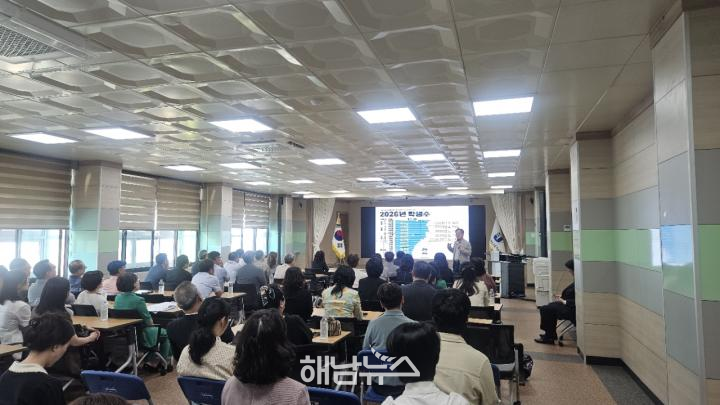 ‘K-교육특별시’ 미래교실 준비한다 / 사진제공=해남교육지원청 |
“Learn Locally, Go Global”… Haenam Education Prepares Future Classrooms for the ‘K-Education Special City’
Seoul National University Professor Kim Kyung-beom invited for capacity-building program for the education community, attended by school administrators and educators
Three key policy priorities presented: autonomous and decentralized education governance, regional talent development, and student growth-centered classrooms
Future education blueprint includes AI-powered personalized learning, shared schools, essay-based assessment, and integrated support for foundational learning
‘Local Education Ecosystem’ connects schools, communities, universities and businesses to nurture regional talent and address regional population decline
Superintendent Cho Yeon-joo: “We will build a unique Haenam education ecosystem by connecting our humanities and ecological assets with future industries such as AI and energy.”
[Haenam = Haenam News] haenamnews@kakao.com
“Educational opportunities should not differ depending on where a student lives.”
The Haenam Office of Education is preparing for the future of education under the vision of the “K-Education Special City,” focusing on AI-powered personalized learning, regional talent development and greater autonomy for schools.
In particular, a new educational ecosystem was proposed that connects schools with local communities, universities and businesses, enabling students to learn and grow in their home region while developing the capabilities to compete and contribute globally. Attention is now focused on how this vision will translate into tangible changes in Haenam’s schools and classrooms.
On September 15, the Haenam Office of Education held a capacity-building program titled “K-Education Special City: Setting a New Standard for Education in Korea” in the third-floor conference hall of its headquarters.
The program brought together principals and vice principals of kindergartens, elementary, middle and high schools, administrative office heads and other interested educators.
The morning and afternoon sessions featured Professor Kim Kyung-beom of Seoul National University, who also serves as chair of the K-Education Special City Preparatory Committee.
Under the theme “Schools That Open the Future, Jeonnam-Gwangju Education for a Greater Korea,” Professor Kim outlined the future direction of education in Jeonnam and Gwangju and presented the policy vision for the K-Education Special City.
At the heart of the vision is the creation of “an educational ecosystem in which education revitalizes the region and the region completes education.”
Professor Kim identified three major policy priorities: ▲ autonomous and decentralized education governance ▲ nurturing regional talent capable of leading on the global stage ▲ classrooms that take responsibility for every student’s growth.
The proposed shift calls for moving away from an education administration centered on control and management toward a system that gives schools greater autonomy while enabling education authorities to provide stronger support closer to schools and students.
Nurturing Talent Locally — and Bringing It Back to the Region
One of the major themes of the program was the concept of “local education for local development,” in which students who learn and grow within their communities ultimately contribute to shaping the future of those communities.
The vision seeks to expand education beyond the boundaries of individual schools by connecting schools with local communities, universities, businesses and industrial sectors, effectively transforming the entire region into an extended learning environment.
By linking education with future industries and employment opportunities in the region, students would gain broader opportunities for career development and personal growth, while locally nurtured talent could in turn contribute to regional development.
This approach is particularly significant for rural communities such as Haenam, which face challenges including a declining school-age population and the continued outflow of young people.
A key practical challenge for the K-Education Special City will therefore be reducing educational disparities so that students do not face fewer choices in curriculum, career exploration, college preparation or experiential learning simply because they attend a small school or live in a rural community.
AI-Powered Personalized Learning and Expansion of ‘2030 Classrooms’
Changes to the classroom were also outlined during the program.
The proposed future education model includes AI-powered personalized teaching and learning platforms, shared-school programs across Jeonnam and Gwangju, expanded essay and written-response assessments, teacher exchanges and collaborative research, and an integrated support system for foundational learning.
AI would be used to provide learning support tailored to each student’s individual level and needs, while online school classes would be archived so that students could access a wider range of learning opportunities when needed.
The expansion of future-oriented “2030 Classrooms” and stronger mathematics and science education were also presented as key priorities.
Assessment methods would also shift away from simple memorization and selecting correct answers toward developing literacy, critical thinking and problem-solving skills, with greater emphasis placed on written-response and essay-based assessments.
Shared-school programs would connect schools with a wide range of human and educational resources available throughout the region, helping students overcome geographical and institutional limitations and gain access to more diverse, high-quality learning opportunities.
Connecting Haenam’s Nature and Culture with AI and Energy
The Haenam Office of Education plans to combine these policy directions with Haenam’s unique regional strengths to develop what it describes as a “Haenam-style educational ecosystem.”
The initiative aims to actively incorporate Haenam’s historical, cultural, humanities and ecological resources into education while also connecting students with future-oriented industries such as AI and energy, broadening their career opportunities and future competencies.
“The education of the future should not be one in which students have different opportunities to learn depending on where they live,” Superintendent Cho Yeon-joo said. “Every student, regardless of region, should be able to fully realize their potential.”
“We will build an educational ecosystem unique to Haenam by connecting the region’s humanities and ecological assets with future industries such as AI and energy, so that our children can learn and grow locally while taking on challenges on the global stage,” Cho added.
Cho also said, “Through this program, schools and the Office of Education will prepare together for the changes envisioned under the K-Education Special City initiative. Together with our education community, we will work to ensure that ‘Haenam Education — Building a Millennium of the Future with the Local Community’ can grow into a new model for the future of education in Korea.”
 해남뉴스 박충배 편집/논설 news@hbcnews.kr