| “학생 수 적다고 교육기회까지 적어선 안 돼”…해남 학생들이 직접 말한 ‘우리가 바라는 학교’
초·중·고 학생대표 40명, 지역학생연합회 리더십 캠프 참여 해남뉴스 박충배 편집/논설 news@hbcnews.kr |
| 2026년 09월 14일(월) 12:53 |
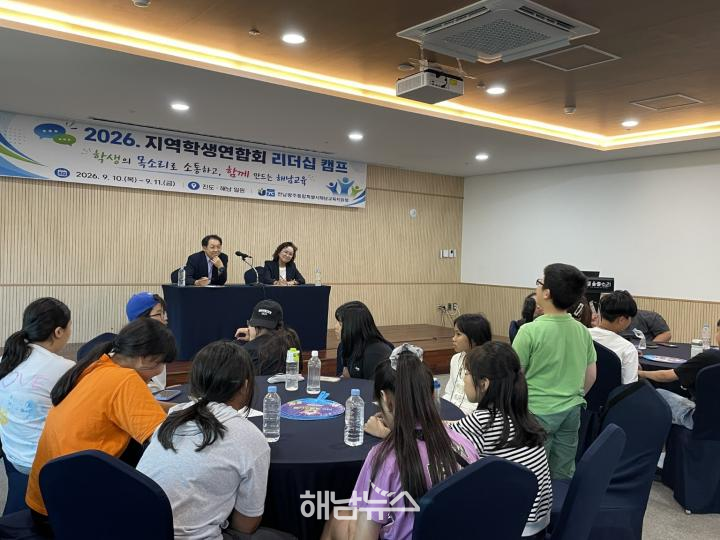 학생들과 함께한 ‘교육장과의 대화’/ 사진제공=해남교육지원청 |
“학교의 규모나 학생 수에 관계없이 다양한 교과와 체험, 진로·진학 프로그램을 경험할 수 있었으면 좋겠습니다.”
해남지역 초·중·고 학생대표들이 한자리에 모여 자신들이 바라는 학교와 해남교육의 미래를 직접 이야기했다.
전남광주통합특별시해남교육지원청(교육장 조연주)은 지난 10일부터 11일까지 1박 2일간 진도와 해남 일원에서 관내 초·중·고 학생대표 40명이 참여한 가운데 ‘2026 지역학생연합회 리더십 캠프’를 운영했다.
이번 캠프는 학교와 학교급을 넘어 학생대표들이 서로 소통하고 교류하면서 리더십과 공동체 역량을 키우고, 지역의 역사·문화·생태자원을 직접 체험해 지역에 대한 이해와 역사의식, 생태 감수성을 높이기 위해 마련됐다.
특히 단순한 현장체험에 그치지 않고 학생들이 해남교육의 당사자로서 자신들이 원하는 교육환경과 교육기회를 직접 제안했다는 점에서 의미를 더했다.
첫날 학생들은 진도아리랑마을과 운림산방을 찾아 진도의 역사와 전통문화를 살펴봤다.
이어 우수영국민관광단지에서 명량해상케이블카와 진도타워를 체험하며 충무공 이순신 장군과 명량대첩의 역사적 의미를 되새겼다.
지역학생연합회 하반기 정기회와 학생 참여형 리더십·공동체 프로그램도 진행됐다. 서로 다른 학교에서 모인 학생들은 학교생활과 학생자치 등에 대한 의견을 나누고 공동의 과제를 함께 고민했다.
■ 학생들이 교육장에게 직접 전한 ‘해남교육의 미래’
이번 캠프에서 눈길을 끈 프로그램은 ‘교육장과의 대화’였다.
학생들은 조연주 교육장과 마주 앉아 교육혁신선도지역을 비롯한 해남교육의 미래와 자신들이 바라는 학교의 모습에 대해 의견을 제시했다.
특히 학생들은 학교 규모나 지역에 따라 교육기회가 달라져서는 안 된다며 다양한 교과수업과 체험활동, 진로·진학 프로그램 등을 폭넓게 경험할 수 있는 교육환경에 대한 바람을 나타냈다.
농어촌지역은 학생 수와 학교 규모 등의 여건으로 도시지역에 비해 선택할 수 있는 교육 프로그램이 제한될 가능성이 있는 만큼, 학생들의 이번 제안은 해남교육이 앞으로 풀어야 할 과제와도 맞닿아 있다.
학생들의 목소리를 단순히 듣는 데 그치지 않고 실제 교육정책과 학생자치 사업에 얼마나 반영할 것인지가 앞으로 중요한 부분이다.
둘째 날에는 해남 산이정원에서 ‘정원탐험대’ 생태환경 체험이 진행됐다.
학생들은 숲과 정원을 직접 탐방하며 자연환경과 생태계의 중요성을 배우고, 지역이 보유한 생태·문화자원이 하나의 교육공간으로 활용될 수 있다는 점을 체험했다.
참가 학생들은 다른 학교 학생들과 새로운 관계를 형성하고 함께 활동하는 과정에 높은 만족감을 나타냈으며, 역사·문화 체험과 공동체 활동, 학생들이 직접 자신의 의견을 이야기할 수 있었던 프로그램에도 긍정적인 반응을 보였다.
조연주 교육장은 “학생들과 이야기를 나누며 우리 학생들이 해남교육의 미래와 자신들에게 필요한 교육기회에 대해 깊이 있게 고민하고 있다는 것을 확인할 수 있었다”고 말했다.
이어 “학생 수와 학교 규모에 따라 교육기회가 달라지지 않도록 적정규모의 교육환경을 조성하고, 학교와 지역이 함께 다양한 교육기회를 만들어 가는 것이 중요하다”고 강조했다.
또 “앞으로도 학생들이 단순히 교육정책의 대상이 아니라 자신의 학교와 지역교육에 직접 의견을 제시하고 참여할 수 있도록 소통의 기회를 확대하겠다”고 밝혔다.
해남교육지원청은 이번 캠프에서 제시된 학생들의 의견을 향후 지역학생연합회 운영과 학생자치 활성화 사업에 반영할 계획이다.
또 ‘인간다움과 미래다움을 갖춘 해남다움 인재 육성’을 목표로 학생 참여 중심 교육활동과 지역의 역사·생태·문화자원을 연계한 교육을 지속적으로 확대할 방침이다.
결국 이번 캠프의 성과는 학생들이 어떤 의견을 냈느냐를 넘어 그 목소리가 실제 학교 현장과 해남교육 정책에 얼마나 반영되느냐에 달려 있다. 학생들이 교육의 대상에서 교육의 주체로 자리 잡을 수 있도록 지속적인 참여 통로를 만드는 것이 해남교육의 다음 과제다.
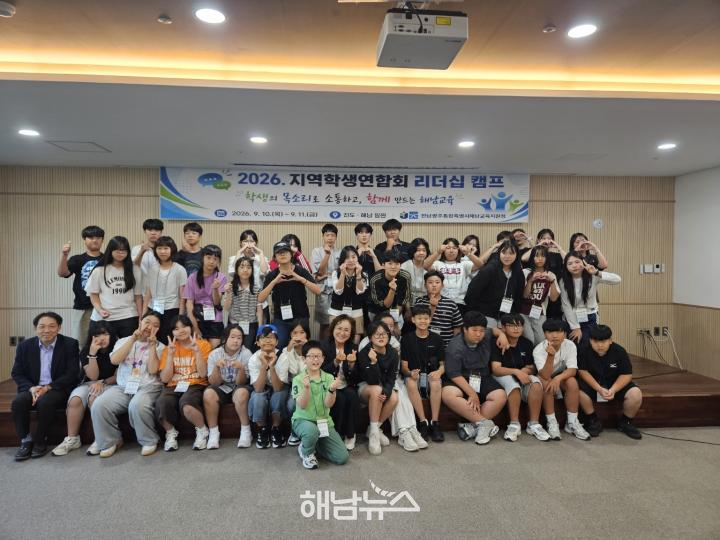 리더십 캠프 참가학생 기념촬영 / 사진제공=해남교육지원청 |
“Fewer Students Shouldn’t Mean Fewer Educational Opportunities”… Haenam Students Voice Their Vision for the Schools They Want
40 elementary, middle and high school student representatives participate in Regional Student Council Leadership Camp
Two-day, one-night program in Jindo and Haenam combines history, culture and ecology with student交流
Students directly propose their desired educational environment and vision for schools in dialogue with superintendent
“Students should have access to diverse subjects, experiences, and career and college guidance regardless of school size”
From the history of the Battle of Myeongnyang to ecological activities at Sani Garden… expanding education linked to local resources
Superintendent Cho Yeon-joo: “We will expand opportunities for students to voice their opinions and participate directly in education policy”
[Haenam = Haenam News] haenamnews@kakao.com
“Regardless of the size of our schools or the number of students, we hope to have opportunities to experience a wide range of subjects, hands-on activities, and career and college guidance programs.”
Elementary, middle and high school student representatives from across Haenam gathered to speak directly about the schools they want and the future they envision for education in the region.
The Haenam Office of Education of the Jeonnam-Gwangju Special Metropolitan Government, headed by Superintendent Cho Yeon-joo, held the 2026 Regional Student Council Leadership Camp from September 10 to 11. The two-day, one-night program took place in Jindo and Haenam and brought together 40 student representatives from elementary, middle and high schools across the county.
The camp was designed to help student representatives communicate and build relationships beyond the boundaries of individual schools and grade levels while developing leadership and a stronger sense of community.
It also provided opportunities for students to experience the region’s historical, cultural and ecological resources firsthand, strengthening their understanding of the local community, historical awareness and ecological sensitivity.
More importantly, the program went beyond a conventional field trip by giving students an opportunity to participate as stakeholders in Haenam education and directly express what kind of educational environment and opportunities they want.
On the first day, students visited Jindo Arirang Village and Unrimsanbang, where they explored the history and traditional culture of Jindo.
They then traveled to the Usuyeong Tourist Complex, where they rode the Myeongnyang Marine Cable Car and visited Jindo Tower, reflecting on Admiral Yi Sun-sin and the historical significance of the Battle of Myeongnyang.
The program also included the Regional Student Council’s regular second-half meeting as well as student-centered leadership and community-building activities.
Students from different schools exchanged views on school life and student self-governance and discussed issues they share in common.
Students Speak Directly to the Superintendent About the Future of Haenam Education
One of the highlights of the camp was the “Dialogue with the Superintendent.”
Students sat down with Superintendent Cho Yeon-joo and shared their views on the future of education in Haenam, including the region’s educational innovation initiatives, as well as the kind of schools and learning environments they hope to see.
In particular, students stressed that educational opportunities should not vary depending on the size or location of a school.
They expressed a strong desire for an educational environment in which all students can access a broad range of academic subjects, experiential learning opportunities, and career and college guidance programs.
In rural communities, where student populations and school sizes are often smaller, the range of educational programs available to students can be more limited than in urban areas. In that respect, the students’ proposals also point to one of the key challenges facing the future of education in Haenam.
The next important step will be ensuring that the students’ voices are not merely heard, but meaningfully reflected in education policy and student self-governance programs.
On the second day, students took part in an ecological exploration program at Sani Garden in Haenam.
Walking through the forest and gardens, they learned about the value of the natural environment and the importance of ecosystems while experiencing firsthand how local ecological and cultural resources can be transformed into educational opportunities.
Participants expressed high levels of satisfaction with the opportunity to build new relationships with students from other schools and work together through various activities.
They also responded positively to the historical and cultural experiences, community-building activities, and programs that gave them opportunities to express their own views.
“Through my conversations with the students, I realized how deeply they are thinking about the future of education in Haenam and the educational opportunities they need,” Superintendent Cho said.
“It is important to create an appropriate educational environment so that students do not receive different levels of opportunity simply because of the number of students or the size of their school,” she added. “Schools and local communities must work together to provide a wider range of educational opportunities.”
Cho continued, “We will expand opportunities for communication so that students are not simply the recipients of education policy, but can directly express their views and participate in shaping their schools and local education.”
The Haenam Office of Education plans to incorporate the students’ suggestions from the camp into future Regional Student Council activities and initiatives aimed at strengthening student self-governance.
It will also continue to expand student-centered educational activities and programs connecting education with the region’s historical, ecological and cultural resources, with the goal of fostering students who embody humanity, future-oriented capabilities and the unique identity of Haenam.
Ultimately, the success of the leadership camp will not be measured simply by what students said, but by how much of their voices are actually reflected in schools and education policy.
Creating lasting channels through which students can move beyond being the recipients of education and become active participants in shaping it will be the next important task for Haenam education.
 해남뉴스 박충배 편집/논설 news@hbcnews.kr