| 대흥사 여의주봉 적멸마니보궁 사리탑 복원 및 진신사리 봉안 경과보고서
해남뉴스 박충배 편집/논설 news@hbcnews.kr |
| 2026년 09월 08일(화) 16:36 |
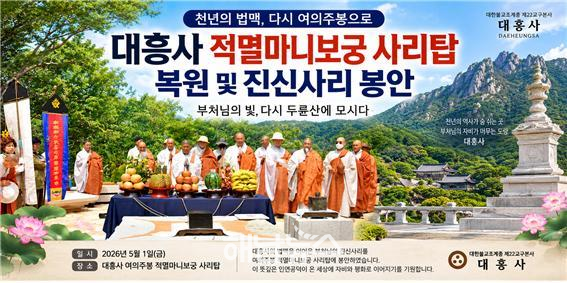 대흥사적멸마니보궁 봉안기 / 사진제공=해남뉴스 |
1. 석가여래 진신사리의 유래
불교 전승에 따르면 석가모니 부처님께서 열반하신 뒤 다비를 통해 나온 진신사리는 여덟 몫으로 나뉘어 인도 여러 지역에 사리탑을 세워 봉안되었습니다.
이후 인도를 통일한 마우리아왕조의 아쇼카왕은 부처님의 사리를 널리 나누어 봉안했으며, 이 과정에서 불교사에 전해지는 이른바 ‘팔만사천 사리탑’의 전승이 형성되었습니다.
부처님의 진신사리에 대한 신앙은 이후 인도에서 중국을 비롯한 동아시아 불교권으로 확산됐습니다.
송나라의 문인 소동파가 남긴 「진상원 석가사리탑명」에는 동정호 남쪽의 아육왕탑에 석가여래의 사리가 봉안되어 있었으며, 그 가운데 사리 3과가 방자명 거사에게 전해졌다는 기록이 남아 있습니다.
이는 동정호 일대 아육왕탑과 부처님 진신사리의 관계를 전하는 중요한 송대 문헌 기록입니다.
2. 대흥사로 이어진 진신사리의 전승
대흥사에 전해오는 전승에 따르면 이와 같은 진신사리의 일부가 오랜 세월 중국에서 전해져 청나라 말기의 대학자 옹방강 선생에게 이르렀다고 합니다.
이후 옹방강 선생과 학문적 인연을 맺었던 추사 김정희 선생을 통해 대흥사 연파혜장 선사에게 전해졌으며, 다시 초의선사와 수룡화상, 철선화상을 거쳐 풍암·취운 등 대흥사의 법맥을 이은 상수제자들에게 전승됐다고 전해집니다.
그리고 이 사리는 대흥사의 법맥을 따라 마침내 응송 노화상에게까지 전해지게 되었습니다.
이처럼 오랜 세월 소중하게 전승돼 온 진신사리를 보다 여법하게 모시기 위해 대흥사는 1982년 만월당 공양간 앞에 ‘석가여래 진신사리탑’을 조성해 봉안했습니다.
그로부터 44년 동안 진신사리는 이곳에 모셔져 대흥사를 찾는 사부대중의 귀의와 신앙의 대상이 되어 왔습니다.
3. 상월보선 대종사의 여의주봉 사리탑 복원 발원
대흥사 조실 상월보선 대종사께서는 생전에 대흥사 경내 호국대전 뒤편 여의주봉에 있었던 옛 사리탑이 외세와 격변의 세월을 거치면서 훼손되고 방치된 것을 늘 안타깝게 여기셨습니다.
대종사께서는 여의주봉의 사리탑을 반드시 다시 복원하고 그곳에 부처님의 진신사리를 여법하게 봉안하여 부처님의 가르침과 대흥사의 법맥을 후대에 전해야 한다는 뜻을 여러 차례 밝히셨습니다.
“여의주봉에 사리탑을 복원하여 부처님의 진신사리를 봉안해야 한다.”
이는 대종사께서 생전에 품으셨던 간절한 발원이었습니다.
그러나 여러 사정으로 뜻을 이루지 못한 채 세월이 흘렀고, 대종사의 발원은 후대가 반드시 완성해야 할 대흥사의 중요한 불사로 남게 되었습니다.
4. 성해법상 주지스님, 대종사의 발원을 받들다
마침내 시절인연이 도래하여 현 대흥사 주지 성해법상 스님께서 상월보선 대종사의 뜻을 받들어 여의주봉 적멸마니보궁 사리탑 복원불사를 추진하게 되었습니다.
이에 대흥사는 2026년 3월 31일, 1982년부터 진신사리를 모셔왔던 만월당 공양간 앞 기존 석가여래 진신사리탑을 정중하게 해체했습니다.
해체 과정에서 기존 사리탑에 봉안돼 있던 사리함과 진신사리를 여법한 절차에 따라 이운하고, 여의주봉 사리탑 복원과 봉안을 준비했습니다.
5. 여의주봉 적멸마니보궁 사리탑 복원
그리고 오늘 2026년 5월 1일, 마침내 대흥사 호국대전 뒤 여의주봉에 ‘적멸마니보궁 사리탑’을 복원 조성하고 석가여래 진신사리를 봉안하게 되었습니다.
1982년 만월당 앞 사리탑에 진신사리를 봉안한 지 44년 만에 부처님의 진신사리가 상월보선 대종사께서 그토록 발원하셨던 여의주봉으로 이운되는 뜻깊은 순간입니다.
6. 새 사리탑 봉안 내역
이번에 복원 조성된 여의주봉 적멸마니보궁 사리탑에는 각각의 의미를 지닌 성물이 봉안되었습니다.
먼저 사리탑 하층 기단 하대석 내부에는 월출산 용암사지에서 이운한 사리 7과를 봉안했습니다.
이와 함께 상월보선 대종사께서 생전에 인도 불교 4대 성지를 순례하시면서 모셔온 성토로 조성한 보주 8과를 함께 봉안했습니다.
그리고 사리탑의 핵심인 1층 탑신석 내부에는 지난 3월 31일 만월당 공양간 앞 기존 석가여래 진신사리탑을 해체하면서 이운한 옛 사리함과 그 안에 모셔진 진신사리 6과를 정중하게 봉안했습니다.
이에 따라 이번 적멸마니보궁 사리탑에는
월출산 용암사지에서 이운한 사리 7과,
상월보선 대종사의 인도 4대 성지 순례 성토로 조성한 보주 8과,
그리고 기존 만월당 앞 사리탑에서 이운한 진신사리 6과와 사리함이 각각 봉안되었습니다.
7. 44년 만의 이운, 오랜 발원의 성취
오늘의 봉안은 단순히 하나의 사리탑을 새롭게 세우고 사리를 옮겨 모시는 데 그 의미가 그치지 않습니다.
오랜 세월 이어져 온 부처님 진신사리에 대한 신앙과 대흥사의 법맥을 계승하는 불사이며, 상월보선 대종사께서 생전에 간절히 염원하셨던 여의주봉 사리탑 복원의 발원을 후대가 받들어 성취했다는 데 더욱 큰 의미가 있습니다.
1982년 만월당 앞에 봉안됐던 진신사리는 44년의 세월을 지나 오늘 여의주봉 적멸마니보궁 사리탑에 다시 모셔졌습니다.
그리하여 여의주봉은 부처님의 진신사리를 봉안하고 그 가르침을 되새기는 새로운 신앙의 성지로서 그 법등을 이어가게 되었습니다.
8. 동참 사부대중에 대한 감사
오늘의 뜻깊은 불사가 원만하게 회향되기까지 많은 분들의 원력과 정성이 함께했습니다.
특히 달성사 보각 주지스님과 봉불사 성원 주지스님, 그리고 신도 여러분을 비롯한 사부대중 100여 명께서 여의주봉 적멸마니보궁 사리탑 복원과 진신사리 봉안의 거룩한 인연에 함께해 주셨습니다.
오늘 이 자리에 함께해 주신 모든 분께 깊은 감사의 말씀을 올립니다.
이번 불사의 수승한 인연과 공덕으로 부처님의 자비광명이 온 세상에 두루 비추고, 불법이 더욱 융성하며, 대흥사의 법등이 세세생생 이어지기를 발원합니다.
아울러 오늘 이 불사에 동참하신 모든 사부대중께서 부처님의 가피 속에서 가정마다 평안하시고 건강하시며, 발원하시는 모든 일이 원만하게 성취되기를 간절히 기원드립니다.
이상으로 대흥사 여의주봉 적멸마니보궁 사리탑 복원 및 석가여래 진신사리 봉안에 관한 경과보고를 모두 마치겠습니다.
감사합니다.
Progress Report on the Restoration of the Jeokmyeol Mani Bogung Stupa at Yeouiju-bong, Daeheungsa Temple, and the Enshrinement of the Sacred Relics of the Buddha
Venerable monks, distinguished guests, and members of the fourfold Buddhist community gathered here today, I would like to present a report on the events leading to the restoration of the Jeokmyeol Mani Bogung Stupa at Yeouiju-bong, Daeheungsa Temple, and the enshrinement of the sacred relics (sarira) of Shakyamuni Buddha.
1. Origin of the Sacred Relics of Shakyamuni Buddha
According to Buddhist tradition, after Shakyamuni Buddha entered Parinirvana and his body was cremated, his sacred relics were divided into eight portions and enshrined in stupas erected in different regions of India.
Later, Emperor Ashoka of the Mauryan Dynasty, who unified much of the Indian subcontinent, redistributed the Buddha’s relics and enshrined them widely. From this tradition arose the Buddhist account of the so-called “84,000 stupas of Ashoka.”
The veneration of the Buddha’s sacred relics subsequently spread from India to China and throughout the wider East Asian Buddhist world.
An important historical reference appears in the Song-dynasty scholar and poet Su Dongpo (Su Shi) and his work, Inscription for the Shakyamuni Relic Stupa at Zhenxiang Monastery (Zhenxiangyuan Shijia Sheli Taming).
The text records that sacred relics of Shakyamuni Buddha were enshrined in an Ashoka Stupa south of Dongting Lake, and that three of those relics were later transmitted to the lay Buddhist Fang Ziming.
This constitutes an important Song-dynasty literary record concerning the connection between the Ashoka Stupa in the Dongting Lake region and the sacred relics of the Buddha.
2. Transmission of the Sacred Relics to Daeheungsa Temple
According to the tradition preserved at Daeheungsa Temple, some of these sacred relics were transmitted through China over many generations and eventually came into the possession of the distinguished Qing-dynasty scholar Weng Fanggang.
They are said to have subsequently been transmitted through Chusa Kim Jeong-hui, who maintained a scholarly relationship with Weng Fanggang, to Venerable Yeonpa Hyejang of Daeheungsa Temple.
The relics were then passed down through the Dharma lineage of Daeheungsa Temple, including Venerable Choui, Venerable Suryong, and Venerable Cheolseon, and subsequently to senior disciples including Pungam and Chwiun.
Through this Dharma lineage, the sacred relics were eventually transmitted to Venerable Eungsong.
To enshrine these precious relics in a more solemn and appropriate manner, Daeheungsa Temple constructed the Shakyamuni Buddha Sacred Relic Stupa in front of the Manwoldang dining hall in 1982.
For the following 44 years, the sacred relics remained enshrined there, serving as an object of devotion and reverence for the Buddhist community and visitors to Daeheungsa Temple.
3. Grand Master Sangwol Boseon’s Aspiration to Restore the Stupa at Yeouiju-bong
During his lifetime, Grand Master Sangwol Boseon, the senior spiritual master of Daeheungsa Temple, deeply regretted that the ancient stupa once located at Yeouiju-bong, behind Hogukdaejeon Hall within the temple grounds, had been damaged and left in ruins amid foreign incursions and the turbulent course of history.
Grand Master Sangwol Boseon repeatedly expressed his earnest wish that the stupa at Yeouiju-bong be restored and that the sacred relics of the Buddha be reverently enshrined there, so that the teachings of the Buddha and the Dharma lineage of Daeheungsa Temple could be transmitted to future generations.
His heartfelt aspiration was:
“The stupa at Yeouiju-bong must be restored, and the sacred relics of the Buddha must be enshrined there.”
This remained one of Grand Master Sangwol Boseon’s most cherished aspirations.
However, circumstances prevented its realization during his lifetime, and his aspiration remained an important Buddhist undertaking entrusted to succeeding generations of Daeheungsa Temple.
4. Venerable Seonghae Beopsang Carries Forward the Grand Master’s Aspiration
When the appropriate causes and conditions finally came together, the current abbot of Daeheungsa Temple, Venerable Seonghae Beopsang, resolved to fulfill Grand Master Sangwol Boseon’s aspiration and initiated the restoration project for the Jeokmyeol Mani Bogung Stupa at Yeouiju-bong.
Accordingly, on March 31, 2026, Daeheungsa Temple respectfully dismantled the existing Shakyamuni Buddha Sacred Relic Stupa in front of the Manwoldang dining hall, where the sacred relics had been enshrined since 1982.
During the dismantling process, the reliquary and sacred relics enshrined within the former stupa were reverently removed and transferred in accordance with proper Buddhist ceremonial procedures in preparation for their enshrinement at the restored stupa on Yeouiju-bong.
5. Restoration of the Jeokmyeol Mani Bogung Stupa at Yeouiju-bong
Today, May 1, 2026, the Jeokmyeol Mani Bogung Stupa at Yeouiju-bong, behind Hogukdaejeon Hall at Daeheungsa Temple, has finally been restored, and the sacred relics of Shakyamuni Buddha have been reverently enshrined within it.
This marks a deeply meaningful occasion.
Forty-four years after the sacred relics were enshrined in the stupa in front of Manwoldang in 1982, they have now been transferred to Yeouiju-bong—the very place where Grand Master Sangwol Boseon so earnestly wished that they would one day be enshrined.
6. Sacred Objects Enshrined in the Newly Restored Stupa
Several sacred objects of profound religious significance have been enshrined within the newly restored Jeokmyeol Mani Bogung Stupa at Yeouiju-bong.
First, within the lower foundation stone of the stupa, seven sarira relics transferred from the Yongamsa Temple Site at Wolchulsan Mountain have been enshrined.
Also enshrined there are eight sacred jewels made from holy soil that Grand Master Sangwol Boseon brought back during his pilgrimage to the Four Great Buddhist Holy Sites in India.
Within the first-story body stone of the stupa, the original reliquary transferred from the former Shakyamuni Buddha Sacred Relic Stupa in front of the Manwoldang dining hall on March 31 has been reverently enshrined.
Within this reliquary are six sacred relics of the Buddha.
Accordingly, the restored Jeokmyeol Mani Bogung Stupa now enshrines:
Seven sarira relics transferred from the Yongamsa Temple Site at Wolchulsan Mountain;
Eight sacred jewels made from holy soil collected by Grand Master Sangwol Boseon during his pilgrimage to the Four Great Buddhist Holy Sites in India; and
The original reliquary containing six sacred relics of the Buddha, transferred from the former stupa in front of Manwoldang.
7. The Fulfillment of a Long-Held Aspiration After 44 Years
Today’s enshrinement means far more than the construction of a stupa and the physical transfer of sacred relics.
It is a sacred Buddhist undertaking that carries forward the centuries-old veneration of the Buddha’s relics and the Dharma lineage of Daeheungsa Temple.
More importantly, it represents the fulfillment by succeeding generations of the profound aspiration cherished during his lifetime by Grand Master Sangwol Boseon: the restoration of the sacred stupa at Yeouiju-bong and the enshrinement of the Buddha’s sacred relics within it.
The sacred relics enshrined in front of Manwoldang in 1982 have, after 44 years, now been reverently transferred and enshrined in the Jeokmyeol Mani Bogung Stupa at Yeouiju-bong.
With this, Yeouiju-bong begins a new chapter as a sacred place where the relics of the Buddha are enshrined, his teachings are remembered, and the light of the Dharma is carried forward for generations to come.
8. Gratitude to the Fourfold Buddhist Community
The successful completion and dedication of this sacred undertaking was made possible through the devotion, aspiration, and sincere efforts of many people.
We extend our deepest gratitude in particular to Venerable Bogak, Abbot of Dalseongsa Temple; Venerable Seongwon, Abbot of Bongbulsa Temple; and the approximately 100 monks, lay Buddhists, and members of the fourfold Buddhist community who joined this sacred occasion and contributed to the restoration of the Jeokmyeol Mani Bogung Stupa and the enshrinement of the Buddha’s sacred relics.
We offer our sincere gratitude to everyone gathered here today.
May the supreme merit and virtuous connections created through this sacred undertaking allow the compassionate light of the Buddha to shine throughout the world.
May the Buddha-Dharma continue to flourish, and may the Dharma lamp of Daeheungsa Temple be transmitted unbroken from generation to generation.
We also sincerely pray that all those who have participated in this sacred undertaking may always be blessed by the grace and compassion of the Buddha, that peace and good health may abide in every family, and that all their virtuous aspirations may be perfectly fulfilled.
This concludes the Progress Report on the Restoration of the Jeokmyeol Mani Bogung Stupa at Yeouiju-bong, Daeheungsa Temple, and the Enshrinement of the Sacred Relics of Shakyamuni Buddha.
Thank you.
 해남뉴스 박충배 편집/논설 news@hbcnews.kr