| “벌초·성묘 갔다가 검은 딱지 생기면 주의”…가을철 쯔쯔가무시증 비상 지난해 전남광주 환자 545명…77.4%가 10~11월 집중 해남뉴스 박충배 편집/논설 news@hbcnews.kr |
| 2026년 09월 02일(수) 11:13 |
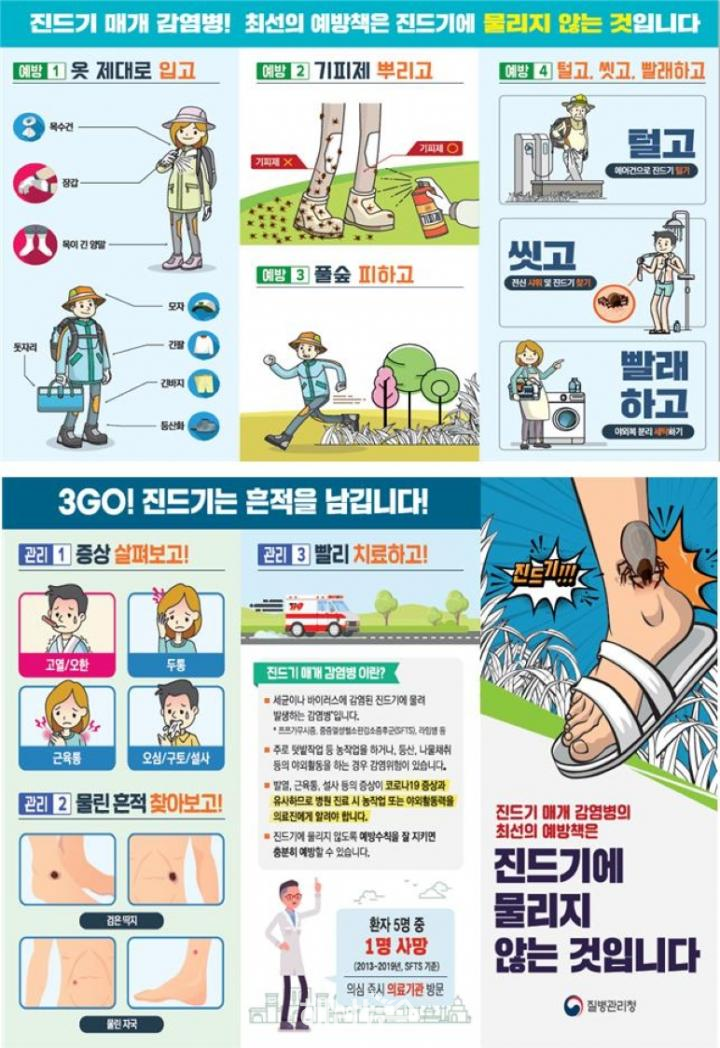 쯔쯔가무시 예방 포스터 / 사진제공=전남광주특별시 |
가을철 농작업과 벌초·성묘, 등산 등 야외활동이 늘어나면서 털진드기 유충에 물려 감염되는 쯔쯔가무시증에 대한 각별한 주의가 요구되고 있다.
특히 지난해 전남광주에서 발생한 쯔쯔가무시증 환자 545명 가운데 무려 77.4%가 10~11월에 집중된 것으로 나타나 본격적인 가을철을 앞두고 진드기 물림 예방수칙 준수가 중요해지고 있다.
전남광주통합특별시는 가을철 농작업과 벌초·성묘·등산 등 야외활동 증가에 대비해 긴 옷 착용과 진드기 기피제 사용 등 예방수칙을 철저히 지켜줄 것을 당부했다.
쯔쯔가무시증은 쯔쯔가무시균을 보유한 털진드기 유충에 물려 발생하는 제3급 법정감염병이다.
국내에서는 매년 3천~6천명의 환자가 발생하고 있으며, 털진드기 유충의 활동이 활발해지는 10~11월에 환자가 집중되는 특징을 보인다.
전남광주지역 역시 마찬가지다.
2025년 전남광주에서 발생한 쯔쯔가무시증 환자는 모두 545명으로, 이 가운데 422명(77.4%)이 10~11월 두 달 동안 발생했다.
특히 지난해 털진드기 감시 결과 전남과 경남 등 남부지역에서는 쯔쯔가무시균을 매개할 수 있는 활순털진드기가 주로 확인된 것으로 나타났다.
이에 따라 추수와 밭일 등 농작업이 본격화되고 벌초·성묘와 가을 산행이 늘어나는 시기에는 진드기에 물리지 않도록 각별히 주의해야 한다.
질병관리청도 본격적인 유행 시기에 대비해 오는 12월 16일까지 16주 동안 전국 18개 지점에서 털진드기 발생 상황을 감시한다.
전남광주특별시 역시 보건환경연구원 및 관계기관과 협력해 털진드기 발생 상황을 지속적으로 살피고 시군 보건소를 중심으로 농업인과 고령층 등 고위험군에 대한 예방교육과 홍보를 강화할 방침이다.
■ 야외활동 땐 긴팔·긴바지…풀밭에 직접 앉지 마세요
쯔쯔가무시증을 예방하기 위해서는 무엇보다 진드기에 물리지 않는 것이 중요하다.
농작업이나 벌초·성묘, 등산 등 야외활동을 할 때는 긴팔과 긴바지를 착용하고 목이 긴 양말과 장갑, 모자 등을 이용해 피부 노출을 최대한 줄여야 한다.
신발과 양말, 바지 등에는 진드기 기피제를 제품 사용법에 따라 적절한 주기로 사용하는 것이 좋다.
발목 이상 높이의 풀이 우거진 곳에는 가급적 들어가지 않고, 풀밭에 옷을 벗어두거나 직접 앉고 눕는 행동도 피해야 한다.
부득이하게 풀밭에서 쉬어야 할 경우에는 반드시 돗자리를 사용하는 것이 안전하다.
야외활동을 마치고 집에 돌아온 뒤 관리도 중요하다.
귀가 즉시 입었던 옷을 털어 세탁하고 목욕이나 샤워를 하면서 몸에 진드기가 붙어 있지는 않은지 확인해야 한다.
특히 털진드기 유충은 크기가 0.3㎜ 이하로 매우 작아 육안으로 확인하기 어렵기 때문에 몸에 벌레 물린 흔적이나 검은 딱지 형태의 가피가 생기지는 않았는지 꼼꼼히 살펴야 한다.
■ “감기인 줄 알았는데”…발열·발진에 검은 딱지 보이면 병원으로
쯔쯔가무시증에 감염되면 일반적으로 감염 후 10일 이내 발열과 두통, 오한, 발진, 림프절 종대 등의 증상이 나타날 수 있다.
특히 털진드기에 물린 부위에 나타나는 검은 딱지 형태의 가피가 대표적인 특징이다.
따라서 농작업이나 벌초·성묘, 등산 등 야외활동을 한 뒤 10일 이내 발열이나 발진 등의 증상이 나타나거나 몸에서 검은 딱지가 발견될 경우 쯔쯔가무시증을 의심하고 신속하게 보건소나 의료기관을 찾아 진료를 받아야 한다.
의료기관을 방문할 때는 최근 농작업이나 벌초, 성묘, 등산 등 야외활동을 했다는 사실을 의료진에게 알리는 것도 중요하다.
전남광주통합특별시는 시군 보건소와 함께 마을방송과 전광판, 누리집, 사회관계망서비스(SNS), 경로당, 마을회관 등을 활용해 가을철 쯔쯔가무시증 예방수칙을 집중 홍보할 계획이다.
정광선 전남광주통합특별시 보건복지본부장은 “쯔쯔가무시증은 진드기에 물리지 않도록 예방수칙을 지키는 것이 중요하다”며 “농작업이나 벌초·성묘·등산 등 야외활동을 할 때 긴 옷을 착용하고 기피제를 사용하는 등 예방수칙을 생활화하길 바란다.”고 말했다.
이어 “야외활동 후 10일 이내 발열이나 발진이 나타나거나 검은 딱지가 발견되면 신속히 의료기관을 방문하고 야외활동 이력을 의료진에게 알려 적절한 진료를 받아 달라.”고 당부했다.
“Watch for a Black Scab After Grave Visits or Mowing”… Scrub Typhus Alert Issued for Autumn
545 cases reported in Jeonnam-Gwangju last year…77.4% occurred in October and November
Infection transmitted through bites from infected chigger mites…symptoms include fever, headache, chills and rash
Wear long sleeves and pants and use repellent during farming, grave visits and hiking
Avoid sitting or lying directly on grass…shower and wash clothes immediately after returning home
Seek prompt medical attention for fever, rash or a black scab within 10 days of outdoor activity
Jeonnam-Gwangju Special Metropolitan City strengthens prevention education for farmers, older adults and other high-risk groups
[Haenam=Haenam News] haenamnews@kakao.com
As farming, grave maintenance and visits, hiking and other outdoor activities increase in autumn, health authorities are urging residents to take extra precautions against scrub typhus, an infectious disease transmitted through the bite of infected chigger mites.
Of the 545 scrub typhus cases reported in the Jeonnam-Gwangju region last year, 77.4 percent occurred in October and November, underscoring the need for strict preventive measures ahead of the peak autumn season.
The Jeonnam-Gwangju Special Metropolitan City has advised residents to wear protective clothing and use tick and mite repellents during farming, grave maintenance and visits, hiking and other outdoor activities.
Scrub typhus is a Class 3 notifiable infectious disease caused by Orientia tsutsugamushi and is transmitted to humans through the bite of infected chigger mites.
Between 3,000 and 6,000 cases are reported annually in South Korea, with infections concentrated in October and November, when chigger mite activity increases.
The Jeonnam-Gwangju region shows a similar seasonal pattern.
A total of 545 scrub typhus cases were reported in the region in 2025, with 422 cases, or 77.4 percent, occurring during October and November alone.
Surveillance conducted last year also found that Leptotrombidium scutellare, a major vector capable of transmitting the scrub typhus pathogen, was prevalent in southern regions including Jeonnam and Gyeongnam.
Authorities are therefore advising residents to take particular care to avoid mite bites during the autumn harvest season, when farming, field work, grave maintenance, ancestral grave visits and hiking become more frequent.
The Korea Disease Control and Prevention Agency (KDCA) is conducting a 16-week surveillance program for chigger mite activity at 18 locations nationwide through Dec. 16 in preparation for the peak transmission season.
The Jeonnam-Gwangju Special Metropolitan City will also continue monitoring chigger mite activity in cooperation with its Institute of Health and Environment and other relevant agencies. Local public health centers will strengthen prevention education and awareness campaigns targeting high-risk groups, particularly farmers and older adults.
Wear Long Sleeves and Pants — Avoid Sitting Directly on Grass
The most important way to prevent scrub typhus is to avoid being bitten by chigger mites.
When engaging in farming, grave maintenance or visits, hiking or other outdoor activities, people should minimize exposed skin by wearing long-sleeved shirts, long pants, high socks, gloves and hats.
Mite repellent should also be applied to shoes, socks and pants at appropriate intervals according to the product instructions.
People are advised to avoid entering areas with grass higher than ankle level whenever possible. Clothing should not be left on the grass, and people should avoid sitting or lying directly on grassy ground.
When resting in grassy areas is unavoidable, a ground mat should always be used.
Precautions are also important after returning home from outdoor activities.
Clothing worn outdoors should be shaken out and washed immediately, followed by a bath or shower while carefully checking the body for signs of mite bites.
Because chigger mite larvae are less than 0.3 millimeters in size and difficult to see with the naked eye, particular attention should be paid to bite marks or the appearance of a black scab, known as an eschar.
“It May Feel Like a Cold”… Seek Medical Care for Fever, Rash or a Black Scab
Symptoms of scrub typhus generally develop within 10 days after infection and may include fever, headache, chills, rash and swollen lymph nodes.
One of the most distinctive signs of the disease is an eschar — a dark or black scab that forms at the site of the mite bite.
Anyone who develops a fever or rash, or notices a black eschar within 10 days after farming, grave maintenance or visits, hiking or other outdoor activities should suspect scrub typhus and promptly visit a public health center or medical facility for diagnosis and treatment.
Patients should also inform medical professionals of any recent outdoor activities, including farming, grave maintenance, grave visits or hiking, as this information can assist with timely diagnosis.
The Jeonnam-Gwangju Special Metropolitan City plans to intensify its autumn scrub typhus prevention campaign through local public health centers, using village broadcasts, electronic information boards, official websites, social media platforms, senior centers and community halls.
“Preventing scrub typhus begins with avoiding mite bites,” said Jeong Gwang-seon, head of the Health and Welfare Headquarters of the Jeonnam-Gwangju Special Metropolitan City. “We urge residents to make preventive measures part of their routine by wearing protective clothing and using repellent during farming, grave maintenance and visits, hiking and other outdoor activities.”
He added, “If you develop a fever or rash, or notice a black scab within 10 days after outdoor activity, please seek medical attention promptly and inform medical professionals about your recent outdoor activities so that you can receive appropriate diagnosis and treatment.”
 해남뉴스 박충배 편집/논설 news@hbcnews.kr