| 해남 비단벌레, 인공증식·생태복원 연구 추진…“천연기념물 보전 기반 마련” 국가유산청, 천연기념물·멸종위기 야생생물 Ⅰ급 비단벌레 증식 연구 해남뉴스 박충배 편집 및 논설위원 news@hbcnews.kr |
| 2026년 07월 31일(금) 14:04 |
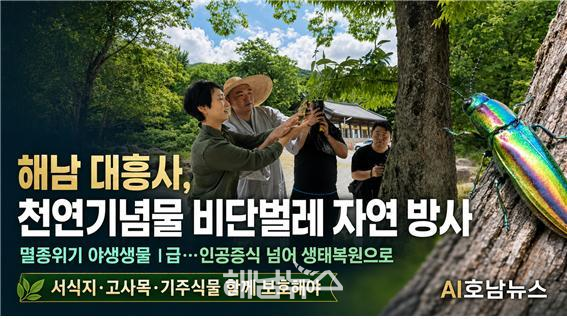 대흥사 비단벌레 방사 배너 / 사진제공=AI호남뉴스 |
국가유산청이 천연기념물이자 멸종위기 야생생물 Ⅰ급인 비단벌레의 안정적인 보전과 생태계 복원을 위해 인공증식 기술 개발에 나섰다.
국가유산청에 따르면 이번 연구는 전남 해남군을 중심으로 비단벌레 서식지를 조사하고 인공증식에 필요한 원종 개체를 확보한 뒤, 성충과 유충 등 생애주기별 사육·관리 기술을 체계화하는 데 목적이 있다.
비단벌레는 몸길이가 약 30~40㎜인 딱정벌레목 비단벌레과 곤충이다. 몸 전체가 초록색 또는 금록색을 띠고 강한 금속성 광택과 붉은색 줄무늬가 나타나 우리나라에서 가장 아름다운 곤충 가운데 하나로 꼽힌다.
주로 따뜻하고 울창한 산림에 서식하며, 유충은 팽나무와 느티나무 등 오래되거나 죽은 나무의 목질부에서 성장한다. 성충은 대체로 7월부터 8월 사이에 활동하는 것으로 알려졌다.
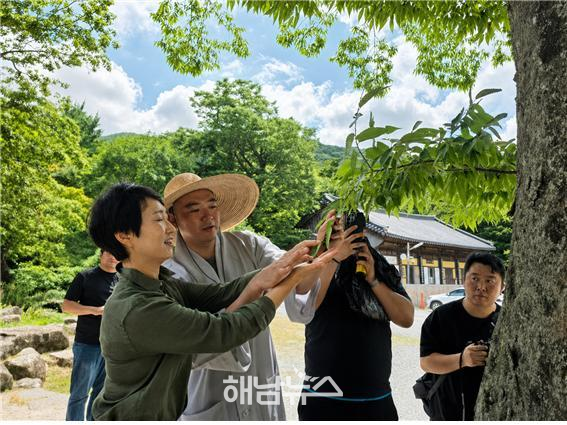 대흥사 비단벌레 방사 행사 / 사진제공=국가유산청 |
비단벌레는 생태적 가치뿐 아니라 역사·문화적 가치도 매우 높다. 화려한 딱지날개는 삼국시대 장식 재료로 활용됐으며, 황남대총과 금관총 등 신라 최고위급 무덤에서 비단벌레 날개를 이용한 장식품이 확인됐다.
경주 쪽샘 44호분에서는 비단벌레 딱지날개로 꽃잎 모양을 장식한 말다래가 출토됐다. 말다래는 말을 탄 사람의 다리에 흙이 튀지 않도록 안장 아래 늘어뜨린 판으로, 당시 비단벌레 장식이 왕실과 지배층의 권위를 상징했던 것으로 해석된다.
이 같은 문화적·생태적 가치를 인정받아 비단벌레는 2008년 천연기념물 제496호로 지정됐다. 국가유산 체계 개편 이후에도 천연기념물로 보호되고 있으며, 야생생물 보호 관련 법령에 따라 멸종위기 야생생물 Ⅰ급으로 관리되고 있다.
현재 국내에서는 전남과 전북, 경남 일부 지역을 중심으로 서식이 확인되고 있다. 그러나 분포지역이 제한적인 데다 산림 개발과 고사목 제거, 기후환경 변화, 무분별한 채집 등에 취약해 적극적인 서식지 관리가 필요한 실정이다.
국가유산청은 연구를 통해 비단벌레의 생애주기별 관리지침과 적정 온도·습도, 먹이와 기주목, 우화 조건 등을 담은 인공증식 매뉴얼을 마련할 계획이다. 장기적으로는 대량증식 기술과 안정적인 보전 체계를 구축해 자연 개체군 복원과 비단벌레 장식 문화유산 재현 연구 등에 활용한다는 방침이다.
특히 연구의 중심지역으로 해남이 제시되면서 지역 내 실제 서식지와 개체군 규모, 기주식물 분포, 산림관리 과정에서의 고사목 제거 실태 등을 체계적으로 조사해야 한다는 지적이 나온다.
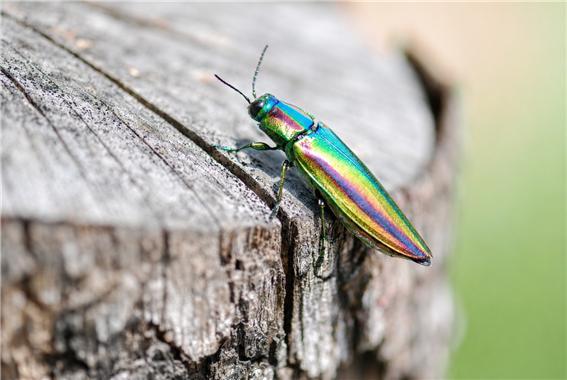 멸종위기 비단벌레 / 사진제공=국가유산청 |
비단벌레 유충은 오래되거나 죽은 나무에서 성장하기 때문에 산림을 깨끗하게 관리한다는 이유로 고사목을 일률적으로 제거하면 오히려 서식 기반이 훼손될 수 있다. 단순한 개체 증식에 그치지 않고 팽나무·느티나무 등 기주식물과 주변 산림생태계를 함께 보전해야 하는 이유다.
국가유산청과 해남군은 연구 대상지와 개체 확보 규모, 포획·증식 허가 절차, 자연 방사 기준, 유전적 다양성 관리계획 등을 투명하게 공개할 필요가 있다. 서식지가 외부에 과도하게 노출될 경우 불법 채집 위험이 커질 수 있는 만큼 정확한 위치정보는 보호하되, 연구 성과와 보전 정책은 주민과 공유해야 한다.
비단벌레 인공증식 사업이 실험실 안의 성과로 끝나서는 안 된다. 해남의 산림과 오래된 기주목을 보호하고 불법 채집을 차단하는 현장 중심의 보전대책으로 연결될 때 천연기념물 복원사업의 실질적인 의미를 확보할 수 있다.
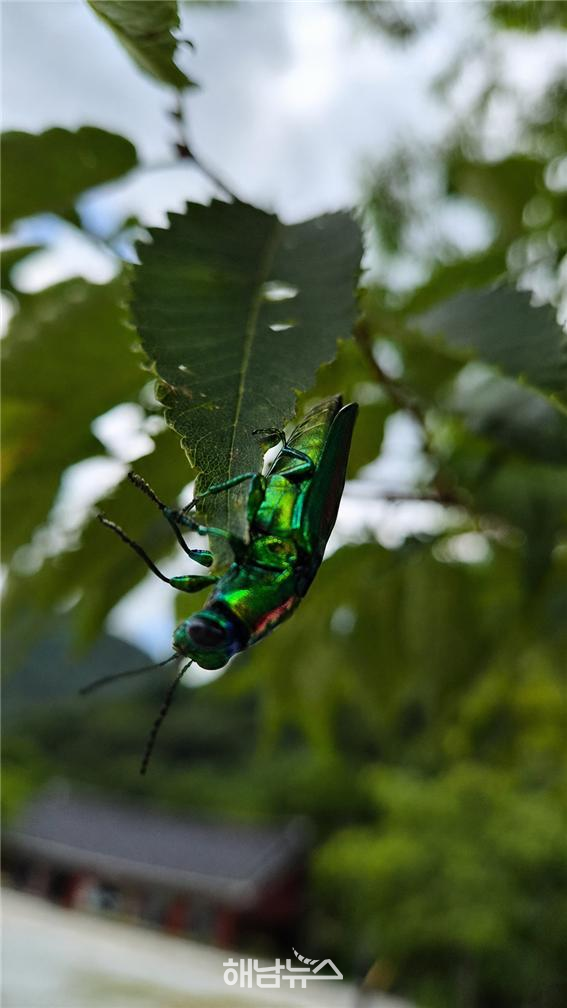 멸종위기 비단벌레 / 사진제공=국가유산청 |
Haenam Launches Research on Artificial Breeding and Ecological Restoration of the Jewel Beetle
Project expected to lay groundwork for conserving the endangered natural monument
Korea Heritage Service launches breeding research on the jewel beetle, a natural monument and a Class I endangered wildlife species
Surveys habitats in Haenam County, South Jeolla Province, and secures founder specimens for artificial breeding
Research to identify appropriate breeding environments and conditions throughout adult and larval life stages
Rare insect known for its iridescent green and golden coloring; adults are generally active from July to August
Traces of jewel beetle wing decorations found in elite Silla tombs, including Hwangnamdaechong, Geumgwanchong and Tomb No. 44 in the Jjoksaem district of Gyeongju
Habitat destruction, climate change and indiscriminate collecting raise concerns over population decline
“Breeding achievements must be accompanied by measures to protect habitats, dead trees and host plants in Haenam”
【HAENAM=AI HONAM NEWS】 aihnnews@kakao.com
The Korea Heritage Service has begun developing artificial breeding techniques for the jewel beetle, a designated natural monument and Class I endangered wildlife species, to support its long-term conservation and ecological restoration.
According to the agency, the project aims to survey jewel beetle habitats primarily in Haenam County, South Jeolla Province, secure founder specimens for artificial breeding, and establish systematic breeding and management techniques for each stage of the insect’s life cycle, including the larval and adult stages.
The jewel beetle is a member of the family Buprestidae in the order Coleoptera and measures approximately 30 to 40 millimeters in length. Its body is green or golden-green, with an intense metallic sheen and distinctive red stripes, making it one of Korea’s most visually striking insects.
The species generally inhabits warm, densely forested areas. Its larvae grow inside the wood of old or dead trees, particularly hackberry and zelkova trees. Adults are most commonly active between July and August.
The jewel beetle possesses considerable historical and cultural significance in addition to its ecological value. Its colorful hardened forewings, known as elytra, were used as decorative material during Korea’s Three Kingdoms period. Ornaments incorporating jewel beetle wings have been discovered in elite Silla tombs, including Hwangnamdaechong and Geumgwanchong.
At Tomb No. 44 in Gyeongju’s Jjoksaem district, archaeologists uncovered a mudguard decorated with flower-shaped patterns made from jewel beetle wings. The mudguard was a panel suspended beneath a saddle to prevent mud from splashing onto a rider’s legs. The discovery suggests that jewel beetle ornamentation served as a symbol of authority among Silla royalty and the ruling class.
In recognition of its cultural and ecological importance, the jewel beetle was designated Natural Monument No. 496 in 2008. It remains protected as a natural monument under Korea’s restructured national heritage system and is managed as a Class I endangered wildlife species under the country’s wildlife protection legislation.
In Korea, the species has been confirmed in limited areas of South Jeolla, North Jeolla and South Gyeongsang provinces. Its restricted distribution, however, makes it particularly vulnerable to forest development, the removal of dead trees, changing climatic conditions and indiscriminate collecting. Active habitat management is therefore urgently required.
Through the research project, the Korea Heritage Service plans to develop an artificial breeding manual covering life-cycle management, suitable temperature and humidity levels, food and host trees, and conditions necessary for adult emergence. In the longer term, the agency intends to establish mass-breeding technology and a stable conservation system that can support the restoration of wild populations and research into reproducing cultural artifacts originally decorated with jewel beetle wings.
With Haenam identified as a focal area for the research, calls are growing for systematic investigations into local habitats, population size, the distribution of host plants and the removal of dead trees during forest management.
Because jewel beetle larvae develop inside old or dead wood, indiscriminately removing dead trees in the name of keeping forests clean may destroy the very conditions the species needs to survive. Conservation efforts must therefore go beyond breeding individual insects and include the protection of host trees, such as hackberry and zelkova, as well as the surrounding forest ecosystem.
The Korea Heritage Service and Haenam County should disclose the scope of the research, the number of specimens to be secured, procedures for capture and breeding permits, criteria for release into the wild, and measures to preserve genetic diversity. Although precise habitat locations should remain protected to reduce the risk of illegal collecting, research findings and conservation policies should be shared transparently with residents.
The artificial breeding initiative must not end as a laboratory achievement. It will have genuine value as a natural monument restoration project only when it leads to field-based measures that protect Haenam’s forests and old host trees while preventing illegal collection.
 해남뉴스 박충배 편집 및 논설위원 news@hbcnews.kr