| “먹거리 정책, 시민과 생산자가 직접 결정해야”… 민형배, 시민주권형 농정 강조 나주 공동텃밭 간담회서 현장 중심 농업정책 제시… 김희중 대주교와 국제교류 확대 논의 해남뉴스 박충배 편집 및 논설위원 haenamnews@kakao.com |
| 2026년 05월 18일(월) 09:35 |
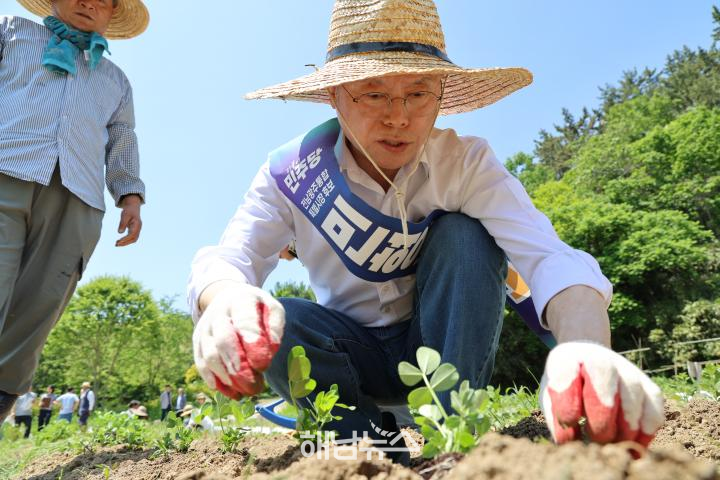 민형배, 시민주권형 농정 강조 / 사진제공=민형배 선대위 |
더불어민주당 민형배 전남광주통합특별시장 후보가 농민과 시민단체 관계자들을 만나 시민이 직접 참여하는 ‘시민주권형 농업·먹거리 정책’ 추진 의지를 밝혔다.
민 후보는 17일 나주시 노안면 이슬촌마을에 위치한 광주전남귀농운동본부·광주토종학교 공동텃밭을 방문해 농민·시민사회 관계자들과 지역 먹거리 정책과 시민 참여형 행정 운영 방안을 논의했다.
이날 현장에는 상생먹거리광주시민연대 오효열 상임대표와 김선임 집행위원장을 비롯해 연대단체 대표, 김경호 이슬촌마을 이장, 이종국·신수오·류동훈 광주전남귀농운동본부 운영위원 등 20여 명이 참석했다.
민 후보는 참석자들과 함께 공동텃밭을 둘러보며 직접 땅콩을 심는 시간을 갖고, 농업 정책이 행정 주도가 아닌 현장 중심으로 설계돼야 한다고 강조했다.
민 후보는 “먹거리 정책도 행정이 일방적으로 만들어 내려보내는 시대는 지났다”며 “현장을 가장 잘 아는 시민과 생산자, 활동가들이 정책 방향을 직접 결정하고 공무원은 이를 제도와 예산으로 뒷받침해야 한다.”고 밝혔다.
이어 “시민이 정책의 대상이 아니라 정치와 행정의 실질적 주체가 되는 것이 시민주권정부의 핵심 가치”라며 “전남·광주 통합특별시는 농업과 먹거리 정책에서도 시민 참여 구조를 제도화해 나가겠다.”고 말했다.
현장 참석자들은 지역 순환형 먹거리 체계 구축과 로컬푸드 기반 확대, 청년 귀농 활성화, 공동체 농업 지원 방안 등에 대해 다양한 의견을 제시한 것으로 전해졌다.
한편 민 후보는 이날 공동텃밭 방문에 앞서 나주 노안성당에서 천주교 김희중 대주교를 예방하고 전남광주통합특별시의 국제교류 확대 방안에 대해서도 의견을 나눴다.
김희중 대주교는 이 자리에서 “대한민국은 알려져 있지만 각 지역과 도시의 특성과 문화는 세계에 충분히 알려지지 않았다”며 “통합특별시가 독자적인 국제교류 역량을 갖추고 세계 도시들과 직접 연결되는 구조를 만들어야 한다.”고 강조했다.
특히 전남의 농업·수산업과 전통문화 자원을 기반으로 북측을 포함한 다양한 국제 교류 가능성을 제안하며 농수산·문화·관광 분야 협력 확대 필요성을 언급했다.
이에 민 후보는 “전남광주통합특별시 출범 이후 국제대사 기능을 형식적 상징이 아닌 실질적 국제협력 집행기구 수준으로 강화하는 방안을 검토하겠다.”며 “광주와 전남이 대한민국 내부 경쟁을 넘어 세계 도시들과 직접 연결되는 글로벌 도시외교 시대를 준비해야 한다.”고 밝혔다.
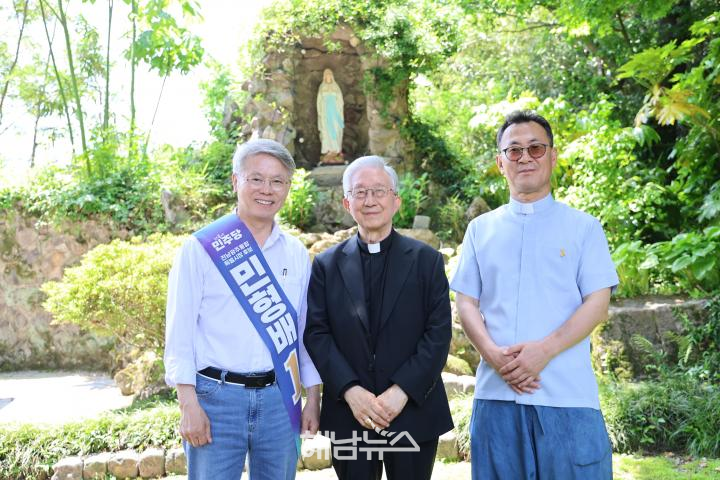 김희중 대주교와 국제교류 확대 논의 / 사진제공=민형배 선대위 |
【Jeonnam·Gwangju = AI Honam News】 aihnnews@kakao.com
“Food Policy Should Be Decided Directly by Citizens and Producers”
Min Hyeong-bae Emphasizes Citizen Sovereignty-Based Agricultural Governance
Candidate presents field-centered agricultural policy at Naju community garden meeting… discusses expansion of international exchanges with Archbishop Kim Hee-jung
Min Hyeong-bae, the Democratic Party candidate for Mayor of the proposed Jeonnam-Gwangju Integrated Special City, met with farmers and civic group representatives on the 17th and expressed his commitment to promoting a “citizen sovereignty-based agricultural and food policy” in which citizens directly participate in policymaking.
Candidate Min visited the 공동텃밭 (community garden) jointly operated by the Gwangju-Jeonnam Returning Farmers Movement Headquarters and Gwangju Native Seed School in Iseulchon Village, Noan-myeon, Naju, where he discussed regional food policies and citizen-participatory administration with local farmers and civic leaders.
Around 20 participants attended the meeting, including Oh Hyo-yeol, standing representative of the Sangsaeng Food Gwangju Citizens’ Alliance, Executive Director Kim Seon-im, village head Kim Gyeong-ho, and operating committee members Lee Jong-guk, Shin Su-o, and Ryu Dong-hoon of the Gwangju-Jeonnam Returning Farmers Movement Headquarters.
During the visit, Min toured the community garden with participants and personally planted peanuts, emphasizing that agricultural policies should be designed from the field rather than imposed top-down by administrative authorities.
“Gone are the days when food policies were unilaterally created and handed down by the government,” Min said. “Citizens, producers, and activists who know the realities of the field best should determine policy directions themselves, while public officials should support them through institutions and budgets.”
He continued, “The essence of a citizen sovereignty government is that citizens are not merely policy targets but actual subjects of politics and administration,” adding, “The Jeonnam-Gwangju Integrated Special City will institutionalize citizen participation structures in agricultural and food policies as well.”
Participants at the meeting reportedly shared various opinions on building a regional circular food system, expanding local food infrastructure, encouraging young people to return to farming, and supporting community-based agriculture.
Prior to visiting the community garden, Min also paid a courtesy visit to Archbishop Kim Hee-jung at Noan Catholic Church in Naju, where they discussed ways to expand international exchanges for the future Jeonnam-Gwangju Integrated Special City.
Archbishop Kim stated, “While the name ‘Korea’ is widely recognized internationally, the unique characteristics and cultures of its regions and cities are not sufficiently known to the world,” emphasizing that “the integrated special city must develop its own international exchange capabilities and build direct connections with cities around the globe.”
He particularly suggested exploring broader exchanges — including with North Korea — in the fields of agriculture, fisheries, culture, and tourism, based on Jeonnam’s agricultural, marine, and traditional cultural resources.
In response, Min said, “Once the Jeonnam-Gwangju Integrated Special City is launched, we will consider strengthening the role of international ambassadors beyond symbolic positions into practical international cooperation bodies.”
He added, “Gwangju and Jeonnam must move beyond internal competition within Korea and prepare for an era of global city diplomacy in which cities engage directly with the world.”
 해남뉴스 박충배 편집 및 논설위원 haenamnews@kakao.com