| “모기 한 마리도 허용 없다”… 전남, 일본뇌염 ‘선제 봉쇄’ 총력전 해빙기 2만6천 취약지 전면 방역… 4월 말까지 집중 소독 해남뉴스 박충배 편집 및 논설위원 haenamnews@kakao.com |
| 2026년 03월 26일(목) 13:11 |
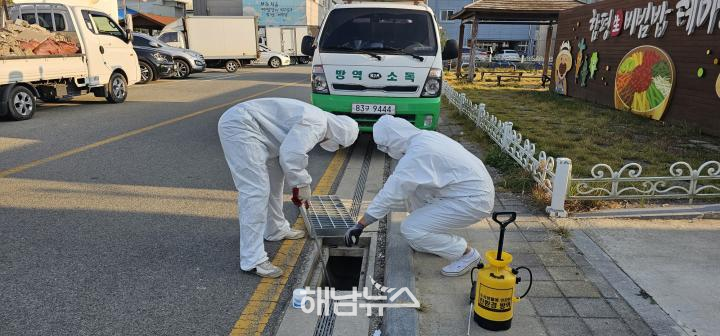 하수구 방역 / 사진제공=전라남도 |
전라남도가 일본뇌염 확산 가능성에 선제 대응하며 ‘모기와의 전면전’을 선포했다. 단 한 마리의 감염 매개 모기도 용납하지 않겠다는 강도 높은 방역 대응이다.
전남도는 일본뇌염 주의보 발령에 따라 해빙기 방역소독을 대폭 강화하고, 4월 말까지 도내 전역을 대상으로 집중 방역에 돌입했다고 밝혔다.
앞서 질병관리청은 지난 3월 20일 제주지역에서 일본뇌염 매개모기인 ‘작은빨간집모기’가 올해 처음 확인됨에 따라 전국에 일본뇌염 주의보를 발령했다. 최근 기온 상승과 함께 모기 활동 시기가 빨라지는 추세가 반영된 조치다.
■ 2만6천 취약지 ‘핀셋 방역’… 사각지대 원천 차단
전남도는 22개 시군 2만6천922개 방역 취약지를 중심으로 선제적 집중 방역을 추진 중이다.
주요 대상은 하수구, 쓰레기장, 축사 주변 등 모기 유충 서식 가능성이 높은 지역으로, 친환경 약품을 활용한 맞춤형 방역이 이뤄지고 있다.
특히 기온 상승이나 강우 이후에는 추가 방제를 실시하는 ‘상시 대응 체계’를 구축하고, 읍면동별 취약지역을 지정해 반복 관리에 나선다는 방침이다.
이는 단순한 일회성 소독이 아닌, 모기 발생 자체를 차단하는 ‘근원 제거형 방역’ 전략으로 평가된다.
■ “무증상이라 더 위험”… 중증 진행 가능성 경고
일본뇌염은 감염자의 대부분이 증상이 없거나 경미하지만, 일부에서는 고열·두통·경련 등 중증으로 진행될 수 있어 각별한 주의가 요구된다.
특히 면역력이 약한 고령층이나 어린이의 경우 치명률이 높아 예방 중심 대응이 핵심이다.
최근 5년간 전국에서는 매년 환자가 발생하고 있으며, 사망 사례도 보고된 바 있어 방심할 수 없는 감염병으로 분류된다.
■ “생활 속 방역이 최후 방어선”… 도민 실천 강조
전남도는 행정 방역과 함께 도민 참여형 생활 방역의 중요성을 강조하고 있다.
야외 활동 시에는 야간 외출 자제, 밝은색 긴 옷 착용, 모기 기피제 사용 등이 권고되며,
가정에서는 방충망 정비, 모기장 사용, 집 주변 고인물 제거 등 기본 수칙 준수가 핵심이다.
모기는 고인 물에서 번식하는 특성이 있어, 작은 물웅덩이 하나가 감염 확산의 출발점이 될 수 있기 때문이다.
정광선 전남도 보건복지국장은 “일본뇌염 주의보가 발령된 만큼 해빙기 조기 방역이 무엇보다 중요하다”며 “도민들께서는 생활 주변 고인 물을 제거하고 모기에 물리지 않도록 개인 방역수칙을 철저히 지켜달라.”고 당부했다.
전남도의 이번 대응은 단순한 계절성 방역을 넘어, 기후변화 시대 감염병 확산에 맞선 ‘선제적 공공보건 전략’이라는 점에서 의미가 크다.
보이지 않는 위협과의 싸움에서 승패는 결국 ‘지금의 대응 속도’에 달려 있다.
 하수구 방역 / 사진제공=전라남도 |
“Zero Tolerance for a Single Mosquito”… Jeonnam Launches All-Out Preemptive Blockade Against Japanese Encephalitis
26,000 High-Risk Sites Under Full Disinfection… Intensive Control Through End of April
“Eliminating Standing Water Is the Lifeline”… Authorities Urge Citizen-Led Prevention
【Jeonnam = Haenam News】 haenamnews@kakao.com
Jeollanam-do Province has declared an all-out war against mosquitoes, moving swiftly to preempt the spread of Japanese encephalitis. Authorities emphasized a zero-tolerance policy, stating that not a single disease-carrying mosquito will be allowed to slip through.
The province announced that, following the issuance of a Japanese encephalitis advisory, it has significantly strengthened early-season (post-thaw) disinfection efforts and launched an intensive, province-wide vector control campaign through the end of April.
Earlier, the Korea Disease Control and Prevention Agency (KDCA) issued a nationwide alert on March 20 after confirming the first appearance this year of Culex tritaeniorhynchus—the primary vector of Japanese encephalitis—in Jeju. The move reflects a trend of earlier mosquito activity driven by rising temperatures.
■ “Precision Targeting” of 26,000 High-Risk Sites… Eliminating Blind Spots
Jeonnam is currently carrying out focused disinfection across 26,922 high-risk locations in all 22 cities and counties.
Key targets include sewers, waste disposal areas, and livestock facilities—environments highly conducive to mosquito breeding. Eco-friendly disinfectants are being used in tailored control operations.
The province has also established a continuous response system, conducting additional disinfection following temperature spikes or rainfall. Each 읍·면·동 (township-level administrative unit) designates vulnerable zones for repeated monitoring and intervention.
This approach is being evaluated as a “source elimination strategy” aimed at blocking mosquito breeding at its origin, rather than relying on one-off spraying.
■ “More Dangerous Because It’s Often Silent”… Warning of Severe Cases
While most Japanese encephalitis infections are asymptomatic or mild, some cases can progress to severe illness, including high fever, headaches, and seizures.
The elderly and children—those with weaker immune systems—face higher fatality risks, making prevention critically important.
Over the past five years, cases have occurred annually nationwide, including fatalities, underscoring the disease as a persistent public health threat.
■ “Everyday Prevention Is the Final Defense”… Call for Public Action
The provincial government stressed that administrative measures alone are not enough, highlighting the importance of citizen participation in daily prevention efforts.
For outdoor activities, residents are advised to:
Avoid nighttime outings (from sunset to sunrise)
Wear light-colored, long-sleeved clothing
Use mosquito repellents
At home, recommended measures include:
Repairing window screens
Using mosquito nets
Eliminating standing water around residences
Since mosquitoes breed in stagnant water, even small puddles can become the starting point of disease transmission.
Jeong Gwang-seon, Director of Health and Welfare of Jeollanam-do, stated,
“Now that a Japanese encephalitis advisory has been issued, early-season disinfection is more critical than ever. We urge residents to remove standing water around their homes and strictly follow personal protection measures to prevent mosquito bites.”
The province’s response goes beyond routine seasonal control, representing a proactive public health strategy in the era of climate change.
In the fight against invisible threats, the outcome ultimately depends on how fast—and how decisively—we act.
 해남뉴스 박충배 편집 및 논설위원 haenamnews@kakao.com