| “휴게소가 전복을 살린다” 전남도·완도군·풀무원, 전국 소비시장 정조준… 전복 산업 ‘구조 전환’ 시동 해남뉴스 박충배 편집 및 논설위원 haenamnews@kakao.com |
| 2026년 03월 17일(화) 14:28 |
 전남 수산물 로코노미 외식상품 개발 업무협약 / 사진제공=전라남도 |
침체된 전복 산업에 변화의 물결이 일고 있다. 전라남도가 기존의 원물 중심 유통 구조를 넘어 외식과 가공 중심 소비 시장으로의 전환을 본격화하며 새로운 돌파구를 마련했다.
전라남도는 17일 도청 정약용실에서 완도군, ㈜풀무원푸드앤컬처와 함께 ‘완도 전복 휴게소 특화메뉴 개발’을 위한 업무협약을 체결했다. 이번 협약은 단순한 판로 확대를 넘어 전복 소비 구조 자체를 바꾸기 위한 전략적 접근이라는 점에서 의미가 크다.
그동안 전복은 산지 직거래나 선물용 수요에 크게 의존해 왔다.
이 같은 소비 구조는 경기 변동과 계절 요인에 취약해 가격 불안정과 수요 정체를 반복하는 한계를 드러내 왔다.
전남도는 이러한 구조적 문제를 해결하기 위해 ‘지속적으로 소비되는 시장’을 만드는 데 초점을 맞췄다.
그 해법이 바로 전국 단위 외식 유통망이다.
협약에 따라 풀무원푸드앤컬처가 운영하는 고속도로 휴게소를 중심으로 전복을 활용한 특화 메뉴가 본격적으로 선보인다.
풀무원푸드앤컬처는 전국 241개 휴게소 가운데 27개소를 직영 운영하고 있어, 단일 기업으로는 상당한 규모의 유통 채널을 확보하고 있다. 이를 기반으로 오는 4월부터 전복을 활용한 메뉴 9종이 개발·판매될 예정이다.
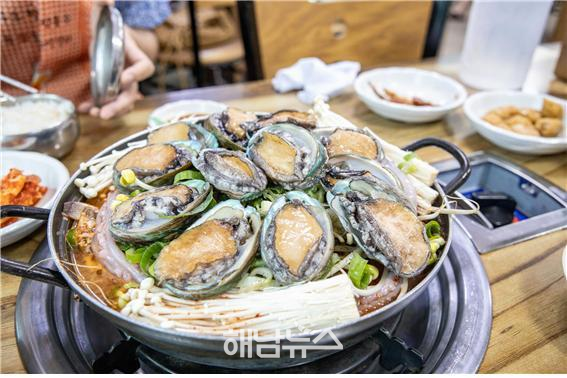
출시 예정 메뉴는 완도전복 돼지맑은보양탕을 비롯해 순두부찌개, 된장찌개, 가마솥 비빔밥, 볶음밥, 꼬치어묵 라면과 우동 등 대중성이 높은 음식들로 구성됐다.
일상적인 식사 메뉴에 전복을 자연스럽게 녹여낸 것이 특징이다.
이를 통해 소비자 접근성을 높이고, 전복을 ‘특별한 음식’이 아닌 ‘일상 식재료’로 전환하겠다는 전략이다.
이 사업이 본격화되면 연간 약 70톤, 14억 원 규모의 전복 소비가 창출될 것으로 전망된다.
이는 단순한 수치 이상의 의미를 가진다.
특정 시즌이나 명절에 집중되던 소비를 상시 소비 구조로 전환하는 첫 사례가 될 수 있기 때문이다.
전남도는 이번 협약을 계기로 협력 범위를 더욱 확대할 계획이다.
휴게소를 시작으로 공항, 리조트, 호텔 등 외식 사업과 산업체·병원·군부대 등 위탁급식 영역까지 전복 공급을 확대해 나간다는 구상이다. 이는 전복을 포함한 전남 수산물 전반에 적용 가능한 새로운 유통 모델로 이어질 가능성이 크다.
또한 오는 4월에는 식품기업 ㈜오뚜기와의 협약을 통해 완도 전복을 활용한 국산 전복죽 제품 출시도 추진된다.
외식 소비와 가정 간편식 시장을 동시에 공략하는 ‘투 트랙 전략’이 가동되는 셈이다.
전남도 관계자는 이번 협약이 지역 수산물과 외식 기업이 결합해 고부가가치를 창출하는 새로운 모델이 될 것으로 기대하고 있다며, 전국 유통망을 기반으로 안정적인 소비 기반을 구축해 나가겠다는 의지를 밝혔다.
이번 협약은 단순히 전복 판매를 늘리는 데 그치지 않는다.
생산 중심 산업이던 수산업을 유통과 소비 중심 산업으로 확장하는 구조적 전환의 출발점이라는 점에서 주목된다.
결국 전복 산업의 미래는 얼마나 많이 생산하느냐가 아니라, 얼마나 지속적으로 소비되느냐에 달려 있다.
 전남 수산물 로코노미 외식상품 개발 업무협약 / 사진제공=전라남도 |
[Wando = Haenam News] haenamnews@kakao.com
A wave of change is sweeping through the struggling abalone industry.
Jeollanam-do (South Jeolla Province) is taking a bold step beyond the traditional raw-product distribution model, moving toward an expansion into dining and processed food markets to create a new breakthrough.
On the 17th, Jeollanam-do signed a memorandum of understanding (MOU) at the Jeong Yak-yong Hall in the provincial government building with Wando County and Pulmuone Food & Culture Co., Ltd. to develop abalone-based specialty menus for highway rest stops. This agreement is significant not merely as a channel expansion, but as a strategic initiative aimed at fundamentally transforming the structure of abalone consumption.
Until now, abalone consumption has largely depended on direct-from-origin sales and gift-oriented demand.
Such a structure has proven vulnerable to economic fluctuations and seasonal factors, repeatedly leading to price instability and stagnant demand.
To address these structural limitations, the province has focused on creating a “continuously consumed market.”
The key solution lies in building a nationwide food-service distribution network.
Under the agreement, abalone-based specialty menus will be introduced at highway rest stops operated by Pulmuone Food & Culture.
The company directly manages 27 out of 241 highway rest areas nationwide, securing a substantial distribution network for a single operator.
Starting in April, nine new menu items featuring abalone will be developed and sold.
The planned menu lineup includes dishes such as clear pork and abalone nourishing soup, soft tofu stew, soybean paste stew, traditional cauldron bibimbap, fried rice, and skewered fish cake ramen and udon.
These menus are designed with broad appeal, integrating abalone naturally into everyday meals.
The strategy is to enhance accessibility and reposition abalone from a “premium specialty” to a “daily ingredient.”
Once fully implemented, the initiative is expected to generate annual consumption of approximately 70 tons of abalone, valued at around 1.4 billion KRW.
This represents more than just numerical growth.
It could mark the first transition from seasonal, event-driven consumption to a stable, year-round consumption structure.
Jeollanam-do plans to further expand cooperation following this agreement.
Starting with highway rest stops, the province aims to extend abalone supply into food-service sectors such as airports, resorts, hotels, and institutional catering for industries, hospitals, and military units.
This model could evolve into a broader distribution framework applicable to a wide range of seafood products from the region.
In addition, the province plans to sign another agreement in April with food company Ottogi to support the launch of a domestically produced abalone porridge using Wando abalone.
This represents a dual-track strategy targeting both the dining sector and the home meal replacement (HMR) market.
A provincial official expressed expectations that this partnership will serve as a new model combining regional seafood with food-service companies to create high-value products, emphasizing the goal of establishing a stable consumption base through nationwide distribution networks.
This agreement goes beyond simply increasing abalone sales.
It marks the beginning of a structural transformation—shifting the fisheries industry from a production-centered model to one driven by distribution and consumption.
Ultimately, the future of the abalone industry will depend not on how much is produced, but on how consistently it is consumed.
 해남뉴스 박충배 편집 및 논설위원 haenamnews@kakao.com