| “대한민국 저탄소 농업의 절반이 전남”… 인증 신청 전국 54%, ‘녹색농업 수도’ 부상 해남·영암·영광 등 서남권 대규모 참여… 저탄소 농업 전국 판도 바뀐다 해남뉴스 박충배 편집 및 논설위원 haenamnews@kakao.com |
| 2026년 03월 10일(화) 09:26 |
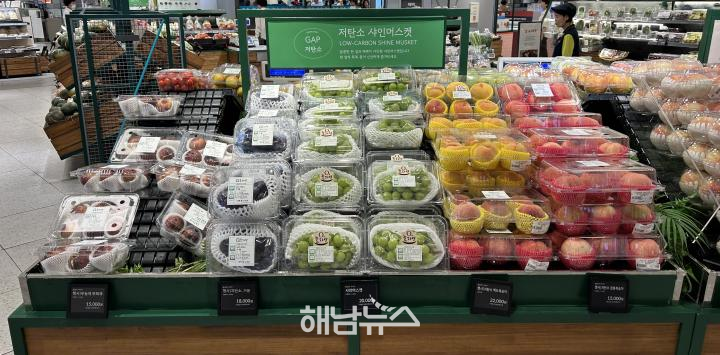 저탄소농산물 전문매장 / 사진제공=전라남도 |
대한민국 저탄소 농업의 중심축이 전라남도로 빠르게 이동하고 있다.
전라남도가 올해 저탄소 농산물 인증 면적 전국 50% 달성 목표에 사실상 청신호를 켰다.
상반기 인증 신청만으로도 전국 절반을 넘어서는 성과를 기록하면서 ‘대한민국 녹색농업 수도’로 부상하고 있다는 평가가 나온다.
전라남도에 따르면 한국농업기술진흥원이 접수한 2026년 상반기 저탄소 농산물 신규 인증 신청은 전국 380건 가운데 54%에 해당하는 207건이 전남에서 접수됐다.
신청 면적도 3천10ha로, 전남도가 올해 목표로 설정한 인증면적 2천336ha의 128% 수준에 달한다.
■ 해남 637ha로 전국 최대… 서남권 저탄소 농업벨트 형성
시군별 신청 면적을 보면 전남 서남권이 저탄소 농업의 핵심 거점으로 떠오르고 있다.
해남 637ha, 영암 456ha, 영광 277ha, 나주 220ha, 장흥 194ha.
특히 해남은 단일 시군 가운데 가장 큰 규모의 신청 면적을 기록하며 전국 저탄소 농업 확산의 핵심 거점으로 자리 잡고 있다.
전남도의 이러한 성과는 단기간에 만들어진 결과가 아니다.
전남도는 지난해 전국 하위권이었던 저탄소 인증을 확대하기 위해 전국 최초 저탄소 농산물 인증 확대 계획 수립.
21개 시군 순회 설명회
대면 교육 5회 794명 참여, 인증 신청 행정 대행 지원, 저탄소 농업 프로그램 사업 선정 기준 완화 건의 등 제도 개선과 현장 지원을 동시에 추진했다.
■ 8월 인증 확정… ESG 시장까지 판로 확대
저탄소 농산물 인증 절차는 3월 서류 평가 → 4월 현장 기술 확인 → 컨설팅 → 8월 최종 인증서 발급 순으로 진행된다.
전남도는 인증 확대에 그치지 않고 판로 확보 전략도 동시에 추진한다.
김영석 전남도 친환경농업과장은 “녹색제품구매법 개정을 통해 ‘녹색제품’에 저탄소 농산물을 포함시켜 공공기관 구매를 의무화하도록 지속적으로 건의하고 있다”며 “환경·사회·투명경영(ESG)을 추진하는 민간기업과 유통업체를 중심으로 안정적인 소비시장도 확대해 나가겠다.”고 말했다.
■ ‘탄소 줄이고 농가 소득 늘리고’
저탄소 농산물 인증은 화학비료 절감, 친환경 농법, 에너지 절약 등 탄소배출을 줄이는 농업기술을 실천한 농산물에 부여되는 국가 인증 제도다.
기후위기 대응과 함께 농가 브랜드 가치와 판매 경쟁력을 높이는 농업 정책으로 주목받고 있다.
전남이 올해 목표대로 전국 인증 면적 50% 이상을 차지할 경우, 대한민국 저탄소 농업의 중심지가 사실상 남도로 이동하는 구조가 될 전망이다.
지역 농업계에서는 “전남이 친환경 농업을 넘어 저탄소 농업까지 선도하면서 ‘대한민국 녹색농업 수도’로 자리 잡고 있다”는 평가가 나오고 있다.
“Half of Korea’s Low-Carbon Agriculture in Jeonnam”… 54% of Certification Applications, Emerging as the Nation’s Green Agriculture Capital
Large-scale participation from Haenam, Yeongam, Yeonggwang and other southwest regions… reshaping Korea’s low-carbon farming landscape
[Jeonnam = Haenam News] haenamnews@kakao.com
The center of South Korea’s low-carbon agriculture is rapidly shifting toward Jeollanam-do (Jeonnam Province).
Jeonnam has effectively secured a strong momentum toward achieving its goal of accounting for 50% of the nation’s certified low-carbon agricultural production area this year.
With application numbers already surpassing half of the national total in the first half of the year, the province is increasingly being recognized as Korea’s “capital of green agriculture.”
According to Jeonnam Province, 207 applications for new low-carbon agricultural certification were submitted in the first half of 2026, accounting for 54% of the national total of 380 applications, as received by the Korea Agency of Agricultural Technology Advancement.
The total application area reached 3,010 hectares, equivalent to 128% of Jeonnam’s annual certification target of 2,336 hectares.
■ Haenam leads with 637 ha… Southwest region forming a low-carbon agriculture belt
By region, the southwestern part of Jeonnam is emerging as a key hub for low-carbon farming.
Haenam: 637 ha
Yeongam: 456 ha
Yeonggwang: 277 ha
Naju: 220 ha
Jangheung: 194 ha
In particular, Haenam recorded the largest application area among all municipalities, establishing itself as a core base for the nationwide expansion of low-carbon agriculture.
Jeonnam officials say this achievement is not a sudden result but the outcome of systematic policy efforts.
To expand low-carbon certification—after ranking in the lower tier nationwide in 2024—the province implemented several initiatives, including:
Establishing the nation’s first comprehensive plan to expand low-carbon agricultural certification
Holding five rounds of explanatory sessions across 21 cities and counties
Conducting five in-person training sessions with 794 participants
Providing administrative assistance for certification applications
Proposing relaxed selection criteria for the low-carbon agriculture program
These efforts combined institutional reform with strong on-site support for farmers.
■ Certification finalized in August… expanding into ESG markets
The certification process for low-carbon agricultural products proceeds as follows:
March: document evaluation
April: on-site verification of carbon-reduction farming practices
Consultation process
August: final certification issued
Jeonnam is also pursuing strategies to expand market channels beyond certification.
Kim Young-seok, Director of the Eco-Friendly Agriculture Division at Jeonnam Province, said:
“We are continuously proposing amendments to the Green Product Purchasing Act so that low-carbon agricultural products are included as ‘green products,’ making them mandatory purchases for public institutions.
We will also expand stable sales channels through private companies and distributors that promote ESG (Environmental, Social, and Governance) management.”
■ “Reducing carbon, increasing farmers’ income”
Low-carbon agricultural certification is a national program granted to agricultural products produced through farming practices that reduce carbon emissions, such as minimizing chemical fertilizers, adopting eco-friendly cultivation methods, and improving energy efficiency.
The program is gaining attention as an agricultural policy that addresses climate change while enhancing farm brand value and market competitiveness.
If Jeonnam successfully achieves its target of accounting for more than 50% of the nation’s certified low-carbon agricultural area, the center of Korea’s low-carbon agriculture will effectively shift to the southern region.
Local agricultural communities note that:
“Jeonnam is not only leading eco-friendly agriculture but is now also spearheading low-carbon farming, establishing itself as the capital of green agriculture in Korea.”
 해남뉴스 박충배 편집 및 논설위원 haenamnews@kakao.com