| “500개 햇빛소득마을로 에너지 판을 뒤집는다” 전남도-22개 시군 ‘원팀’ 선언… 대한민국 에너지 대전환 주도 본격화 해남뉴스 박충배 편집 및 논설위원 haenamnews@kakao.com |
| 2026년 02월 27일(금) 09:42 |
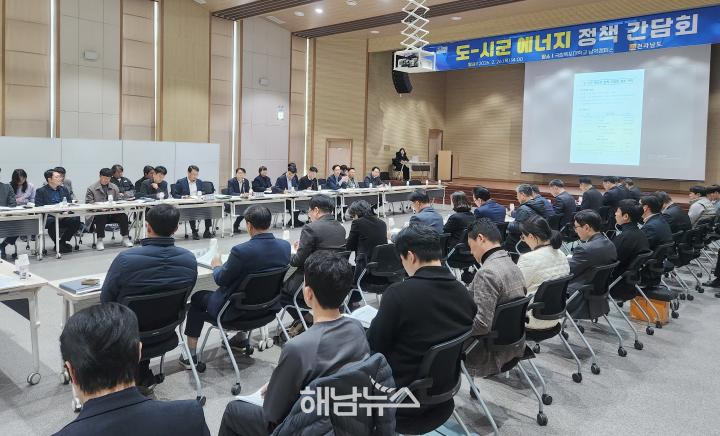 전남도-시군 에너지 정책 간담회1 / 사진제공=전라남도 |
전라남도가 22개 시군과 함께 ‘대한민국 에너지 대전환’의 주도권을 쥐기 위한 본격 행보에 나섰다.
정부의 재생에너지 확대 정책에 선제적으로 대응하고, ‘햇빛소득마을’ 조성을 속도감 있게 추진하기 위해 도와 시군이 하나의 팀으로 뭉쳤다.
전남도는 지난 26일 국립목포대학교 남악캠퍼스에서 유현호 전남도 에너지산업국장과 22개 시군 에너지 담당 과장 등 100여 명이 참석한 가운데 ‘도-시군 에너지 정책 간담회’를 개최했다.
이번 간담회는 정부가 2030년까지 재생에너지 보급 100GW, 햇빛소득마을 2,500개 조성을 목표로 정책 기조를 강화한 데 발맞춰, 도내 현안을 점검하고 지자체 간 협력 체계를 공고히 하기 위해 마련됐다.
■ 2030년까지 ‘햇빛소득마을 500개’… 매년 100개씩 속도전
첫 세션에서는 전남도의 핵심 과제인 ‘햇빛소득마을’ 추진 방향이 집중 논의됐다.
전남도는 2030년까지 도내 500개 마을을 햇빛소득마을로 조성한다는 목표를 세웠다.
매년 100개소씩 단계적으로 확대하는 속도전 전략이다.
이를 위해 도와 녹색에너지연구원 등으로 구성된 현장지원단을 운영해, 공모 준비, 입지 발굴, 주민 협의, 애로사항 해소 컨설팅 등 전 과정을 밀착 지원할 계획이다.
각 시군은 현재 대상지 발굴 현황을 공유하고, 추진 과정에서 나타난 현장의 어려움과 제도 개선 필요 사항을 심도 있게 토의했다.
■ 이격 거리규제 완화·ESS 기준 일원화… 에너지 규제 혁신 공유
두 번째 세션에서는 굵직한 에너지 정책 현안이 다뤄졌다.
주요 내용은, 신재생에너지법 개정에 따른 이격 거리규제 해소, 재생에너지 공급 계획 수립, 배전망 에너지저장장치(ESS) 설치 허가기준 일원화, 해상풍력특별법 주요 내용 등이다.
특히 고흥군 등 선도적으로 대상지를 발굴하고 있는 시군의 우수사례 발표가 이어지며 참석자들의 관심을 모았다.
전남도는 산업용 전기요금의 지역별 차등요금제 도입 등 지역에 유리한 제도 환경이 조성되고 있는 점에 주목하고 있다.
풍부한 재생에너지 공급 능력을 기반으로 대규모 기업 유치와 산업단지 활성화를 동시에 추진한다는 전략이다.
■ “전남·광주 Y4노믹스 성공 열쇠는 에너지”
유현호 에너지산업국장은 “이격 거리규제 완화와 지역별 차등 전기요금제 도입으로 전남의 강점인 재생에너지 공급 능력을 발휘할 절호의 기회가 열렸다.”며 “도와 시군이 유기적인 ‘원 팀’으로 뭉쳐 500개 햇빛소득마을 조성을 조기에 달성하고, 전남·광주 산업 대 부흥 전략인 Y4노믹스를 성공적으로 실현하자”고 강조했다.
전남도는 이번 간담회를 계기로 도-시군 간 상시 협력 체계를 구축하고, 에너지 정책을 단순 보급 사업이 아닌 산업 유치 전략과 연계한 성장 동력으로 발전시킨다는 방침이다.
‘전기 생산지’에 머무르지 않고 ‘에너지로 기업을 부르는 지역’으로 전환하겠다는 선언이다.
전남이 대한민국 에너지 대전환의 심장으로 자리매김할 수 있을지 주목된다.
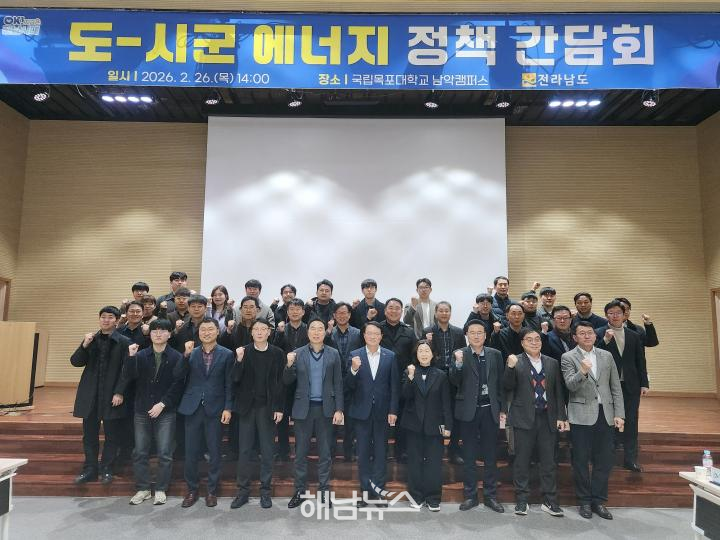 전남도-시군 에너지 정책 간담회1 / 사진제공=전라남도 |
[Jeonnam = Haenam News] haenamnews@kakao.com
“Turning the Tide of Energy with 500 Sunlight Income Villages”
Jeonnam Province and 22 Cities & Counties Declare ‘One Team’ to Lead Korea’s Great Energy Transition
Jeollanam-do Province has begun full-scale efforts, together with its 22 cities and counties, to take the lead in Korea’s great energy transition.
In response to the government’s expanded renewable energy policy, the province and local governments have united as one team to accelerate the creation of “Sunlight Income Villages.”
On the 26th, Jeonnam Province held a “Provincial–Municipal Energy Policy Meeting” at the Namak Campus of Mokpo National University. The meeting was attended by Yoo Hyun-ho, Director General of the Energy Industry Bureau of Jeonnam Province, along with energy division heads from 22 cities and counties and around 100 related officials.
The meeting was organized to align with the government’s policy direction of supplying 100GW of renewable energy and creating 2,500 Sunlight Income Villages nationwide by 2030, while reviewing regional energy issues and strengthening intergovernmental cooperation.
■ 500 Sunlight Income Villages by 2030… Expanding 100 Annually
The first session focused on Jeonnam’s flagship initiative—the Sunlight Income Village project.
The province aims to establish 500 such villages by 2030, expanding by 100 villages each year in a phased, fast-track strategy.
To achieve this, Jeonnam Province will operate an on-site support task force composed of the provincial government and the Green Energy Research Institute. The team will provide comprehensive assistance, including public contest preparation, site discovery, resident consultations, and problem-solving consulting.
Each city and county shared updates on potential project sites and discussed practical challenges and necessary institutional improvements identified during implementation.
■ Regulatory Reform and ESS Standardization… Sharing Key Energy Policy Trends
The second session addressed major energy policy issues and regulatory reforms.
Key topics included easing distance restrictions following amendments to the Renewable Energy Act, establishing renewable energy supply plans, unifying permitting standards for distribution-grid energy storage systems (ESS), and the main provisions of the Offshore Wind Power Special Act.
In particular, best-practice cases from leading local governments such as Goheung County—where project sites are being proactively identified—drew strong interest from participants.
Jeonnam Province also highlighted favorable institutional changes, including the introduction of regionally differentiated industrial electricity rates. Leveraging its abundant renewable energy supply capacity, the province plans to attract large-scale enterprises and revitalize industrial complexes.
■ “Energy Is the Key to the Success of Jeonnam–Gwangju Y4-Nomics”
Director General Yoo Hyun-ho stated, “With the easing of distance regulations and the introduction of regionally differentiated electricity rates, we now have a golden opportunity to maximize Jeonnam’s strength in renewable energy supply.”
He added, “By uniting as a ‘One Team,’ the province and cities and counties will achieve the early realization of 500 Sunlight Income Villages and successfully implement the Jeonnam–Gwangju industrial revival strategy, Y4-Nomics.”
Jeonnam Province plans to establish a standing cooperative framework with local governments and elevate its energy policy from a simple supply initiative to a strategic growth engine linked to industrial attraction.
The province has declared its intention to move beyond being merely an “electricity production region” and become a region that “attracts companies through energy.”
All eyes are now on whether Jeonnam can position itself as the heart of Korea’s energy transition.
 해남뉴스 박충배 편집 및 논설위원 haenamnews@kakao.com