| 대흥사 천불전 봉안 천불상의 조성과 그 사상적 의미 — 『천불조성약기』를 중심으로 — 해남뉴스 박충배 편집 및 논설위원 haenamnews@kakao.com |
| 2025년 12월 22일(월) 15:52 |
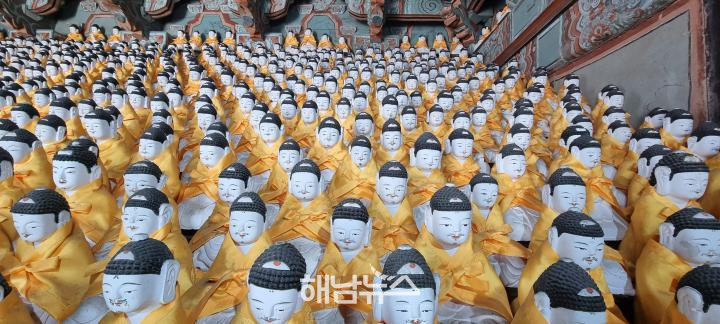 대흥사 천불전 옥불 / 사진제공=해남뉴스 |
박충배 편집/칼럼/논설
Ⅰ. 서론
전라남도 해남 두륜산 대흥사 천불전(千佛殿, 전라남도 유형문화재 제48호)에 봉안된 천불상은 조선 후기 불교조각사와 신앙사 연구에서 매우 중요한 위치를 차지하는 유물이다.
이 천불상은 경주의 옥석을 재료로 하여 조성된 천기의 불상으로, 각 불상이 서로 상이한 조형적 특징을 지니고 있다는 점에서 형식적·사상적 독자성을 보여준다.
특히 중앙에 봉안된 삼존불이 목조 불상이라는 점은 재료와 위계의 차이를 통해 신앙적 중심성을 강조한 사례로 주목된다.
본 논문은 대흥사 천불상의 조성 배경과 조성 과정을 『범해선사문집(梵海禪師文集)』 제1권에 수록된 「천불조성약기(千佛造成略記)」를 중심으로 고찰하고, 천불상이 지니는 다불사상적 의미와 신앙적 성격을 분석하는 데 목적이 있다.
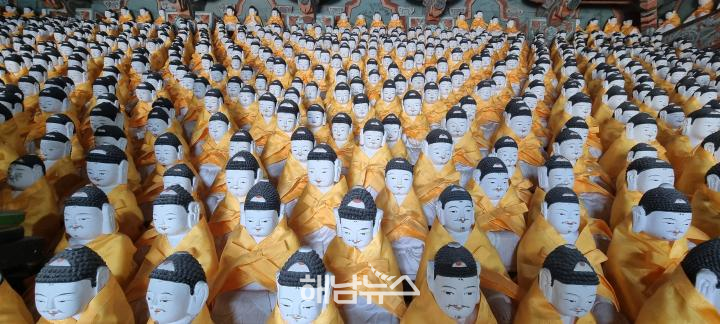 대흥사 천불전 옥불 / 사진제공=해남뉴스 |
Ⅱ. 천불 신앙과 다불사상
천불은 불교의 다불사상(多佛思想)에 근거한 조형적·신앙적 표현이다. 다불사상은 불교 세계관에서 부처가 특정한 한 시대나 공간에 한정되지 않고, 과거·현재·미래의 삼겁(三劫)에 걸쳐 무수히 출현한다는 인식에 기초한다.
일반적으로 ‘천불’이라 할 경우에는 현겁(現劫)에 출현하는 천 분의 부처를 의미하며, 이는 곧 모든 중생이 불성을 지니고 있으며 수행을 통해 누구나 부처가 될 수 있음을 상징적으로 드러낸다.
대흥사 천불상은 이러한 사상을 단순한 교리적 개념이 아니라, 개별 불상의 상이한 형상과 표정을 통해 시각적으로 구현하고 있다는 점에서 중요한 의미를 갖는다.
동일한 형식의 반복이 아닌, 각각 독립된 존재로서의 부처를 표현함으로써 ‘무량한 깨달음의 가능성’을 조형적으로 드러내고 있다.
Ⅲ. 대흥사 천불 조성의 배경
대흥사 천불 조성의 직접적인 계기는 1811년(가경 16년, 신미년) 2월에 발생한 대규모 화재였다.
이 화재로 인해 지장전, 팔해당, 용화전, 적조당, 천불전, 대장전, 약사전, 가허루 등 사찰의 주요 전각이 하룻밤 사이에 전소되었다.
이에 당시 대둔사(대흥사)의 고승이었던 완호(玩虎)대사는 화주가 되어 사찰 중건 불사를 주도하였다.
완호대사는 단순한 전각 복구를 넘어, 신앙적 중심 공간으로서 천불전과 천불상의 조성을 통해 대흥사의 위상을 재정립하고자 하였던 것으로 보인다.
이러한 불사의 일환으로 천불 조성은 국가적·지역적 장인 집단이 참여한 대규모 조형 사업으로 추진되었다.
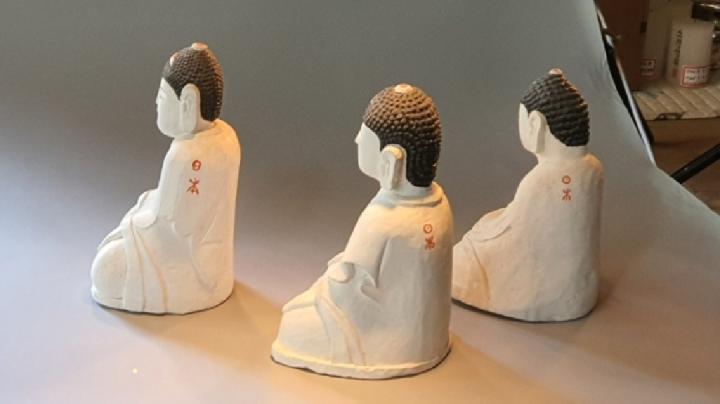 대흥사 천불전 옥불 / 사진제공=해남뉴스 |
Ⅳ. 『천불조성약기』에 나타난 조성 과정
「천불조성약기」에 따르면, 천불 조성은 1817년(정축년)을 전후하여 본격적으로 진행되었다.
완호대사는 서울에서 불사에 필요한 행정적·재정적 절차를 마련한 뒤 경주의 기림사로 내려가 조성 작업을 시작하였다.
1817년 8월 7일 신중에 마지를 올리며 불사가 개시되었고, 경산(京山) 지역을 중심으로 한 화원들이 제작에 참여하였다.
불사 기간 동안 세 차례에 걸쳐 상서로운 기운과 빛이 나타났다는 기록은, 조성 행위 자체가 단순한 공예 작업이 아니라 신성한 종교 의례로 인식되었음을 보여준다.
천불의 점안은 총 세 차례에 걸쳐 이루어졌는데, 1817년 10월 18일 경산 화원 아홉 명이 333존을, 19일에는 영남 화원 스물네 명이 다시 333존을, 20일에는 전라도 화원 열한 명이 마지막 333존을 점안함으로써 천불 조성이 완결되었다.
이러한 기록은 조선 후기 불교조각 제작이 특정 지역이나 계보에 한정되지 않고, 광역적 장인 네트워크를 통해 이루어졌음을 보여주는 중요한 사례라 할 수 있다.
Ⅴ. 해상 운송과 일본 표류 사건
완성된 천불상은 1817년 11월, 해상 운송을 통해 대흥사로 이운되었다. 기록에 따르면 700존은 큰 배에, 300존은 작은 배에 나누어 실렸으나, 출항 후 동래 오륙도 인근에서 풍랑을 만나 큰 배가 표류하게 되었다. 이 배는 결국 일본국 장기도(長岐島) 축전주에 도착하였다.
이와 관련하여, 일본 현지에서 옥불을 발견한 사람들이 이를 봉안하려 하였으나, 불상들이 꿈에 나타나 조선 해남 대둔사로 가는 길임을 알렸다는 전승이 전해진다.
이러한 내용은 역사적 사실이라기보다는 신앙적 서사로 이해되어야 하나, 불상의 귀환 과정에서 ‘일(日)’ 자를 새겨 식별하였다는 점은 이후 봉안 과정에서 반복적으로 언급되는 중요한 단서이다.
1818년(무인년) 6월 일본을 출발한 배는 부산, 통영, 장흥, 완도를 거쳐 같은 해 8월 15일 마침내 대흥사 천불전에 천불존상을 봉안하였다.
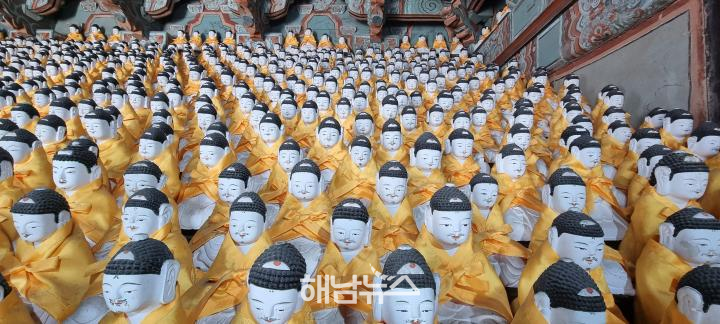 대흥사 천불전 옥불 / 사진제공=해남뉴스 |
Ⅵ. 신앙적 전승과 문화사적 의미
대흥사 천불상은 조성 이후에도 지속적인 신앙적 전승의 대상이 되었다.
근세에 이르러 경상도 지역 신도들의 꿈에 천불이 현몽하여 가사를 입혀 달라고 했다는 설화가 전해지며, 이에 따라 천불상에 4년마다 한 차례 가사를 갈아입히는 의례가 형성되었다.
이러한 전승은 천불상이 단순한 조형물이 아니라 살아 있는 신앙의 대상으로 인식되었음을 보여준다.
Ⅶ. 결론
대흥사 천불전의 천불상은 조선 후기 불교 신앙, 조각 기술, 장인 조직, 그리고 해상 교통과 국제적 접촉까지 포괄하는 복합적 문화유산이다. 『천불조성약기』는 이러한 조성 과정을 비교적 상세히 전하는 희귀한 기록으로, 조선 후기 불교 조형 불사의 실제 운영 방식과 신앙적 인식을 이해하는 데 중요한 사료적 가치를 지닌다.
대흥사 천불상은 다불사상을 시각적으로 구현한 대표적 사례로서, 향후 불교미술사와 신앙사 연구에서 더욱 심층적인 분석이 요구된다.
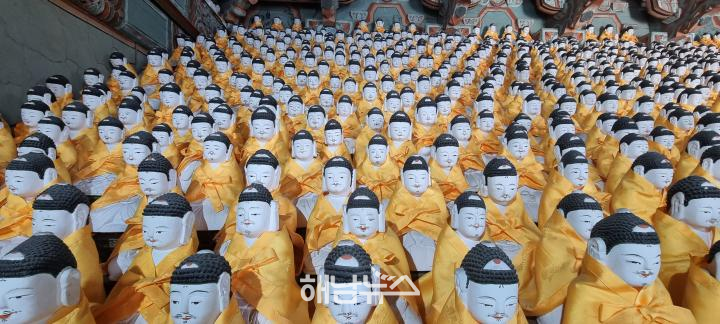 대흥사 천불전 옥불 / 사진제공=해남뉴스 |
[Haenam = Haenam News]
haenamnews@kakao.com
Park Chung-bae
Editor / Columnist / Commentary
The Creation and Ideological Significance of the Thousand Buddha Images Enshrined in the Cheonbuljeon Hall of Daeheungsa Temple
— Focusing on Cheonbul Josŏng Yakk i —
I. Introduction
The Thousand Buddha images enshrined in the Cheonbuljeon Hall of Daeheungsa Temple, located on Mt. Duryun in Haenam, Jeollanam-do (designated as Tangible Cultural Property No. 48 of Jeollanam-do), occupy a highly significant position in the study of late Joseon Buddhist sculpture and religious history. These images consist of one thousand Buddha figures carved from jade stone quarried in Gyeongju, each displaying distinct iconographic and stylistic features, thereby demonstrating both formal and ideological individuality.
Particularly noteworthy is the fact that the central triad is composed of wooden Buddha statues, which contrasts materially with the jade images and underscores the ritual and doctrinal centrality of the triad through a hierarchy of materials. This study aims to examine the historical background and production process of the Thousand Buddha images based primarily on Cheonbul Josŏng Yakk i (“A Brief Record of the Creation of the Thousand Buddhas”), recorded in Volume 1 of Beomhae Seonsa Munjip (Collected Works of Seon Master Beomhae), and to analyze their doctrinal significance within the framework of the Buddhist concept of multiple Buddhas (dabulsasang).
II. Thousand Buddha Worship and the Concept of Multiple Buddhas
The Thousand Buddha images represent a sculptural and devotional manifestation of the Buddhist concept of multiple Buddhas (dabulsasang). This doctrine posits that Buddhas are not confined to a single historical moment or location, but appear in innumerable forms throughout the three kalpas—past, present, and future. In general usage, the term “Thousand Buddhas” refers specifically to the thousand Buddhas of the present kalpa (hyeongeop).
This concept symbolically affirms the Buddhist teaching that all sentient beings possess Buddha-nature and may attain enlightenment through practice. The Thousand Buddha images of Daeheungsa embody this doctrine not merely as an abstract philosophical idea but as a visual and material expression. Rather than repeating a single standardized form, each Buddha image is rendered with individual facial features and postures, thereby visually articulating the notion of infinite manifestations of enlightenment.
III. Historical Background of the Creation of the Thousand Buddhas at Daeheungsa
The immediate impetus for the creation of the Thousand Buddha images at Daeheungsa was a devastating fire that occurred in February 1811 (the 16th year of the Jiaqing reign, sinmi year). This fire destroyed major temple structures, including Jijangjeon, Palhaedang, Yonghwajeon, Jeokjodang, Cheonbuljeon, Daejangjeon, Yaksajeon, and Gahŏru, all of which were reduced to ashes in a single night.
In response, the eminent monk Wanho (玩虎), a leading figure of Daeheungsa at the time, assumed the role of principal donor and organizer, overseeing the comprehensive reconstruction of the temple. His vision extended beyond the physical restoration of the buildings; through the reconstruction of Cheonbuljeon and the creation of the Thousand Buddha images, Wanho sought to reaffirm the religious and institutional stature of Daeheungsa. As a result, the project developed into a large-scale sculptural undertaking involving artisans from multiple regions.
IV. The Creation Process as Recorded in Cheonbul Josŏng Yakk i
According to Cheonbul Josŏng Yakk i, the production of the Thousand Buddha images was carried out in earnest around 1817 (the jeongchuk year). After arranging administrative and financial matters in the capital, Wanho proceeded to Girimsa Temple in Gyeongju, where the sculptural work began. On August 7, 1817, the ritual offering to guardian deities marked the formal commencement of the project, with painters and sculptors primarily from the Gyeongsan region participating in the work.
The record notes that during the approximately three-month production period, auspicious lights and signs appeared on three occasions, indicating that the sculptural process was understood not merely as artisanal labor but as a sacred religious undertaking. The consecration (jeoman) of the Buddha images was conducted in three stages: on October 18, nine artisans from Gyeongsan consecrated 333 images; on October 19, twenty-four artisans from the Yeongnam region consecrated another 333 images; and on October 20, eleven artisans from Jeolla Province consecrated the final 333 images, completing the Thousand Buddhas.
This record provides valuable evidence that late Joseon Buddhist sculptural production relied on extensive interregional networks of artisans rather than on a single localized lineage.
V. Maritime Transportation and the Drift to Japan
In November 1817, the completed Buddha images were transported by sea to Daeheungsa. According to the record, 700 images were loaded onto a large vessel, while 300 were placed on a smaller one. Shortly after departure, however, the larger ship encountered a severe storm near Oryukdo off Dongnae and drifted across the sea, eventually reaching Chikuzengo (present-day Nagasaki Prefecture) in Japan.
A religious tradition recounts that local Japanese residents, upon discovering the jade Buddhas, attempted to enshrine them, but the Buddhas appeared in dreams, declaring that they were destined for Daeheungsa in Haenam, Joseon. While such accounts should be understood as religious narratives rather than historical fact, the practice of inscribing the character il (日) on the images to identify those that had drifted to Japan is consistently mentioned in subsequent records and remains an important material marker.
The ship departed Japan in June 1818, passing through Busan, Tongyeong, Jangheung, and Wando, and finally reached Daeheungsa. On August 15, 1818, the Thousand Buddha images were formally enshrined in the Cheonbuljeon Hall.
VI. Religious Transmission and Cultural Significance
Following their enshrinement, the Thousand Buddha images continued to function as objects of active religious devotion. Traditions from the late Joseon period recount that devotees in the Gyeongsang region dreamed of the Buddhas requesting new robes, leading to the establishment of a ritual practice in which the images were re-robed every four years. Such traditions demonstrate that the Thousand Buddha images were perceived not merely as static works of art but as living sacred beings within the devotional life of the community.
VII. Conclusion
The Thousand Buddha images of the Cheonbuljeon Hall at Daeheungsa constitute a complex cultural heritage encompassing late Joseon Buddhist faith, sculptural techniques, artisan organization, maritime transportation, and transnational encounters. Cheonbul Josŏng Yakk i is a rare and invaluable source that documents the production process in considerable detail, offering critical insight into the operational structure and religious consciousness underlying Buddhist sculptural projects of the period.
As a representative visual embodiment of the doctrine of multiple Buddhas, the Thousand Buddha images of Daeheungsa warrant further in-depth analysis within the broader fields of Buddhist art history and religious studies.
 해남뉴스 박충배 편집 및 논설위원 haenamnews@kakao.com