| — 글씨로 산사를 세운 사람들 — 해남뉴스 박충배 편집 및 논설위원 haenamnews@kakao.com |
| 2025년 12월 18일(목) 16:17 |
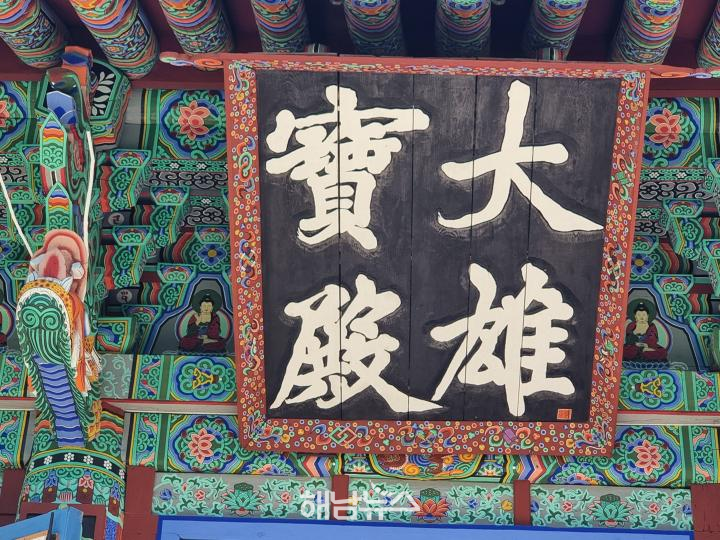 대흥사 대웅보전 원교이광사 / 사진제공=해남뉴스 |
박충배 편집/칼럼/논설
- 대웅보전 :大雄寶殿(전언: 원교체/힘찬 필획) 원교-이광사(1705~1777)
- 침계루 ; 枕溪樓(전언) 원교 이광사
- 명부전 : 冥府殿 미불체(전언) 해사 김성근(1835~1919)
- 백설당 ; 白雪堂 (전언) 해사 김성근 ‘주요 편액’
- 청운당 ; 靑雲堂 (전언) 학정 이돈흥(李敦興)
- 응진전 ; 應眞殿 미상
- 산신각 : 山神閣 미상 미상
- 대향각 : 大香閣 미상 미상
- 선열당 : 先烈堂 미상 미상
- 천불전 : 千佛殿 원교 이광사
- 용화당 : 龍華堂 성당 김돈희(1871~1936)
- 가허루 : 駕虛樓 창암 이삼만(1770~1845/47)
- 봉향각 : 奉香閣 미상 미상
- 세심당 : 洗心堂 미상 미상
- 적묵당 : 寂默堂 미상 미상
- 정진당 : 精進堂 미상 미상
- 만월당 : 滿月堂 미상 미상
- 심검강 : 尋劍江 미상 미상
- 표충사 : 表忠祠 정조 어필(친필)
- 어서각 : 御書閣 위당 신관호(1810~1888)
- 대광명전 : 大光明殿 위당 신관호(1810~1888)
- 동국선원 : 東國禪院 추사 김정희(1786~1856)
- 일로향실 : 一爐香室 추사 김정희
- 무량수각 : 無量壽閣 추사 김정희
- 일주문 : 頭輪山大興寺 해사 김성근(기존 편액)
頭輪山大興寺 여초 김응현(현대 교체 편액 가능)
禪林敎海滿華道場
- 해탈문 : 解脫門 원교 이광사 설 / 김성근 설
- 연하문 : 煙霞門 미상
- 범종각 : 梵鐘閣
-
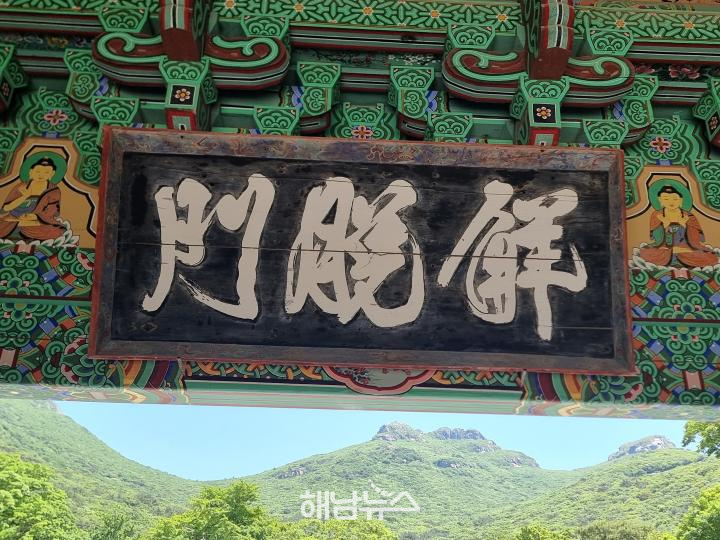 대흥사 해탈문 원교이광사 / 사진제공=해남뉴스 |
대흥사 현판 필자(書者) 인물별 프로필 총람
Ⅰ. 원교(圓嶠) 이광사 李匡師 (1705~1777)
1. 생애와 위상
원교 이광사는 조선 후기 서예사에서 ‘동국진체(東國眞體)’를 완성한 인물로 평가받는 대표적 명필이다. 그는 중국 서체의 모방을 넘어, 조선의 기질과 정신을 반영한 독자적 서풍을 확립하였다. 문신이자 학자로서 활동했으며, 왕실·서원·사찰 편액을 두루 남겼다.
2. 서예적 특징
힘찬 필획, 장중한 구조, 해서와 행서의 절제된 혼용, 장식성 배제, 도덕적·사상적 긴장감 강조.
3. 대흥사 현판과의 관계
대웅보전 大雄寶殿, 침계루 枕溪樓, 천불전 千佛殿, 해탈문 解脫門
이는 대흥사에서 가장 핵심적인 ‘정법·수행·교학의 중심 공간’에 그의 글씨가 집중되었음을 의미한다.
4. 사상적 위치
원교의 글씨는 대흥사를 기도의 절이 아닌, 법과 교학의 중심 도량으로 규정한다. 그의 현판은 곧 “이곳은 정법이 머무는 곳”이라는 선언이다.
Ⅱ. 해사(海士) 김성근 金聲根 (1835~1919)
1. 생애와 위상
김성근은 조선 말기에서 대한제국기에 활동한 문신·서예가로, 관료 사회와 서단(書壇)을 잇는 인물이다. 정치·외교·행정 경험을 바탕으로 공적(公的) 서예에 강점을 보였다.
2. 서예적 특징
미불체(米芾體) 계열로 전언됨, 획의 굴곡과 리듬감이 뚜렷, 공적 공간에 적합한 중후함.
3. 대흥사 현판과의 관계
명부전 冥府殿, 백설당 白雪堂, 일주문 頭輪山大興寺(기존 편액), 해탈문 解脫門, 특히 명부전·일주문 등 경계·심판·출입의 공간에 그의 글씨가 집중된다.
4. 사상적 위치
김성근의 글씨는 대흥사를 도덕 질서와 사회적 규범을 환기하는 공간으로 확장한다. 원교가 ‘법의 중심’을 세웠다면, 김성근은 윤리와 경계의 언어를 더했다.
Ⅲ. 학정(學亭) 이돈흥 李敦興 (생몰 미상, 조선 후기)
1. 생애와 위상
이돈흥은 강학(講學)과 교육에 관여한 문인으로 전해지며, 지역 유학자 계열 인물로 추정된다.
2. 대흥사 현판
청운당 靑雲堂
3. 의미
‘푸른 구름’은 출세와 이상, 학문의 지향을 뜻한다. 이는 대흥사가 강원·교육 기능을 지닌 학문 도량이었음을 보여주는 증거다.
Ⅳ. 창암(蒼巖) 이삼만 李三晩 (1770~1845/1847)
1. 생애와 위상
이삼만은 호남 서단을 대표하는 문인 서예가로, 관직보다는 개인의 수양과 예술성을 중시한 인물이다.
2. 서예적 특징
문인적 해서·행서, 여백과 균형 중시, 과장 없는 담담함.
3. 대흥사 현판
가허루 駕虛樓
4. 사상적 위치
‘허공을 탄다’는 가허루의 명칭은 선종의 공(空) 사상을 직접 드러낸다. 이삼만의 글씨는 대흥사가 문인적 선 사유를 포용한 산사였음을 증명한다.
Ⅴ. 성당(惺堂) 김돈희 金敦熙 (1871~1936)
1. 생애와 위상
대한제국~일제강점기 초기에 활동한 관료·서예가. 전통 서풍을 계승하면서도 근대적 감각을 수용했다.
2. 대흥사 현판
용화당 龍華堂
3. 의미
‘용화’는 미륵불의 세계, 즉 미래불 사상을 뜻한다. 이는 대흥사가 근대 전환기에도 미래를 사유한 불교 도량이었음을 보여준다.
Ⅵ. 위당(威堂) 신관호 申觀浩 (1810~1888)
1. 생애와 위상
무신·외교관·서예가로 활동. 특히 예서와 공적 서예에 능했다.
2. 대흥사 현판
어서각 御書閣, 대광명전 大光明殿.
3. 사상적 위치
왕의 글과 불법의 빛을 봉안하는 공간에 그의 글씨가 쓰였다는 점에서, 신관호는 국가–불교–공적 질서의 매개자라 할 수 있다.
Ⅶ. 추사(秋史) 김정희 金正喜 (1786~1856)
1. 생애와 위상
조선 후기 최고의 학자·서예가·금석학자. 추사체를 창안하여 한국 서예의 지평을 바꾼 인물.
2. 대흥사 현판
동국선원 東國禪院, 일로향실 一爐香室, 무량수각 無量壽閣
3. 사상적 위치
추사의 현판은 대흥사가 초의선사를 중심으로 한 지성·불교·문인의 사유 공동체였음을 보여준다. 이 공간에서 대흥사는 단순한 사찰을 넘어 지적 허브가 된다.
Ⅷ. 정조 正祖 (1752~1800)
1. 위상
조선 제22대 국왕. 개혁군주이자 뛰어난 문장가·서예가.
2. 대흥사 현판
표충사 表忠祠 (어필)
3. 의미
국왕의 친필이 산사에 걸린 사례는 드물다. 이는 대흥사가 국가가 공인한 충·의·정신의 상징 공간이었음을 보여준다.
Ⅸ. 여초(如初) 김응현 金膺顯 (1927~2007)
1. 생애와 위상
현대 한국 서예계를 대표하는 대가. 전통 서예의 현대적 계승자.
2. 대흥사 현판
일주문 頭輪山大興寺 (현대 교체 편액 가능성)
3. 의미
이는 대흥사의 현판 전통이 현대까지 살아 있는 유산임을 보여준다.
Ⅹ. 미상 현판들 (익명성의 의미)
응진전, 산신각, 대향각, 선열당, 봉향각, 세심당, 적묵당, 정진당, 만월당, 심검강, 연하문, 범종각 등 이 현판들은 개인의 이름보다 개념·수행·의례 자체가 중심인 공간들이다. 서자가 남지 않은 것은 결핍이 아니라, 의도된 불교적 익명성으로 이해할 수 있다.
대흥사의 현판은 곧 사람의 계보다.
원교에서 추사, 정조에서 현대 서예가까지, 이 산사는 글씨로 세워지고 정신으로 이어진 세계유산이다.
[Haenam = Haenam News]
haenamnews@kakao.com
Edited / Column / Commentary by Park Chung-bae
The People Who Built a Mountain Monastery with Calligraphy
The Inscribers of the Name Boards at Daeheungsa Temple
Overview of Name Boards at Daeheungsa
Daeheungsa Temple on Mt. Duryun is not merely a complex of wooden buildings and tiled roofs.
It is a monastery constructed through calligraphy and sustained by ideas.
Each name board (悬板, hyeonpan) is not a decorative element, but a textual declaration that defines the spiritual, doctrinal, and social identity of the space it marks.
Below is a comprehensive list of Daeheungsa’s major name boards and their inscribers, followed by detailed biographical profiles of each calligrapher.
Major Name Boards and Attributions
Daeungbojeon 大雄寶殿
(Traditionally attributed to Won-gyo style; powerful brushwork)
Won-gyo Yi Gwang-sa (1705–1777)
Chimgyellu 枕溪樓
(Traditionally attributed)
Won-gyo Yi Gwang-sa
Myeongbujeon 冥府殿
(Traditionally attributed to Mi Fu–style)
Haesa Kim Seong-geun (1835–1919)
Baekseoldang 白雪堂
(Traditionally attributed; major name board)
Haesa Kim Seong-geun
Cheongundang 靑雲堂
(Traditionally attributed)
Hakjeong Yi Don-heung
Eungjinjeon 應眞殿 – Unknown
Sanshingak 山神閣 – Unknown
Daehyanggak 大香閣 – Unknown
Seonyeoldang 先烈堂 – Unknown
Cheonbuljeon 千佛殿
Won-gyo Yi Gwang-sa
Yonghwadang 龍華堂
Seongdang Kim Don-hui (1871–1936)
Gahyeoru 駕虛樓
Changam Yi Sam-man (1770–1845/47)
Bonghyanggak 奉香閣 – Unknown
Sesimdang 洗心堂 – Unknown
Jeongmukdang 寂默堂 – Unknown
Jeongjindang 精進堂 – Unknown
Manwoldang 滿月堂 – Unknown
Simgumgang 尋劍江 – Unknown
Pyochungsa Shrine 表忠祠
Royal Calligraphy (Autograph) – King Jeongjo (1752–1800)
Eoseogak 御書閣
Widang Shin Gwan-ho (1810–1888)
Daegwangmyeongjeon 大光明殿
Widang Shin Gwan-ho
Dongguk Seonwon 東國禪院
Chusa Kim Jeong-hui (1786–1856)
Illohyangsil 一爐香室
Chusa Kim Jeong-hui
Muryangsugak 無量壽閣
Chusa Kim Jeong-hui
Iljumun Gate 頭輪山大興寺
– Haesa Kim Seong-geun (earlier plaque)
– Yeocho Kim Eung-hyeon (possible modern replacement)
– Rear inscription: 禪林敎海滿華道場
Haetalmun Gate 解脫門
Attributed either to Won-gyo Yi Gwang-sa or Kim Seong-geun
Yeonhamun Gate 煙霞門 – Unknown
Beomjonggak 梵鐘閣 (Bell Pavilion)
Comprehensive Profiles of the Inscribers
I. Won-gyo Yi Gwang-sa (1705–1777)
Life and Historical Standing
Yi Gwang-sa is regarded as the master who completed the Dongguk Jinche—a distinctly Korean orthodox script that transcended imitation of Chinese models. A scholar-official and calligrapher, he left works at royal palaces, Confucian academies, and major Buddhist temples.
Calligraphic Characteristics
Powerful, disciplined brush strokes
Monumental composition
Controlled blending of regular and semi-cursive scripts
Rejection of ornamentation in favor of moral and intellectual tension
Relationship with Daeheungsa
Daeungbojeon (大雄寶殿)
Chimgyellu (枕溪樓)
Cheonbuljeon (千佛殿)
(Traditionally) Haetalmun (解脫門)
These are the doctrinal and spiritual core spaces of the temple.
Intellectual Significance
Yi’s calligraphy defines Daeheungsa not as a site of prayer alone, but as a center of Buddhist law and learning. His plaques declare: “This is where the True Dharma abides.”
II. Haesa Kim Seong-geun (1835–1919)
Life and Standing
A high-ranking official and calligrapher of the late Joseon and Korean Empire periods, Kim bridged bureaucracy and the calligraphic world, excelling in public and institutional calligraphy.
Calligraphic Style
Traditionally associated with Mi Fu–style
Strong rhythmic variation
Gravitas suitable for boundary and judgmental spaces
Name Boards at Daeheungsa
Myeongbujeon (冥府殿)
Baekseoldang (白雪堂)
Iljumun Gate (頭輪山大興寺)
(Possibly) Haetalmun (解脫門)
Intellectual Role
If Yi Gwang-sa established the axis of Dharma, Kim Seong-geun added the language of ethical order, boundary, and moral judgment.
III. Hakjeong Yi Don-heung (Late Joseon)
Profile
A Confucian scholar associated with education and lecturing.
Name Board
Cheongundang (靑雲堂)
Meaning
“Blue Clouds” symbolizes aspiration, learning, and advancement—evidence of Daeheungsa’s role as an educational monastery.
IV. Changam Yi Sam-man (1770–1845/47)
Profile
A leading Honam literati calligrapher who valued self-cultivation over office.
Style
Literati regular and semi-cursive script
Emphasis on balance and restraint
Name Board
Gahyeoru (駕虛樓)
Significance
The phrase “Riding the Void” visually embodies the Zen concept of emptiness (śūnyatā).
V. Seongdang Kim Don-hui (1871–1936)
Profile
An official and calligrapher active during Korea’s transition into modernity.
Name Board
Yonghwadang (龍華堂)
Meaning
Refers to the Maitreya Buddha’s future world, reflecting Daeheungsa’s forward-looking Buddhist vision.
VI. Widang Shin Gwan-ho (1810–1888)
Profile
Military official, diplomat, and calligrapher skilled in clerical script.
Name Boards
Eoseogak (御書閣)
Daegwangmyeongjeon (大光明殿)
Role
A mediator between state authority and Buddhist luminosity.
VII. Chusa Kim Jeong-hui (1786–1856)
Profile
The greatest scholar-calligrapher of late Joseon; founder of the Chusa style.
Name Boards
Dongguk Seonwon (東國禪院)
Illohyangsil (一爐香室)
Muryangsugak (無量壽閣)
Intellectual Role
These plaques testify that Daeheungsa was a hub of Buddhist, Confucian, and literati exchange, centered on Chusa and the monk Cho-ui.
VIII. King Jeongjo (1752–1800)
Name Board
Pyochungsa (表忠祠) — Royal Autograph
Significance
A rare case of royal calligraphy in a mountain monastery, affirming Daeheungsa as a state-recognized moral and spiritual institution.
IX. Yeocho Kim Eung-hyeon (1927–2007)
Profile
A master of modern Korean calligraphy and heir to classical traditions.
Name Board
Iljumun Gate (modern replacement possibility)
Meaning
Demonstrates that Daeheungsa’s calligraphic lineage is a living heritage, not a relic.
X. Anonymous Name Boards and the Meaning of Anonymity
Eungjinjeon, Sanshingak, Daehyanggak, Seonyeoldang, Bonghyanggak, Sesimdang, Jeongmukdang, Jeongjindang, Manwoldang, Simgumgang, Yeonhamun, Beomjonggak.
These spaces privilege concept, ritual, and practice over individual authorship. Their anonymity is not a loss of record, but a deliberate expression of Buddhist non-ego and communal spirituality.
Conclusion
The name boards of Daeheungsa form a genealogy of people and ideas.
From Yi Gwang-sa to Chusa, from royal autographs to modern masters,
this monastery was built with calligraphy and sustained by spirit—
a living World Heritage of written thought.
 해남뉴스 박충배 편집 및 논설위원 haenamnews@kakao.com